


Solitaire vs Statement Ring: How to Choose the Right Ring for the Way You Actually Live

Most guides that pit the solitaire against the statement ring quietly assume you have to pick a side. Team minimalist or team maximalist. Quiet luxury or bold personality. It makes for a tidy headline, but it is not how anyone actually wears rings, and it is definitely not how Indian women are building their jewellery collections.
Here is a more useful way to think about it. A solitaire and a statement ring are not rivals competing for the same slot on your finger. They do two completely different jobs. A solitaire is the quiet anchor you can wear every single day without thinking about it. A statement ring is the occasional showstopper you reach for when you want your hand to be the most interesting thing in the room. The real question is not which one is better. It is which job you need done first, given your wardrobe, your lifestyle, and your budget.
This guide breaks down what each ring actually is, where they genuinely differ, and how to choose the right one for your life. Along the way, we will look at the material and stone choices that matter far more than most shoppers realise, especially in Indian conditions.
What a solitaire ring really is

A solitaire is a ring built around a single centre stone, usually set on a clean, understated band so that nothing distracts from the stone itself. The word comes from the Latin "solitarius," meaning alone, and that solitary stone is the entire point of the design.
The solitaire earned its reputation as the classic engagement ring, and that association runs deep. But limiting the solitaire to proposals misses most of its value. A single-stone ring is one of the most versatile pieces you can own. It slips under a kurta sleeve without catching; it does not fight with your other jewellery, and it reads as intentional rather than loud. That is exactly why so many women now buy solitaires for themselves, as a birthday treat, an anniversary marker, a first-salary reward, or simply an everyday piece that feels a little special.
The setting changes how a solitaire behaves day to day. A prong setting lifts the stone up and lets light hit it from every angle, giving maximum sparkle, though the raised stone is a little more exposed. A bezel setting wraps a rim of metal around the stone, which looks sleek and modern and protects the stone on all sides, making it the more practical choice for continuous wear. If you want one ring that survives your commute, your keyboard, and your kitchen, a low-profile bezel solitaire is usually the smart pick.
Think of the solitaire as the white shirt of your jewellery wardrobe. It is not trying to be the loudest thing you own. It is trying to work with everything, forever.
What a statement ring really is

"Statement ring" is an umbrella term for any ring designed to be noticed. That includes oversized cocktail rings, wide sculptural bands, chunky signets, and multi-finger designs. The defining trait is intent: a statement ring exists to be the focal point of your look.
The best-known type of statement ring is the cocktail ring, and it helps to be precise here, because the terms get muddled everywhere online. All cocktail rings are statement rings, but not all statement rings are cocktail rings. A cocktail ring specifically means an oversized design built around a large centre stone or a dramatic cluster. The style traces back to 1920s speakeasy culture, when women wore bold rings on the right hand at cocktail parties as a symbol of independence. The name stuck, but the meaning evolved. Today, a cocktail ring is simply the most expressive ring in your box.
The other important distinction is emotional. Unlike an engagement ring or a wedding band, a statement ring carries no symbolic obligation. It is pure fashion. You are not wearing it to represent a commitment. You are wearing it because it is fun. After all, it finishes an outfit, and it says something about you. That freedom is the whole appeal. There are no rules about which finger it goes on, though many women wear a statement ring on the right hand specifically so it does not get confused with, or crowd, an engagement ring on the left.
If the solitaire is the white shirt, the statement ring is the jacket you buy because it makes you feel like a slightly bolder version of yourself.
Solitaire vs statement ring: the differences that actually matter
Once you stop asking which is "better" and start asking what each one is for, the comparison becomes genuinely useful. Here is the honest head-to-head.
| What matters | Solitaire ring | Statement ring |
|---|---|---|
| Its job in your look | A refined focal point that still plays well with everything else | The hero of the whole outfit wants minimal supporting jewellery |
| Everyday wearability | High, especially in a low-profile bezel setting | Occasion-leaning, though refined, smaller designs can work daily |
| Best occasions | Work, college, daily wear, dates, festive days, gifting | Parties, receptions, festive evenings, dinners, celebrations |
| Which hand or finger | The left ring finger is classic, but any finger works | Traditionally, the right hand is spaced away from an engagement ring |
| Stacking and layering | Stacks and layers easily with dainty bands | Usually stands alone, or with delicate bands on the opposite hand |
| The mindset behind it | A timeless anchor you invest in | An expressive, trend-aware piece you enjoy |
| Comfort and fit | Lightweight, low-catch, easy to forget you are wearing | Larger surface area, so sizing and comfort need more thought |
A few of these deserve a closer look.
The single most practical difference is versatility versus impact. A solitaire is designed to disappear into your life and reappear only when the light catches it. A statement ring is designed to be seen, which means it works best when the rest of your look steps back. Jewellery editors often call this the "one hero" rule: pick one bold piece and keep everything else quiet. A statement ring is almost always that hero, so pairing it with heavy earrings and a stacked wrist usually works against you.
The second difference is the mindset behind the purchase. A useful test that Indian buyers have started applying to trend jewellery is this: if a piece would feel embarrassing to wear in ten years, it probably should not be your biggest jewellery investment, but if it would feel like a fun memory, it is a great buy. A classic solitaire rarely fails the ten-year test. A very of-the-moment statement ring might, and that is completely fine, as long as you buy it for what it is.
How to choose the right one for you

If your budget or your patience only stretches to one ring right now, choose based on the gap in your collection, not on which style is trendier.
Buy the solitaire first if you do not yet own a go-to everyday ring, if most of your week is work, study, or errands, if you want something that pairs with both Western and Indian outfits, or if you want a piece that will still feel right years from now. The solitaire is the higher-leverage first purchase for most people because you will simply wear it more.
Reach for the statement ring first if you already have your everyday basics covered, if your calendar is full of parties, weddings, and festive gatherings, or if you love the feeling of one striking piece doing all the talking. If your problem is "I have nothing exciting to wear to this reception," a statement ring solves it instantly.
And if you are shopping for a gift, the same logic applies. A solitaire is the safer, more wearable gift for someone whose taste you are not fully sure of. A statement ring is a more memorable gift for someone with a strong, expressive personal style.
The India lens: why the answer is a little different here
Most ring guides online are written for a Western wardrobe and a Western calendar. Indian wearers are solving a more interesting problem, and it changes the maths.
You are dressing two wardrobes, not one. Your week might swing from jeans and a blazer to a kurta to a saree to an Indo-western co-ord. A solitaire handles all of this quietly, and its warm gold tone, if you choose a gold finish, blends seamlessly with traditional gold jewellery, so it never looks out of place next to your bangles. A statement ring is more occasion-specific, and it shines brightest against either the richness of festive ethnic wear or the clean lines of a modern silhouette.
Your occasions are built for statement pieces. Karwa Chauth, Navratri, Diwali, sangeets, receptions, and Puja gatherings are exactly the moments a bold ring was made for. This is where the "one hero" rule and Indian festive dressing meet neatly: pick one striking ring, let the outfit carry the colour, and keep the rest minimal.
Climate and daily wear favour the solitaire for everyday. Indian humidity, heat, hard water, and sweat are hard on jewellery, and continuous-wear habits are common here. A low-profile solitaire, particularly a bezel-set one, is far easier to live in every day than a large raised cocktail ring that catches on everything. The statement ring is better kept for occasions, which also happens to keep it looking its best for longer.
Skin sensitivity is a real, under-discussed issue. Reactions to jewellery are more common than most people admit, and they get worse with constant daily wear in Indian conditions. The base metal matters more than anything else here because nickel is the most common trigger. This is the single biggest reason to care about what your demi-fine ring is actually made of, which brings us to the part most shoppers skip.
-
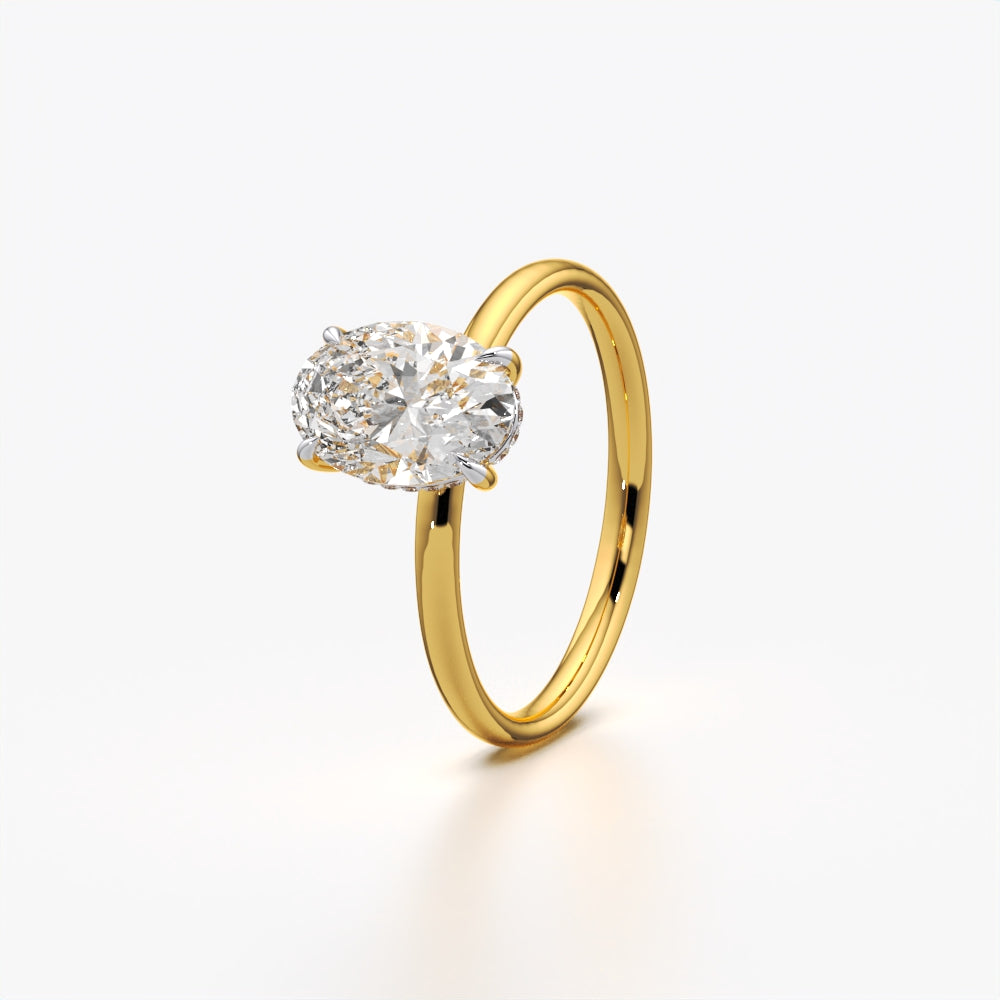
Classic Oval Solitaire Ring
Shop Now -
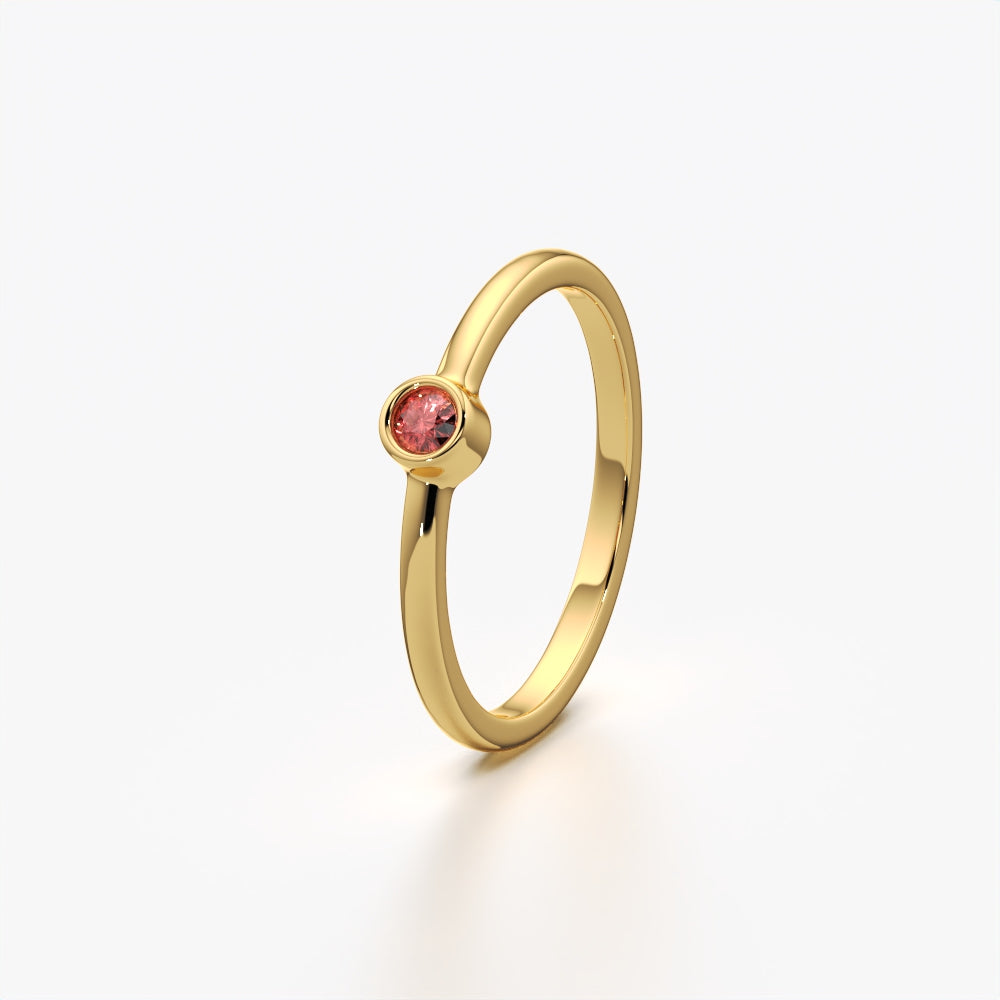
Dainty Bezel Round Solitaire Ring
Shop Now -
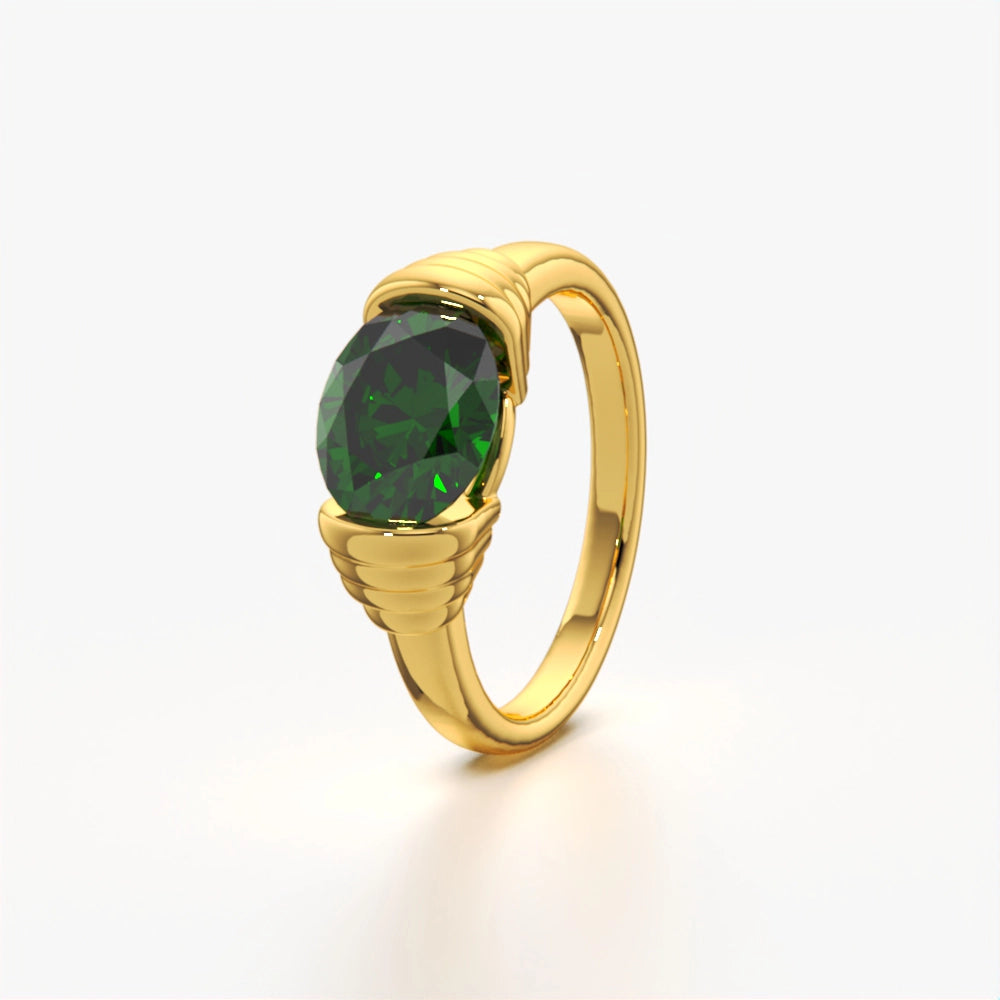
Oval Cabochon Statement Ring
Shop Now -
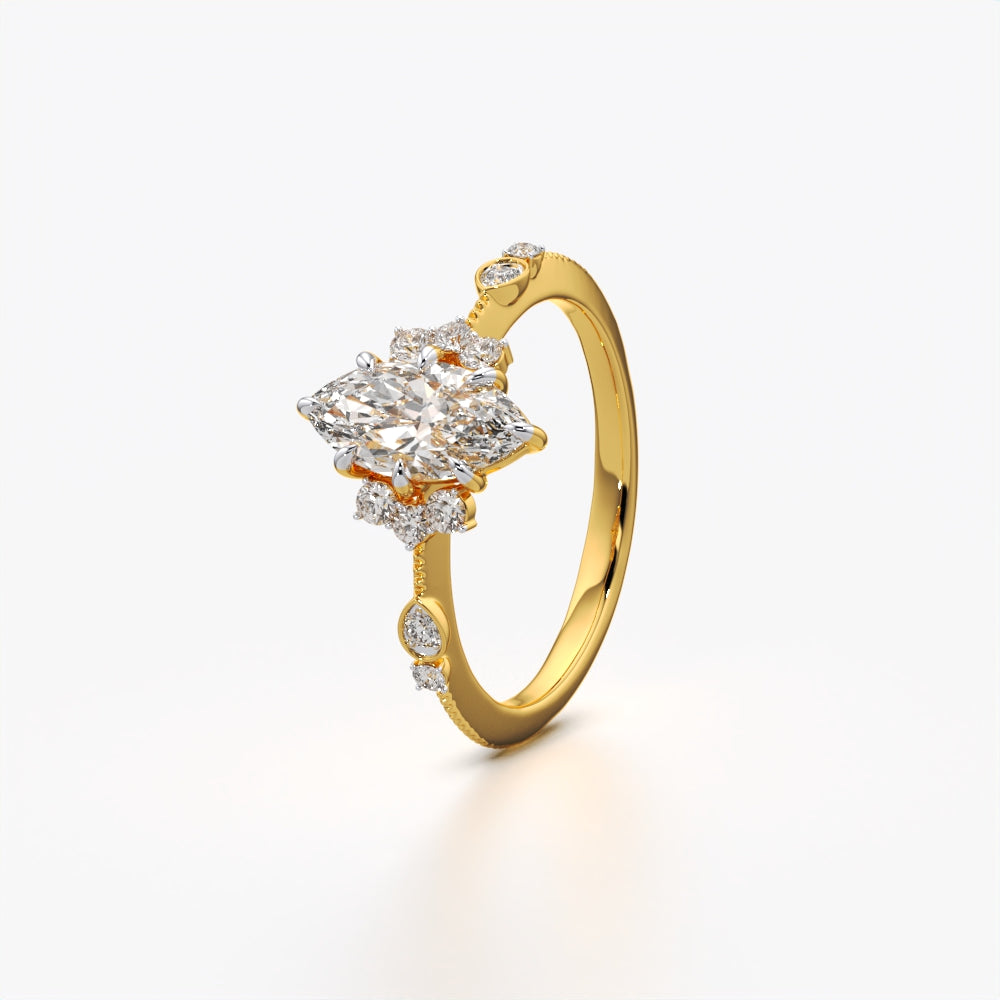
Marquise Celestial Cluster Ring
Shop Now
Materials matter more than the size of the stone
In India, demi-fine jewellery has become the default for daily wear, and for good reason. It sits in the sensible middle between costume pieces that fade within a month and solid gold that feels like overkill for an ordinary Tuesday. Demi-fine usually means a real metal base finished with real gold, priced within reach.
But "demi-fine" covers a wide range of quality, and the base metal is where the real difference lives. Many demi-fine pieces use a brass base with gold plating. That is fine while the plating is intact, but once the gold layer wears through, the brass underneath can start to react with sensitive skin. A base of nickel-free 925 sterling silver is a meaningfully safer bet for continuous wear, because even as the plating ages, the metal against your skin remains skin-friendly silver rather than brass.
The finish matters too. Gold vermeil is a specific standard: a thick layer of real gold, at least 2.5 microns, bonded over sterling silver. That thickness is what separates it from cheap flash-plating that dulls after a few weeks. It gives you the warmth and richness of gold, the strength of silver underneath, and a price that does not require a loan.
This is the practical case for choosing a solitaire in a proper demi-fine specification rather than the cheapest option you can find. As one example, KYMEE's solitaire collection is built in 18K gold over a nickel-free 925 sterling silver base, finished to be anti-tarnish and hypoallergenic, which is exactly the combination that holds up to daily Indian wear. For a solitaire you plan to wear constantly, a low-profile option like a bezel-set design tends to be the most comfortable and the most forgiving.
A note on stones, told honestly
Here is where a lot of jewellery marketing gets slippery, so let us be clear. The sparkling stones in most affordable rings are not diamonds. They are diamond simulants, and the two most common ones behave quite differently. Knowing the difference helps you buy well.
Cubic zirconia (CZ) is made from zirconium dioxide. It gives a bright, clear, diamond-like sparkle at a very low cost, which is why it is the go-to for larger centre stones where you want visible size and shine without a fine-jewellery price. It sits around 8 to 8.5 on the Mohs hardness scale, so it is reasonably tough but can pick up fine scratches and lose some brilliance over years of hard daily wear. For a big, glamorous statement stone that you wear occasionally, CZ is an excellent, sensible choice.
Moissanite is made from silicon carbide and is genuinely hard, rated 9.5 on the Mohs scale, which makes it very scratch-resistant and well suited to everyday wear. It also throws more fire, meaning more of those colourful flashes. It costs more than CZ, and very large Moissanite stones can occasionally show a faint tint, which is why it shines especially as a small, brilliant accent that has to survive constant contact.
This is why a thoughtful demi-fine brand will often use each stone for what it does best: Moissanite in small, accent form where durability and sparkle matter most for daily wear, and CZ for larger centre stones where size and shine at an accessible price are the priority. The important thing, from a trust point of view, is that neither is sold to you as a diamond. They are beautiful simulants, and a brand that labels them accurately is one worth trusting.
For a genuinely bold, one-of-a-kind statement ring, this is also where a custom route earns its place. If you want a large centre stone or a design nobody else will have, KYMEE's customised service lets you choose your metal, your stone (cubic zirconia, Moissanite, or lab-grown), and your budget, and then comes back with ideas and a quote within a day. If you want more presence than a plain solitaire but are not ready for a full cocktail ring, halo styles and coloured-stone rings sit comfortably in between.
How to style each one

Styling a solitaire: The solitaire's whole talent is flexibility. Wear it alone for a clean, quiet look, or stack it with a couple of dainty bands for a soft, layered effect. With ethnic wear, a gold-toned solitaire sits happily alongside traditional pieces without competing. For work, it is effortlessly appropriate. The one rule: if you are wearing a bolder ring elsewhere on your hand, let the solitaire play a supporting role.
Styling a statement ring: Let it lead. Keep other hand jewellery minimal, and choose an outfit that gives the ring room to be seen, whether that is the rich texture of a festive drape or the neutral backdrop of a sleek Western outfit. Traditionally, it goes on the right hand, especially if you wear an engagement or wedding ring on the left, so each piece reads clearly on its own. If you must stack, keep the companions delicate, or move them to the opposite hand entirely.
You do not have to choose forever
Here is the part the "which is better" debate keeps missing. For most women, the honest answer over time is both, and demi-fine pricing is precisely what makes that realistic. Indian buyers are increasingly splitting their thinking: a timeless anchor piece for everyday, plus a more expressive, trend-aware piece for occasions. The everyday solitaire earns its keep through sheer frequency of wear. The statement ring earns its keep by making specific evenings feel special.
At solid-gold prices, owning one of each would be a stretch for most people. At demi-fine prices, it is an ordinary, sensible way to build a collection. That is the quiet revolution in how jewellery wardrobes are being assembled right now.
If you are building this way, it is worth choosing a brand whose after-sales promises reduce the risk. Signals like a lifetime plating warranty and a buyback programme matter more on demi-fine than on fine jewellery, because they tell you the brand expects its pieces to be worn, aged, refreshed, and kept, not quietly replaced. BIS registration on the sterling silver base adds another layer of reassurance on the material itself.
-
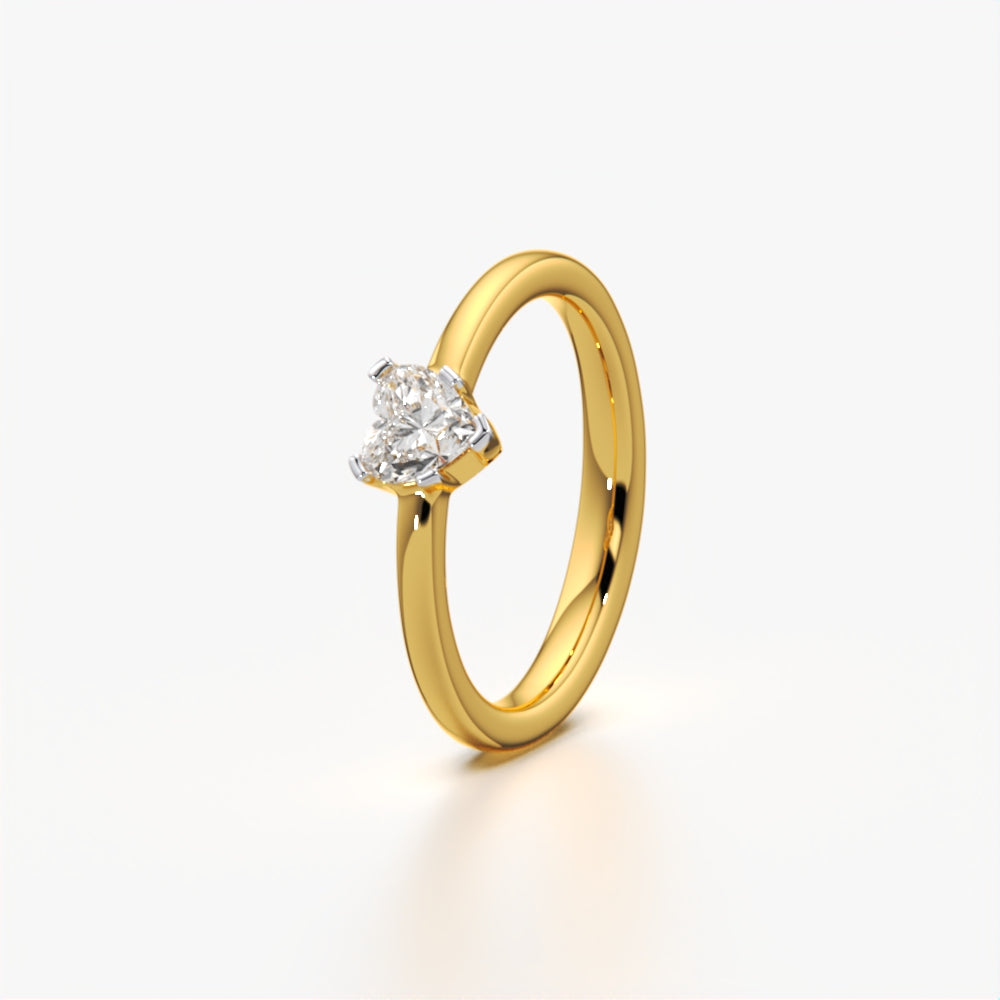
Heart Shaped Solitaire Ring
Shop Now -
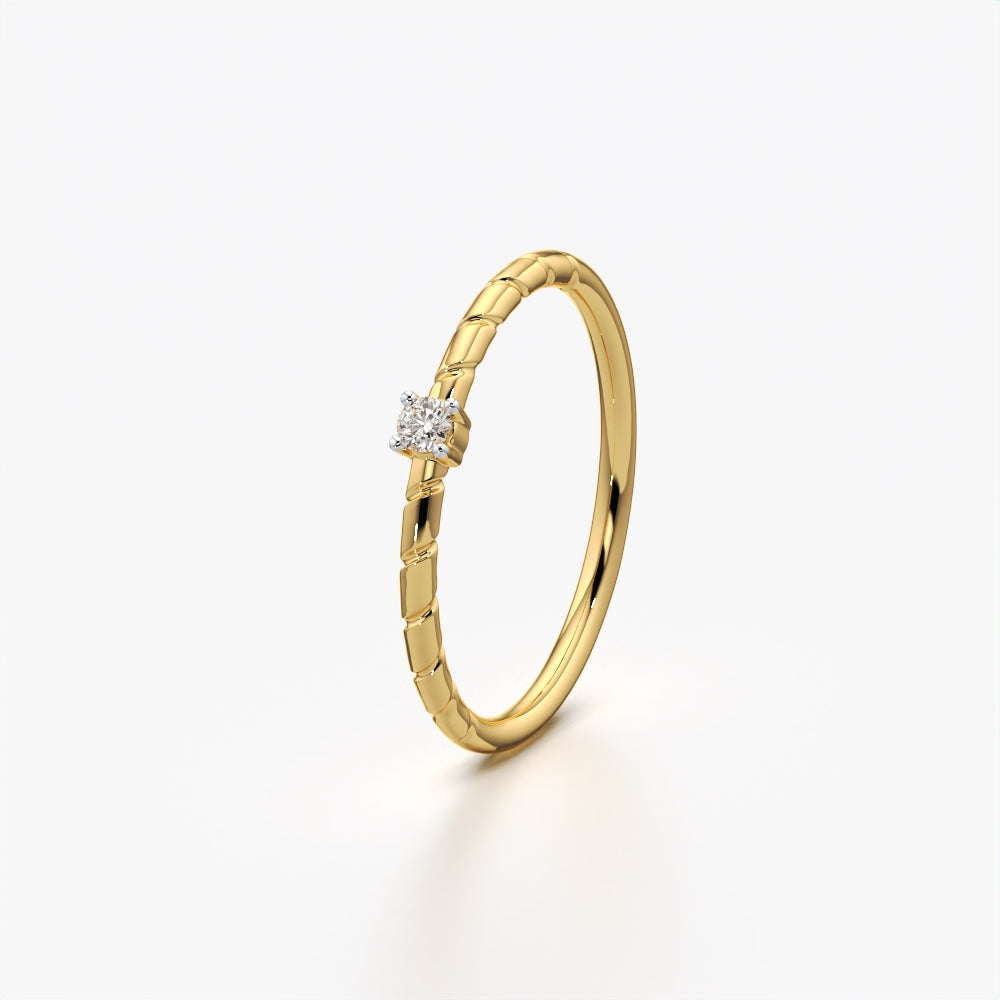
Tiny Bamboo Round Solitaire Ring
Shop Now -

Oval Cluster Statement Ring
Shop Now -
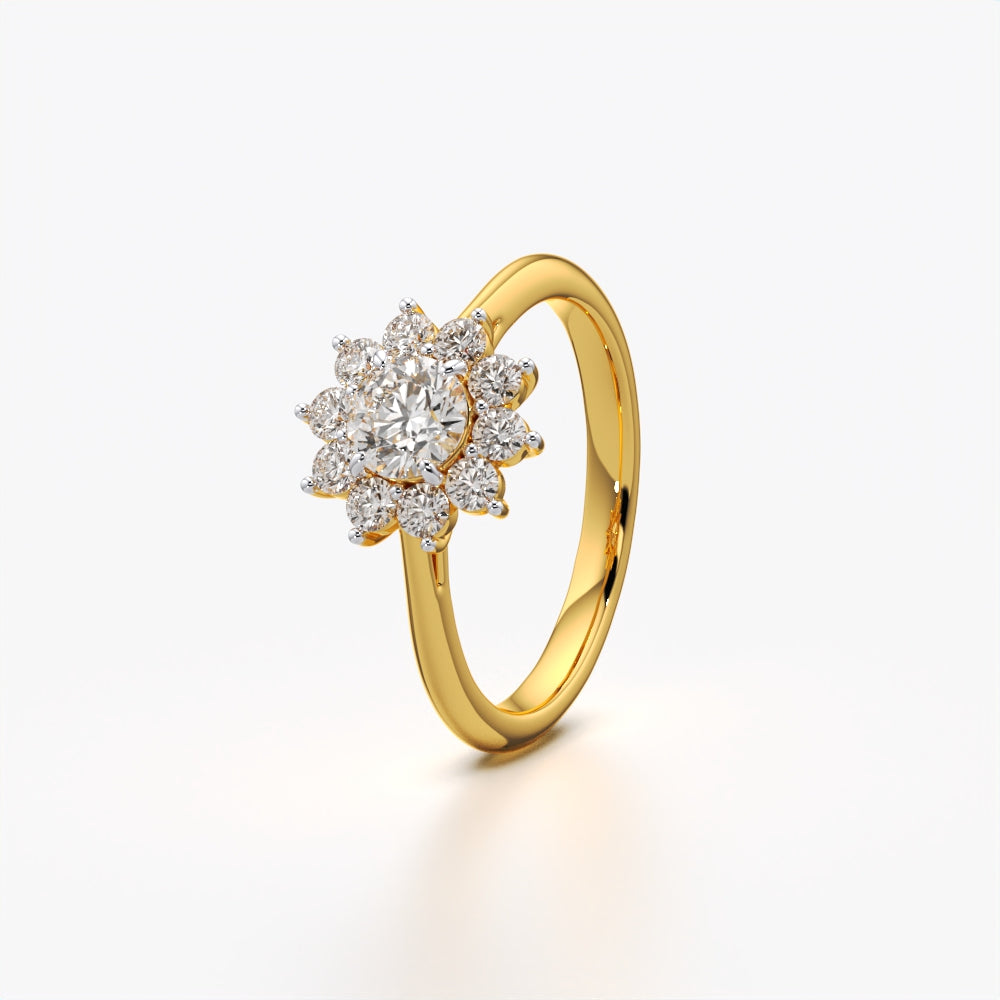
Blooming Halo Flower Ring
Shop Now
Caring for your rings so they last
Gold vermeil rewards a little care, especially in Indian conditions. Take rings off before swimming, heavy cleaning, or workouts, and put them on after your perfume, lotion, and hairspray rather than before, since those are what dull the finish and the stone over time. Clean gently with warm water, a drop of mild soap, and a soft brush, then pat dry with a lint-free cloth. Store each piece separately in a soft pouch so rings do not scratch each other in a shared box. If your solitaire has prongs, glance at them every few months to make sure the stone still sits securely. None of this is demanding, and it is the difference between a ring that looks tired in a year and one that still sparkles in five.
FAQs
Is a statement ring the same as a cocktail ring?
Not quite. "Statement ring" is the broad category for any bold, eye-catching ring, including wide bands and signets. A cocktail ring is a specific type of statement ring built around a large centre stone or dramatic cluster, with roots in 1920s party jewellery. Every cocktail ring is a statement ring, but not every statement ring is a cocktail ring.
Can you wear a solitaire ring every day?
Yes, and it is one of the best everyday rings you can own. Choose a low-profile setting such as a bezel for maximum comfort and durability, and a hard-wearing material like 18K gold over sterling silver. With basic care, it handles daily wear easily.
Is a solitaire only for engagements?
No. The solitaire is iconic as an engagement ring, but it is equally popular as a self-purchase, a birthday or anniversary gift, and a simple everyday accessory. Many women buy one for themselves precisely because it is versatile rather than occasion-specific.
Which finger should you wear a statement ring on?
There are no fixed rules, but the right hand, on the index or ring finger, is the traditional and most practical choice. Wearing it on the right keeps it visually separate from an engagement or wedding ring on the left, so both pieces read clearly.
Are cubic zirconia and Moissanite the same thing?
No. Both are diamond simulants, but they are different materials. Cubic zirconia is softer and more budget-friendly, ideal for larger occasional-wear stones. Moissanite is harder, more brilliant, and better suited to everyday wear, which is why it works beautifully as a small daily accent. Neither is a diamond, and a trustworthy brand will always describe them accurately.
Solitaire or statement ring: which should you buy first?
If you do not yet have a reliable everyday ring, buy the solitaire first, because you will wear it far more often. If your basics are covered and your calendar is full of festive and party occasions, a statement ring is the most exciting first buy. Ideally, over time, you own one of each.
Is gold vermeil good enough for daily wear in India?
Yes, provided it is genuine vermeil, meaning a thick gold layer of at least 2.5 microns over 925 sterling silver, and ideally a nickel-free base for sensitive skin. That specification stands up to humidity, sweat, and continuous wear far better than thin gold plating over brass.