


Stylish Bracelet Designs for Women and How to Pick One Your Wrist Will Actually Keep

The most stylish bracelet designs in 2026 are plain gold chains (paperclip and rope), the tennis bracelet, the single-stone chain, evil eye bracelets, multi-charm bracelets, open cuffs, interlocking bracelets, station bracelets, double-chain bracelets, name bracelets, mangalsutra bracelets, and coloured-stone motif bracelets. The strongest moods this year are bolder gold, sculptural cuffs, a few meaningful charms, and a return of colour, especially blue.
That's the trend list. But in India, the design that suits you depends on more than the trend.
Most Indian wrists are already busy. There's a watch or a smartwatch, a red kalava from the last puja, a kada, glass bangles, or a newlywed's chooda. The same wrist gets washed before and after every meal, rests on a laptop edge for eight hours, and brushes past a dupatta all day. A bracelet has to share that space and survive that routine.
So this guide rates each of the 12 designs on style and on three everyday tests. You'll also find how to size each design, how heavy is comfortable, what the stones mean for daily wear, what bracelets cost in solid gold, vermeil, and plating today, and which of KYMEE's 18K gold vermeil bracelets fit each style.
-
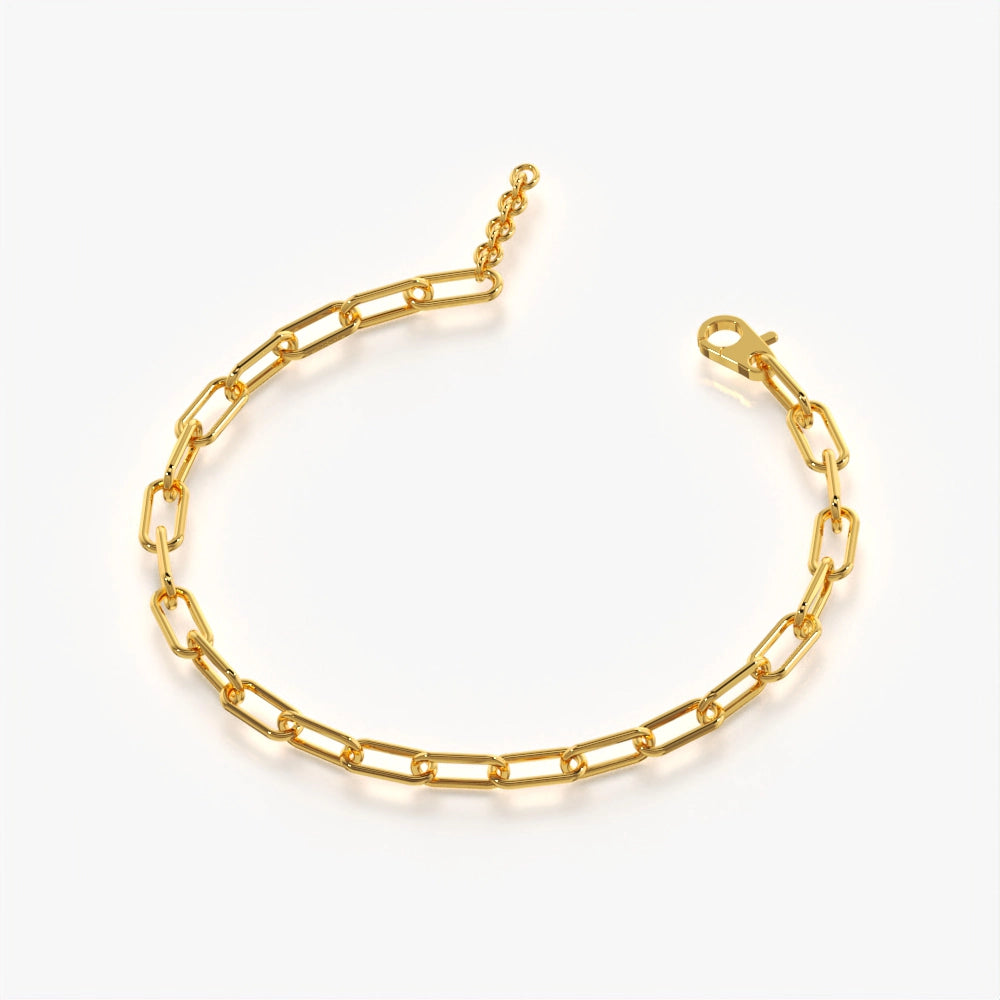
Classic Paperclip Link Bracelet
Shop Now -

Twisted Rope Chain Bracelet
Shop Now -

Graduated Round Tennis Bracelet
Shop Now -

Twin Hearts Linked Bracelet
Shop Now
The 12 designs at a glance
| # | Design | Best for | Snag risk (dupatta, knits) | Desk comfort | Care effort |
| 1 | Plain gold chain (paperclip, rope) | First bracelet, office, stack base | Low | High | Low |
| 2 | Tennis bracelet | Office to wedding in one piece | Medium to high | Medium | Medium |
| 3 | Single-stone chain | Quiet daily sparkle | Low | High | Low |
| 4 | Evil eye bracelet | Meaningful gifting, daily wear | Low (pavé) to medium (drops) | High | Low to medium |
| 5 | Multi-charm bracelet | Weekends, college, symbolic gifts | Medium | Low | Medium |
| 6 | Open cuff or bypass bangle | Festive wear, sarees, statement | Medium | Low | Low |
| 7 | Interlocking bracelet | Gifts for sisters, friends, partners | Low | High | Low |
| 8 | Station bracelet | Daily wear that never shows its back | Low | High | Low |
| 9 | Double-chain bracelet | The stacked look in one piece | Low to medium | High | Low |
| 10 | Personalised name bracelet | Gifts with a name or date | Low | High | Low |
| 11 | Mangalsutra bracelet | Married women, workdays | Low | High | Low |
| 12 | Coloured-stone and nature motif | Festive colour, Navratri, fun | Medium | Medium | Medium |
Ratings are our assessment of how each design is built.
Three tests every bracelet has to pass in your day
Before you fall for a design, put it through these three tests. They take a minute, and they'll tell you whether you'll wear the bracelet every day or leave it in a drawer.
1. The dupatta test
Run the bracelet slowly across a chiffon dupatta, a georgette saree, or a knit sweater. If it catches once, it will catch every day.
What catches most: prong settings (the small metal claws that hold a stone), the open ends of a cuff, and pointed motifs like stars and marquise tips. What catches least: plain chains, pavé (many tiny stones set almost flush), and bezel settings (a smooth metal rim around the stone).
2. The desk test
Rest your forearm on a table as if you're typing. Does the bracelet knock, click, or dig in?
Rigid cuffs tap the laptop edge with every keystroke, a complaint that comes up again and again on jewellery forums from people who type all day. Dangling charms click. Flat chains stay quiet. If you use a mouse, that wrist rests on the desk all day. Wear flat pieces there, and move sparkle and charms to the other hand.
3. The wash test
Count how many times a day this wrist gets wet: hand washes, sanitiser, cooking, washing up. Many Indians eat with their right hand and wash before and after every meal, so the right wrist often gets wet far more than the left.
That matters. KYMEE's own jewellery care guide notes that hand sanitiser, soap and harsh cleaners dull a jewellery surface, and recommends taking pieces off before showering. So ask two questions: can you take this bracelet off easily with one hand, and would you wear it on the wrist that gets washed less?
-
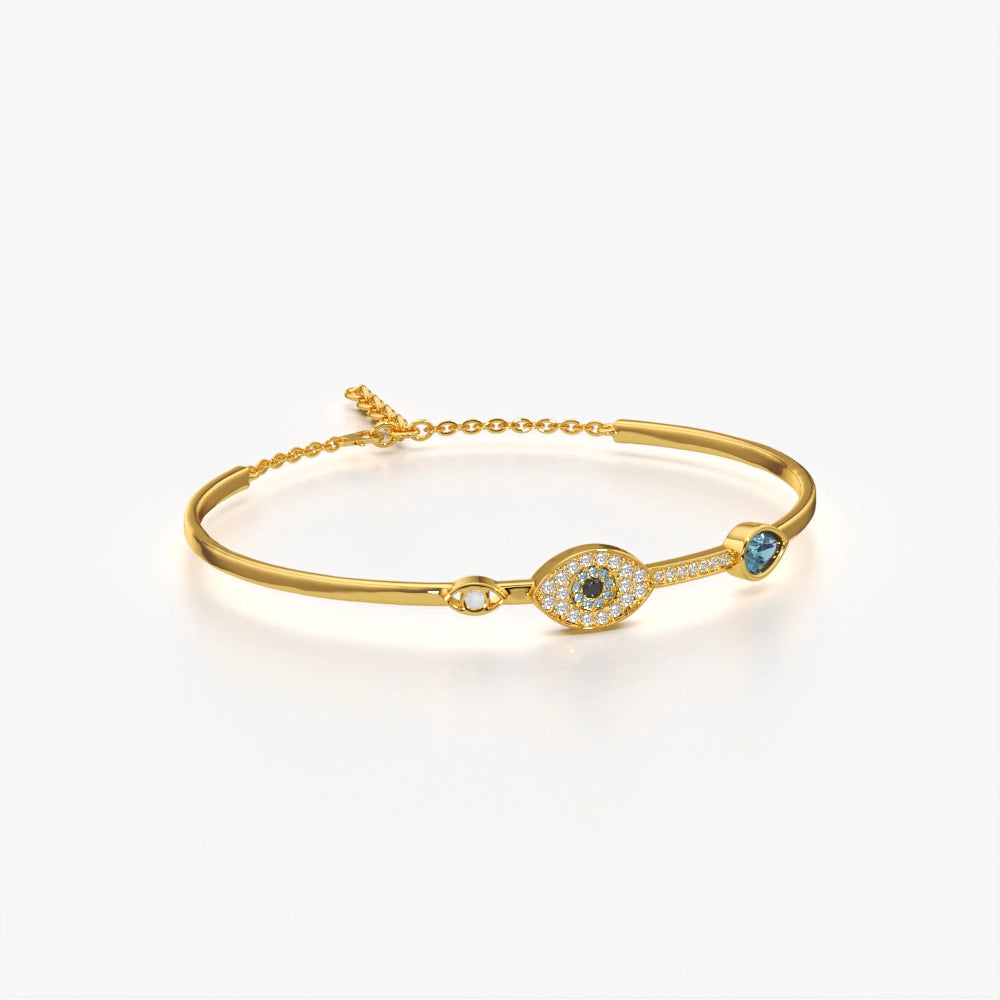
Evil Eye Protection Bangle Bracelet
Shop Now -
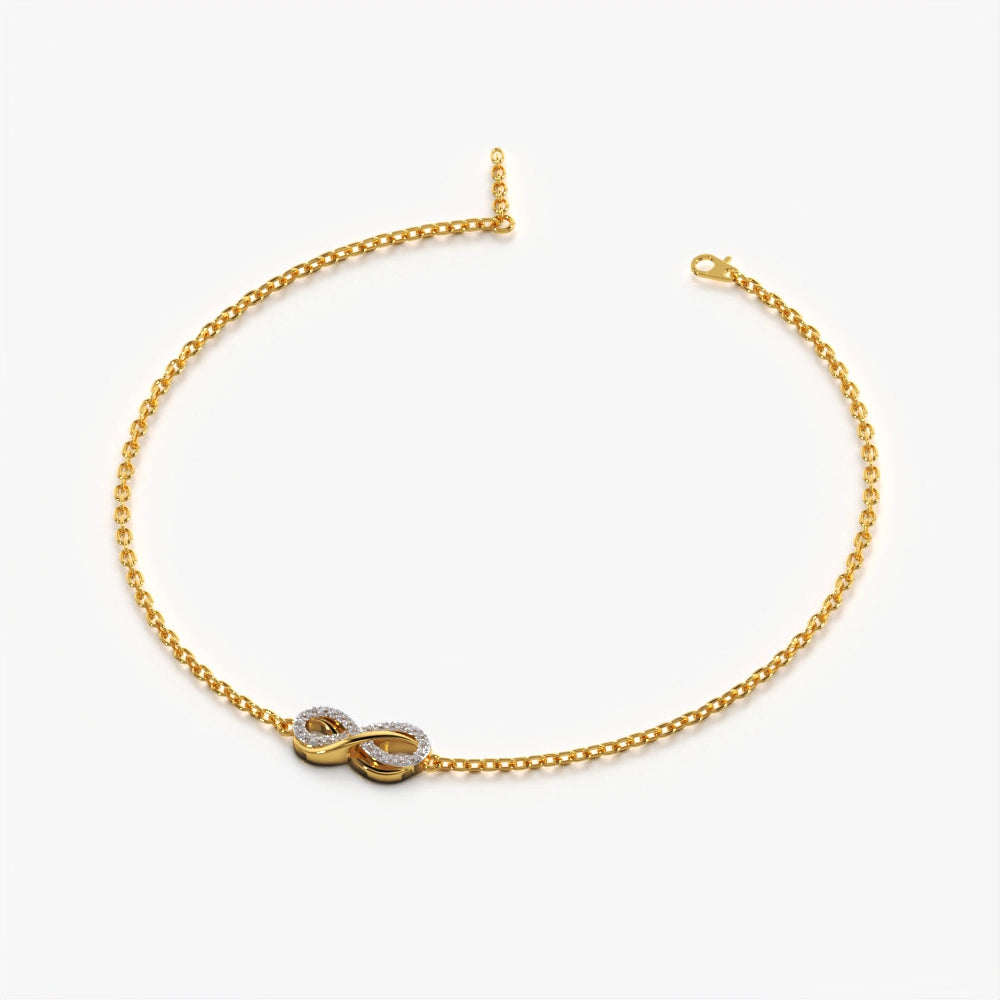
Full Pavé Twisted Infinity Chain Bracelet
Shop Now -
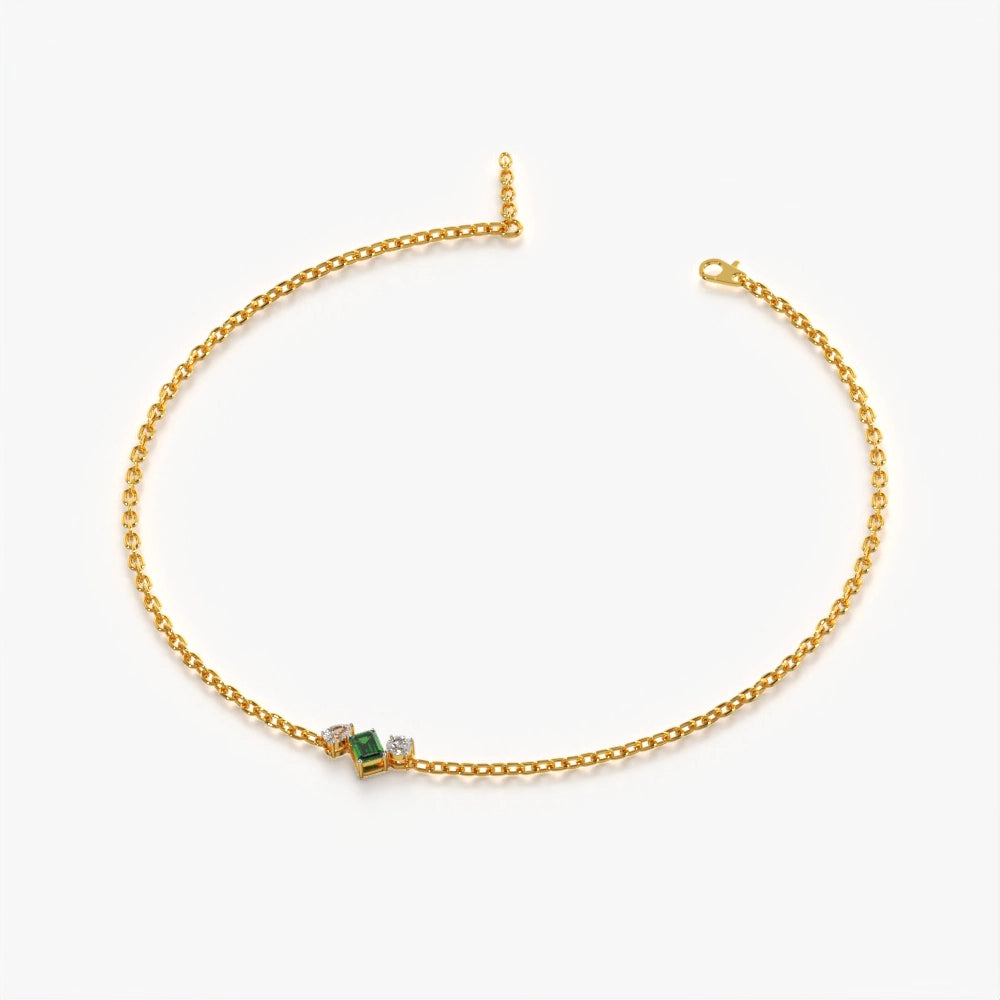
Mixed Cut Green Stone Cluster Bracelet
Shop Now -
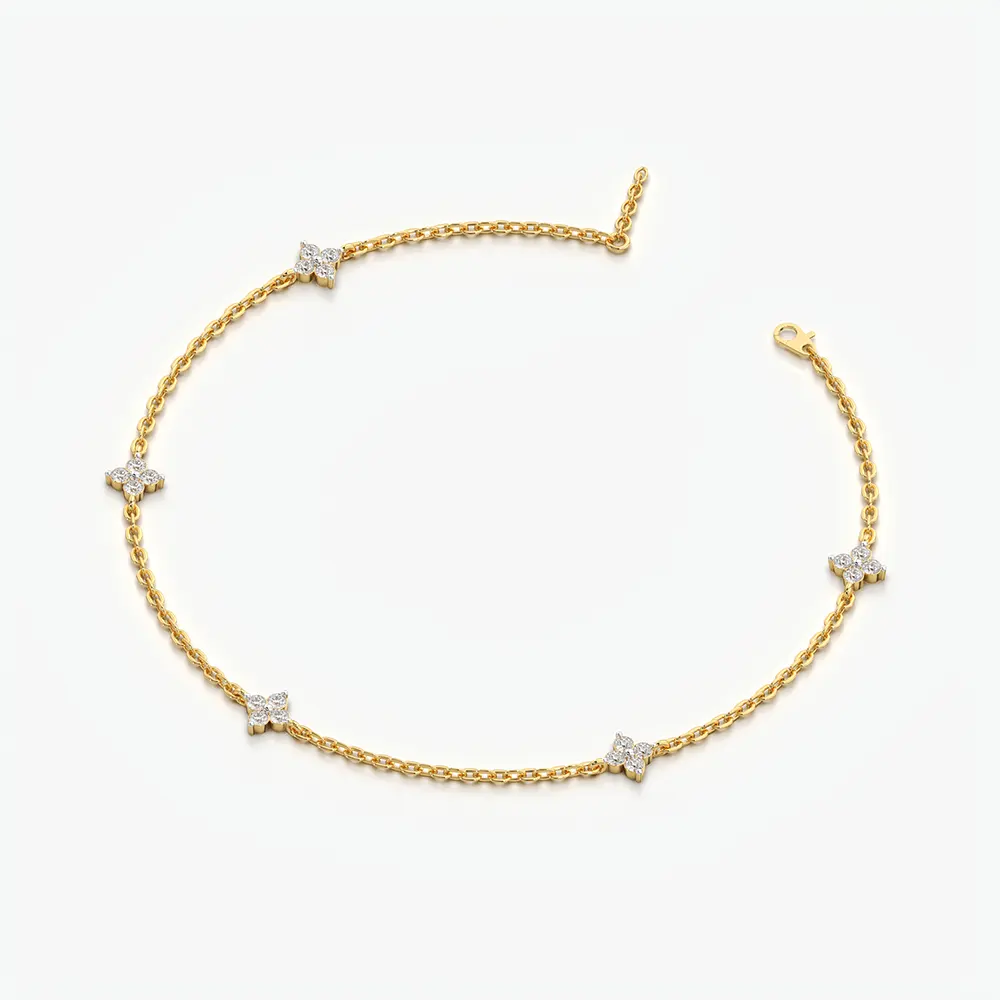
Four Point Star Station Bracelet
Shop Now
Start with what's already on your wrist
Most bracelet guides assume a bare wrist. In India, that's rare. Choose a design that gets along with what you already wear.
| Already on your wrist | Designs that work beside it | Keep away from it | Why |
| An analogue watch | A plain paperclip or rope chain, a slim station bracelet | Pavé, tennis and charm bracelets pressed against the watch | CZ and moissanite are harder than the mineral glass on many watches and can scratch it. Steel watch links also wear gold down faster |
| A smartwatch or fitness band | Anything, on the other wrist | Stacking beside it | The case is chunky, the sensors need skin contact, and the strap rubs |
| A kalava or mauli thread | Fine chains, single-stone and interlocking bracelets | Multi-charm bracelets | Charms and prongs pull at the thread's fibres |
| A steel or iron kada | Anything, on the other wrist | Gold vermeil touching the kada | Steel is much harder than gold and will scuff it with every movement |
| Glass bangles, a chooda or shakha-pola | One fine chain, or bracelets on the other wrist | Tennis lines and pavé between bangles | Bangles clink against stones all day |
| Nothing at all | Start with a plain chain or a station bracelet, then add | Nothing | You have a free hand. Build from a base piece |
A quick note on the kalava: it's traditionally tied on the right wrist for men and unmarried women, and on the left for married women. If yours is on your bracelet wrist, a fine flat chain sits beside it neatly.
Not sure which wrist to use at all? Our guide on which hand to wear a bracelet on covers the beliefs and the practical side.
The 12 stylish bracelet designs
1. Plain gold chains: paperclip and rope

A chain bracelet with no stones at all. Paperclip chains have long, flat, oval links. Rope chains twist strands into a spiral that catches the light along its length.
Why it's in now: plain gold is the base of every good wrist stack, and 2026 wants bolder gold. Pinterest's trend forecast flagged a return to '80s-style chunky gold, with searches for "gold cuff" up 50%. A paperclip or rope chain gives you that gold texture without the weight or cost of a cuff.
On the three tests: the best of the twelve. Nothing to snag, a flat paperclip lies quietly on a desk, and there are no stones to cloud up with soap. It's also the safest design to wear right beside a watch.
- Wear it if: it's your first bracelet, you want something for work, or you need a base for a stack
- Skip it if: you want sparkle or a symbol
KYMEE picks
- Classic Paperclip Link Bracelet: polished elongated oval links with no stones, a lobster clasp, and an extender chain.
- Twisted Rope Chain Bracelet: a classic spiral rope weave with a spring-ring clasp and an extender chain. It feels more substantial on the wrist and works as well with a linen set as with a hoodie.
- Want a little sparkle on the same chain? The Solitaire Paperclip Link Bracelet adds three round cubic zirconia (CZ) stones in six-prong mounts across the front, with an extender chain.
More plain and linked styles are in chain link bracelets.
2. The tennis bracelet

A continuous, flexible line of matching stones. The story usually told is that tennis player Chris Evert paused a match at the 1987 US Open to look for her diamond line bracelet after its clasp gave way, and the name stuck.
Why it's in now: it never really left. What has changed is how it's worn. It's now stacked with a watch or a plain chain on an ordinary workday, not saved for weddings.
On the three tests: mixed. A tennis line is flat and flexible, so it's comfortable at a desk. But every stone sits in its own prongs, all the way around the wrist, which makes it the design most likely to catch on a chiffon dupatta, a georgette saree, or a knit sweater.
The lesson hidden in the name: check the clasp. It's the part that failed in the original story. A box clasp that clicks shut firmly is the classic choice.
Fit it snug. A loose tennis bracelet spins and hangs stones-down. See the sizing table further down.
- Wear it if: you want one piece that works at the office and at a sangeet
- Skip it if: you wear delicate dupattas or knits every day, or want a bracelet you never have to think about
KYMEE picks
All three of KYMEE's tennis bracelets use cubic zirconia (CZ). KYMEE sets moissanite only as tiny pavé accents, so every larger stone in its range is CZ.
- Mini Round Tennis Bracelet: a uniform line of prong-set mini round CZ, with a choice of 3 mm or 4 mm stones, and a box clasp. Listed at roughly 8.9 g to 13.4 g depending on stone size.
- Classic Round Tennis Bracelet: round CZ in four-prong settings in a single even row.
- Graduated Round Tennis Bracelet: alternating large and small round CZ on an adjustable fine chain with a lobster clasp. The lightest of the three, and the easiest to fit because the chain adjusts.
All three are in tennis bracelets.
3. The single-stone chain

One stone on a fine chain. It's the quietest way to wear sparkle, and the bracelet you forget you have on.
Why it's in now: it's the "one good piece" answer for conservative offices, and the easiest filler between a watch and a bolder bracelet.
On the three tests: only one set of prongs to snag, almost nothing to knock on a desk, and easy to wipe clean. One honest caveat: because the stone sits in one spot, it will slide around to the underside of your wrist during the day. That happens with every single-motif bracelet. A closer fit keeps it on top for longer.
- Wear it if: you want your first sparkle bracelet, your workplace is formal, or you're gifting without knowing her style
- Skip it if: you want a piece people notice from across a room
KYMEE picks
- Marquise Solitaire Bracelet: a single marquise-cut CZ set sideways in a two-prong setting on a fine cable chain, with a lobster clasp. The lightest bracelet in KYMEE's range. With two prongs holding a pointed stone, check them every few months.
- Dainty Solitaire Bracelet: a single round-cut CZ in a four-prong setting on a fine cable chain, with a lobster clasp.
- Emerald Cut Solitaire Bracelet: the same idea with a rectangular step-cut stone for a more geometric look.
4. The evil eye bracelet

An eye motif worn to ward off nazar, the envious gaze. India has long had its own versions: the black thread tied on a baby's wrist, the kaala tika behind the ear, the nazar battu hung over a new shop's door. The evil eye bracelet is the modern, wearable cousin, and one of the most gifted bracelet designs in India.
Why it's in now: symbol jewellery has had a long run, and the evil eye crosses generations. It's as likely to be bought by a mother for a daughter moving to a new city as by a college student for herself.
On the three tests: it depends on the design. A small pavé eye is flat and snag-free. Enamel eyes are coloured glass fused to metal, softer than any stone, and can chip if they hit a desk edge hard. Keep enamel pieces on the wrist that doesn't use the mouse.
Many people wear an evil eye on the left wrist, following the belief that the left side receives energy. For the background, read our guide to the evil eye's meaning and history.
KYMEE picks
- Evil Eye Pavé Bracelet: an almond-shaped eye traced in moissanite pavé with a polished gold centre, on a fine cable chain with a lobster clasp. Small enough for everyday wear.
- Statement Evil Eye Double Chain Bracelet: a blue enamel evil eye in a bold gold frame, with two short cascades of small marquise stones and gold teardrops. Moissanite accents. Made for festive nights rather than typing.
- Also in the range: the Marquise Pavé Blue Evil Eye Bracelet, the Evil Eye Charm Bracelet, and the Evil Eye Protection Bangle in the cuff section below.
5. The multi-charm bracelet

Several small charms hanging from one chain, each one a symbol: a moon, a heart, a clover, an eye.
Why it's in now: charms are back, but edited. The 2026 look is a few charms that mean something to you, not a jangling souvenir collection.
On the three tests: the most demanding design here. Charms click on a laptop and catch on sleeves and handbag straps, and the gaps between them trap soap and lotion. Wear it on your non-mouse wrist and take it off before cooking.
Fit: give it more room than a plain chain. Charms hang inside the bracelet and take up space, so a tight charm bracelet pinches.
- Wear it if: you like jewellery that tells a story, or you're buying a gift and can't pick one symbol
- Skip it if: you type all day with that wrist, or like a quiet wrist
KYMEE pick
- Pavé Multi-Charm Paperclip Bracelet: moissanite pavé moon, heart, evil eye and clover charms swinging from a bold paperclip chain, with a lobster clasp. Four good-luck symbols on one chain.
Browse more in charm bracelets. If you'd like to add your own charms to a chain, see how to attach charms to a bracelet.
6. Open cuffs and bypass bangles

A rigid band that doesn't close all the way round. A cuff has a gap at the back. A bypass bangle has two ends that cross past each other, often with a stone on each end. Both slide on from the side of the wrist, so there's no clasp to wrestle with, which makes them the easiest bracelets to put on by yourself.
Why it's in now: sculptural gold is one of 2026's strongest wrist trends, and that 50% jump in "gold cuff" searches on Pinterest says so. In Indian wardrobes, a cuff also sits naturally beside bangles and looks right with a saree or a kurta in a way a fine chain sometimes doesn't.
On the three tests: easy to take off for washing, and no clasp to fail. But a cuff is rigid, so it knocks a laptop edge with every keystroke, and its open ends can catch fine fabric.
Fit: open cuffs are sized by your wrist, not your hand. To adjust one, press both sides gently and evenly. Don't bend it open and shut at the same spot again and again, because metal weakens where it's flexed repeatedly.
- Wear it if: you want one bold piece for the festive season, or you already love bangles
- Skip it if: you work at a laptop all day and won't take it off
KYMEE picks
- Toi et Moi Heart Open Cuff Bangle: a sleek bypass cuff with a red heart-cut CZ on one end and a clear heart-cut CZ on the other. Toi et moi is French for "you and me", which makes it a natural couple's gift.
- Geometric Kite Cluster Open Bangle: tilted kite-shaped tiles, some set with moissanite pavé and some left polished, in a sculptural bypass cuff. The most architectural bracelet in the range.
- Evil Eye Protection Bangle Bracelet: a polished half-cuff with a marquise-shaped pavé evil eye and blue iris, a smaller eye and a round blue stone, finished with a fine chain extender at the back. CZ and moissanite. Half cuff, half chain, so it adjusts more than a fully rigid cuff.
See all bangle bracelets.
7. Interlocking bracelets

Two shapes linked at the centre: two circles, two hearts, or an infinity loop and a heart. The meaning is built into the shape. Two people, joined.
Why it's in now: gifting. It's the design people choose for sisters, best friends, and partners, because it says "us" without spelling out a name.
On the three tests: excellent. Small, flat, and centred, with very little to catch or knock.
- Wear it if: you want a meaningful piece that still looks minimal
- Skip it if: symbols aren't your thing
KYMEE picks
- Interlocked Circles Bracelet: one circle in moissanite pavé looped through one polished gold circle, on a fine cable chain with a lobster clasp.
- Interlocked Twin Heart Tulip Bracelet: a polished open heart linked with a moissanite pavé heart, framed by small tulip-bud motifs, with an adjustable extender.
- Also in the range: the Twin Hearts Linked Bracelet, The Interlinked Infinity & Heart Bracelet, and the Full Pavé Twisted Infinity Chain Bracelet.
Curious about the loop? Read the infinity symbol's meaning and origin.
8. Station bracelets

Small motifs set at even gaps, called "stations", along a fine chain.
The advantage almost nobody mentions: a single-motif bracelet has a front, and it spends much of the day rotated to the underside of your wrist. A station bracelet has no front. Whichever way it turns, there's a star or a flower on top. If "my charm keeps sliding round" is your complaint, this is the fix.
On the three tests: small, spaced-out motifs are low on snags and quiet at a desk. Pointed shapes like stars catch a little more than rounded ones.
- Wear it if: you want daily sparkle that always looks right
- Skip it if: you want one focal point
KYMEE picks
- Four Point Star Station Bracelet: several four-point stars set with mini round moissanite along a whisper-thin cable chain, with a free-hanging extender. Read one way, each motif is a star. Read another way, it's a small cross.
- Marquise Trio Paperclip Chain Bracelet: two moissanite pavé marquise stations and a bezel-set round centre stone on a bold paperclip chain, with a lobster clasp. The bezel setting is one of the least snag-prone ways to hold a stone.
- Also in the range: the Tiny Flower Cluster Station Bracelet, Open Oval Link Station Bracelet and Golden Hour Paperclip Link Station Bracelet.
9. Double-chain bracelets

Two fine chains running side by side, joined by one centre motif. You get the layered look in a single piece, with one clasp and nothing to tangle.
Why it's in now: most people still stack their bracelets, but separate fine chains knot into each other. A double chain is the shortcut.
On the three tests: good. Two fine chains can catch a little more than one, but the centre motif is flat and quiet on a desk.
- Wear it if: you love a stack but hate untangling one
- Skip it if: you prefer a single clean line
KYMEE picks
- Double Chain Pave Circle Bracelet: two parallel cable chains anchored by a round disc fully set with moissanite pavé and framed by two U-shaped gold loops, with an adjustable extender.
- Double Chain Pave Bar Bracelet: the same idea with a bar at the centre.
For ideas on combining pieces, read how to stack bracelets.
10. The personalised name bracelet

A polished bar engraved with a name, initials, a date or a word.
Why it's in now: personalisation has become the default for gifts that need to feel thought through.
On the three tests: a flat bar is comfortable and snag-free. Keep the text short so it stays readable on a small bar, and check the spelling twice before you order.
- Wear it if: you want a gift that can only belong to one person
- Skip it if: you need it tomorrow, since personalised pieces take longer to make
KYMEE pick
- Personalised Name Bar Bracelet: a polished bar engraved with the name you choose, with a tiny puffed heart charm, on a fine cable chain with a lobster clasp. No stones. Personalised items can take a little longer to dispatch, so order early for festival gifts.
See name bracelets and all personalised jewellery.
11. The mangalsutra bracelet

Black beads and a small gold motif, worn on the wrist instead of the neck. Many working women wear one on weekdays because a neck mangalsutra clashes with office necklines, feels heavy in the heat, or tangles with other necklaces.
Worth saying plainly: whether a bracelet version can stand in for the neck mangalsutra is a personal and family decision. Many women wear it alongside a traditional one, and keep the neck piece for pujas and family occasions.
On the three tests: black beads and a small flat motif are about as low-risk as bracelets get.
- Wear it if: you want your mangalsutra with you on workdays without it competing with your necklaces
- Skip it if: your family expects the traditional neck piece every day
KYMEE pick
- Tilted Square Black Bead Mangalsutra Bracelet: a petite square set with mini round moissanite, tilted on its point, with three black beads on each side, on a fine cable chain with a lobster clasp and adjustable extender.
Read about types of mangalsutra for the formats that don't sit on the neck, or browse the full mangalsutra collection.
12. Coloured-stone and nature-motif bracelets

Coloured stones (blue, green, red, purple) and nature motifs (clovers, butterflies, flowers, dolphins).
Why it's in now: after years of all-white sparkle, colour is back. Pinterest's forecast is named "Cool Blue", with searches for "icy blue" up 50%, and "Wilderkind", a pull towards nature and creature motifs, with searches for bug jewellery up 60%. In India, colour also has an obvious job: matching festive outfits and Navratri's colour of the day, in a way all-white sparkle can't.
On the three tests: larger coloured stones sit in prongs, so they catch more than pavé. Flat motifs like a pavé butterfly are easier to live with.
- Wear it if: your wardrobe is colourful, or you want a festive piece that isn't just sparkle
- Skip it if: you want one bracelet that matches everything
KYMEE picks
- Blue Four-Leaf Clover Bracelet: four heart-cut blue CZ petals around a centre, with white CZ bezel accents on a fine cable chain and a lobster clasp.
- Mixed Cut Green Stone Cluster Bracelet: a green rectangular stone, a pear-cut stone, and a round stone clustered together.
- Wing Butterfly Bracelet: one wing in moissanite pavé and one in polished gold filigree, on a fine cable chain with a lobster clasp. A nature motif without the colour.
- Floral Bloom Statement Bracelet: mother-of-pearl petals arranged in a flower and circled by a halo of marquise-cut CZ. Made for a pastel lehenga.
- Also in the range: the Twin Hearts Coloured Stone Bracelet, Purple Butterfly Bracelet, Mid-Leap Dolphin Bracelet and Pave Swan Charm Bracelet.
How to get the size right
A bracelet that's the wrong size is the most common reason one stops being worn. Measuring takes two minutes.
- Wrap a thin strip of paper or thread around your wrist bone, where you'll wear the bracelet. Don't pull it tight.
- Mark where the ends meet, then measure the strip flat against a ruler. That's your wrist size.
- Add room based on the design.
| Design | Add to your wrist size | Why |
| Tennis bracelet | About 1.25 cm (½ inch) for a snug fit, 2 cm (¾ inch) for a classic fit | A loose tennis line spins and hangs stones-down |
| Plain chain, single-stone, station, interlocking, double-chain, name and mangalsutra bracelets | About 1.5 to 2 cm | Enough room to move, not enough to slide onto your hand |
| Multi-charm bracelet | About 2 to 2.5 cm | Charms take up space inside the bracelet |
| Open cuff or bypass bangle | Match your wrist, then adjust by pressing gently | A cuff goes on from the side, so it's sized by the wrist |
| Closed bangle | Sized by your hand, not your wrist | It has to pass over your knuckles |
Your bangle size isn't your bracelet size: Most Indian women know their bangle size: 2.2, 2.4, 2.6, and so on. That number describes an inner diameter wide enough to slide over the widest part of your hand. Size 2.4 is about 57 mm across, and 2.6 is about 60 mm. It's the right number for closed bangles and kadas, but it doesn't convert into a chain bracelet length. For chains, measure your wrist.
Extenders help: Many chain bracelets, including several of the KYMEE designs above, have a short extender chain that gives you a few positions to choose from. If a listing doesn't mention the length or an extender and your wrist is on the small or large side, ask customer care before you order.
How heavy should a bracelet be?
Weight changes how a bracelet feels and behaves. Very light chains are easy to forget, but they twist and ride up. A little weight helps a bracelet sit where you put it.
| Weight | How it feels | KYMEE examples |
| Under 2 g | Barely there | Marquise Solitaire (~1.40 g), Mangalsutra Bracelet (~1.50 g), Evil Eye Pavé (~1.55 g), Interlocked Circles and Four Point Star Station (~1.80 g) |
| 2 to 5 g | You'll feel it, in a good way. Holds its shape | Classic Paperclip (~2.70 g), Name Bar (~2.89 g), Blue Four-Leaf Clover (~2.9 g), Twisted Rope Chain (~4.15 g) |
| 5 to 10 g | A statement. Sits firmly and moves less | Multi-Charm Paperclip (~5.35 g), Toi et Moi Cuff (~5.57 g), Graduated Tennis (~7.14 g), Kite Cluster Cuff (~9.15 g), Classic Round Tennis (~9.63 g) |
| Over 10 g | Substantial, like a fine gold bracelet | Mini Round Tennis (listed at up to ~13.4 g, depending on stone size) |
Stones in bracelets: what the listing should tell you
Your wrist knocks into far more than your neck does: desks, doors, car doors, the kitchen counter. So in a bracelet, how hard a stone is, and how it's set, matter more than in a necklace.
- Moissanite scores 9.5 on the Mohs hardness scale, just below diamond at 10. KYMEE uses it only as tiny pavé accents.
- Cubic zirconia (CZ) scores about 8 to 8.5. It's bright and affordable, but softer, so after years of daily knocks, its facet edges can pick up tiny nicks. KYMEE uses CZ for every larger stone, including all its tennis bracelets, solitaires, and coloured stones.
- Enamel is coloured glass fused to metal. It's softer than any stone and can chip if it takes a hard knock.
- Mother of pearl is the shiny inner layer of a shell. It's soft and sensitive to perfume and sweat, so treat it as an occasion piece.
Neither moissanite nor CZ is a diamond. A trustworthy listing names the exact stone, and so should your invoice.
How the stone is set matters too:
- Pavé: many tiny stones set close together, almost flush with the metal. Rarely catches.
- Bezel: a smooth metal rim around the stone. The most protective and the least likely to snag.
- Prongs: small metal claws. They let in the most light, but they're what catches on fabric. Check prong-set bracelets every few months, especially ones with pointed stones like marquise.
What bracelets cost: Solid Gold vs. Vermeil vs. Plated (2026)
| Feature / Metal | Flash Gold Plated | KYMEE 18K Gold Vermeil | 18K Solid Gold |
| Base Metal | Brass, copper, or base alloy | 925 Sterling Silver | 18K Solid Gold Alloy |
| Gold Thickness | ~0.1 to 0.5 microns | Heavy 2.5 microns (18K Gold) | Solid gold throughout |
| Hypoallergenic | High risk (often contains nickel/brass) | 100% Nickel-Free & Lead-Free | Hypoallergenic |
| Water & Daily Wear | Tarnishes quickly with moisture/sweat | Water-resistant; built for gentle daily wear | Lifetime water-safe & sweat-proof |
| Average Price Range | ₹800 – ₹2,500 | ₹4,000 - ₹12,000 | ₹45,000 - ₹1,500,000+ |
Which design for which occasion
| Occasion | Design that works | A KYMEE pick |
| Office, eight hours at a laptop | Plain chain or station bracelet on the mouse hand | Classic Paperclip Link or Four Point Star Station |
| College | Evil eye, interlocking or a colour motif | Evil Eye Pavé or Blue Four-Leaf Clover |
| Festive nights: Navratri, Diwali parties | Statement evil eye, coloured stones, a cuff | Statement Evil Eye Double Chain or Floral Bloom Statement |
| Wedding guest in a lehenga or saree | Tennis bracelet or a cuff beside your bangles | Graduated Round Tennis or Geometric Kite Cluster Open Bangle |
| Karwa Chauth or anniversary gift | A "you and me" cuff, or a mangalsutra bracelet for workdays | Toi et Moi Heart Open Cuff Bangle or Tilted Square Black Bead Mangalsutra Bracelet |
| Bhai Dooj gift for a sister, or a best friend's birthday | Interlocking or a name bracelet | Interlocked Circles or Personalised Name Bar |
| A milestone you're marking for yourself | Tennis bracelet | Mini Round Tennis |
Caring for a bracelet you wear every day
Bracelets need a little more care than necklaces, because your hands never stop working.
- Take it off for bathing, cooking and washing up. KYMEE's care guide recommends removing jewellery before showering or swimming, since chlorine, salt water, steam and moisture gradually dull gold vermeil.
- Let sanitiser dry first. Sanitiser and soap dull the surface, so let your hands dry fully before your wrist touches anything.
- Take it off before haldi and mehendi. Turmeric stains and fresh mehendi oils cling to chains and settings.
- Put it on last. Perfume, lotion, and sunscreen leave a film that dulls pavé. Let them dry, then add your bracelet.
- If you eat with your hand, think about the other wrist. It gets washed far less.
- Store it fastened and separate. Close the clasp before putting a chain away so it doesn't knot, and keep cuffs apart from chains so edges don't scratch. A soft pouch or lined box is ideal.
- Wipe it after a hot, sweaty day with a soft, dry, lint-free cloth. Sweat, humidity, and skin acidity can cause mild discolouration over time. For heavier build-up, use a slightly damp cloth with mild soap, then dry it completely.
Read the full jewellery care guide, and for pavé pieces, how to clean moissanite.
Designs KYMEE doesn't make, and your options
KYMEE's bracelet range is built around 18K gold vermeil chains, charms, tennis lines and cuffs for women. You won't find these in the collection today:
- Beaded, cord or thread bracelets
- Pearl strand bracelets
- Heavy Cuban or curb link chains
- Slider (bolo) bracelets with a pull-cord fit
- Chunky closed kadas in Indian bangle sizes
- Men's and children's bracelets
- Large moissanite stones. KYMEE uses moissanite only in mini form
If you'd like one of these in 18K gold vermeil, or a KYMEE design changed (a different motif, your initial, a stone in your colour), you can have it made. Fill in KYMEE's create-your-own form with the piece type, your budget, and a sketch or photo, and the team replies within 24 hours with ideas and a quote. Any larger stone in a custom piece will be cubic zirconia (CZ), since moissanite is used only in small accent sizes.
FAQs
What bracelet designs are trending in 2026?
Bold plain gold chains, sculptural open cuffs, a few meaningful charms, evil eye and other symbol bracelets, and coloured stones, especially blue. Tennis bracelets remain a steady favourite. Pinterest's 2026 forecast highlighted bolder gold, gold cuffs, icy blues and nature motifs, and the styling mood favours mixed, personal stacks over matched sets.
Which bracelet design is best for daily wear?
A plain paperclip or rope chain, a station bracelet, or a small interlocking design. They're flat, have little to snag on dupattas or knits, and don't knock a laptop. Pick one around 1.5 to 5 grams, with a lobster clasp you can manage with one hand, in a nickel-free base like 925 sterling silver.
Which bracelet design suits a thin wrist?
Fine chains, single-stone and station bracelets, and a mini tennis line look balanced on a slim wrist. Keep the fit close, about 1.5 cm over your wrist size, so the bracelet doesn't slide towards your hand. A narrow cuff can work too. Very chunky links tend to overwhelm a small wrist.
Which bracelet design suits a broader wrist?
Paperclip and rope chains, double-chain designs, open cuffs and graduated tennis lines have enough presence to look in proportion. Check the length carefully, and favour designs with an extender or an open cuff, since both adjust. A very fine single chain can look thin and dig in if it's too snug.
Can you wear a bracelet with a watch?
Yes. A plain gold chain sits best beside a watch. Keep pavé, tennis, and charm bracelets away from the watch face, because CZ and moissanite are harder than the mineral glass on many watches and can scratch it. Steel watch links also wear gold down faster, so leave a little gap or use the other wrist.
Which hand should a woman wear a bracelet on?
Most people wear bracelets on their non-dominant hand, where they get knocked and splashed less. If you use a mouse or eat with your right hand, the left wrist is usually easier on the bracelet. Some traditions link the left wrist with receiving protection, which is why many people wear evil eye bracelets there.
How do you measure your bracelet size at home?
Wrap a strip of paper around your wrist bone without pulling it tight, mark where it meets, and measure it flat. Add about 1.25 to 2 cm for a tennis bracelet, 1.5 to 2 cm for most chains, and 2 to 2.5 cm for a charm bracelet. Your Indian bangle size doesn't convert into a chain length.
What's the difference between a bracelet, a bangle and a cuff?
A bracelet is usually flexible and closes with a clasp. A bangle is a rigid, closed circle that slides over your hand, so it's sized by your knuckles. A cuff is rigid but open at the back or crossed at the ends, so it slips on from the side of the wrist and is sized by the wrist.
Is gold vermeil good for a bracelet you'll wear every day?
Yes, with a little care. Gold vermeil has a 925 sterling silver core under a thick 18K gold layer, so it looks like gold and has no brass underneath. Because wrists get washed often, take it off for bathing, cooking, and washing up, and let sanitiser dry before it touches the bracelet.
Is a CZ tennis bracelet good for daily wear?
It's an affordable way to wear the tennis look every day. CZ is softer than moissanite or diamond, so keep it away from hard knocks. Fit it snugly so it doesn't spin and hang stones-down, check the clasp regularly, and take it off before workouts, cooking, or housework.
Can a mangalsutra bracelet replace a traditional mangalsutra?
That's a personal and family decision. Many women wear a mangalsutra bracelet on workdays for comfort, and keep the neck mangalsutra for pujas and family occasions. Others wear both together. The bracelet version is lighter, doesn't clash with necklaces, and suits office necklines.