


What is Sustainable Jewellery? What the Word Actually Means in India, and How to Check It

Search "sustainable jewellery," and you will get the same paragraph on every result page. Recycled metals. Ethical sourcing. Lab-grown stones. Fair wages. Eco-friendly packaging.
All of it is true. None of it is useful, because every brand says it, and almost none of them show you anything.
This guide takes a different route. It explains what the term means, what it legally requires in India, which claims are worth trusting, and how to test any brand yourself in about ten minutes. It also covers two things the Indian internet has largely skipped: that recycled precious metal is a genuinely contested claim, and that India built a circular jewellery economy long before anyone here used the word sustainability.

The short answer
Sustainable jewellery is jewellery designed and made to reduce environmental and social harm across its whole life, from where the metal and stones came from, to who made it, to how long it stays in use, to what happens when you are done with it.
The important part of that sentence is the last half. Most brands only talk about the first half.
-
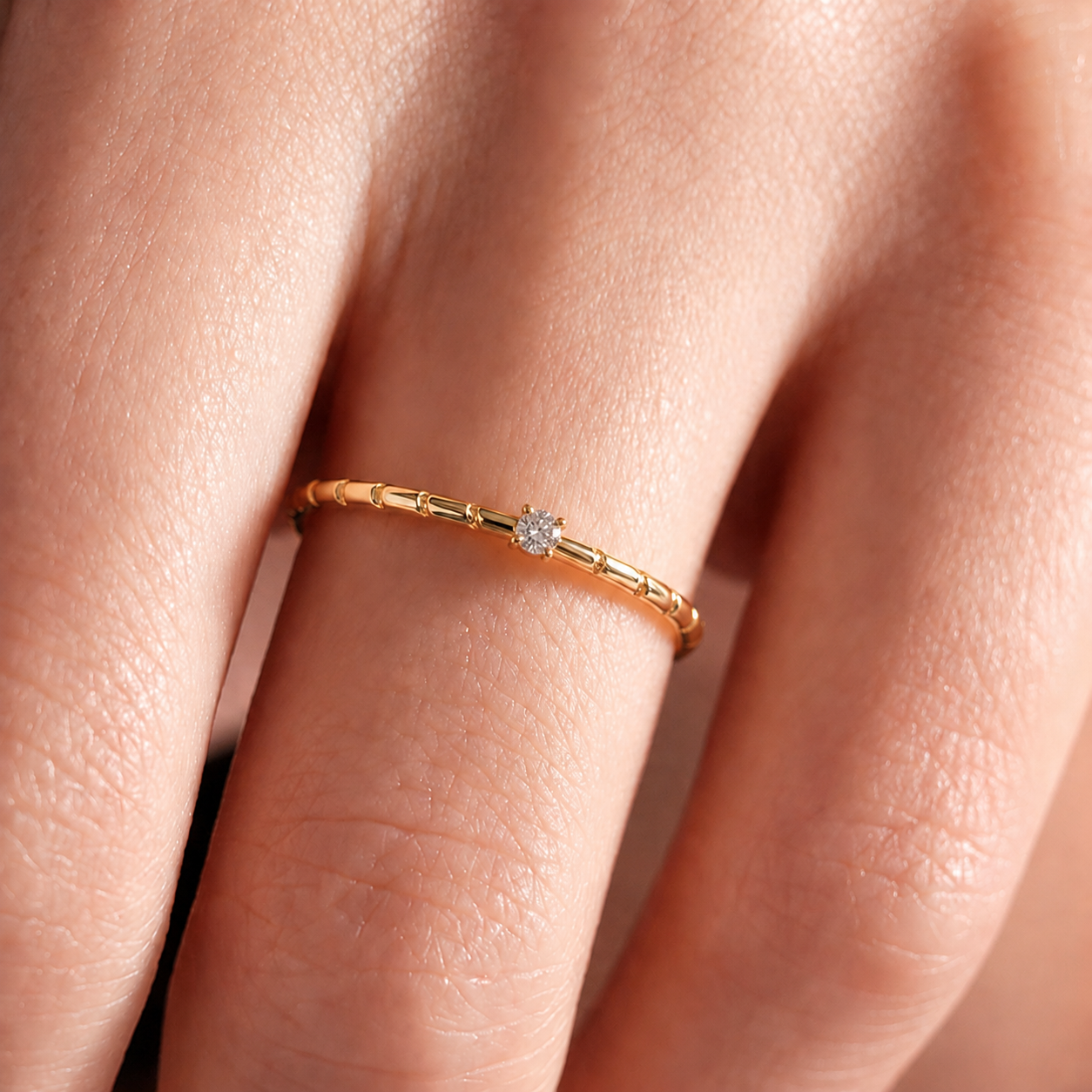
Tiny Bamboo Round Solitaire Ring
Shop Now -

Paved CZ Mini Huggie Hoop Earrings
Shop Now -
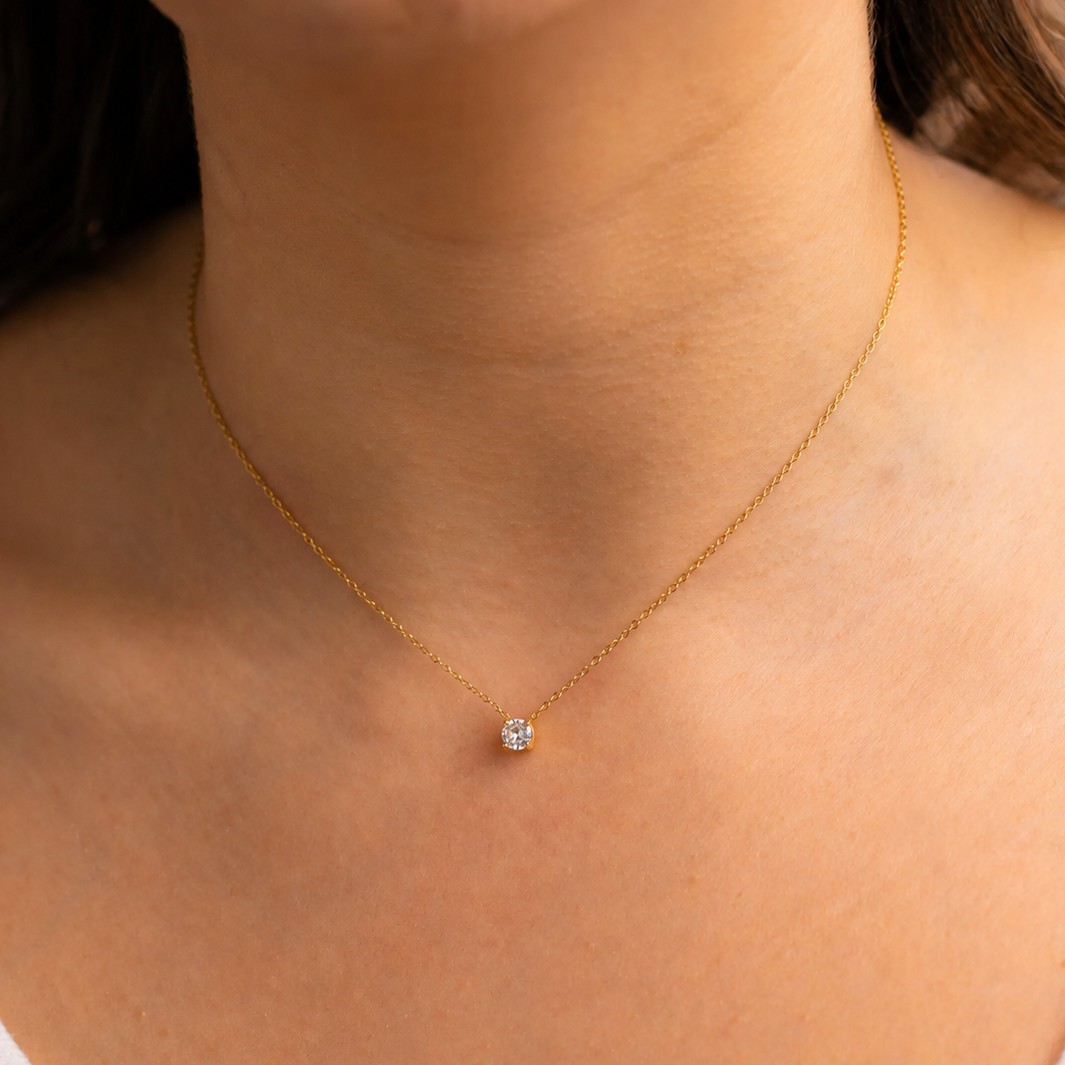
Tiny Solitaire Pendant Necklace
Shop Now -
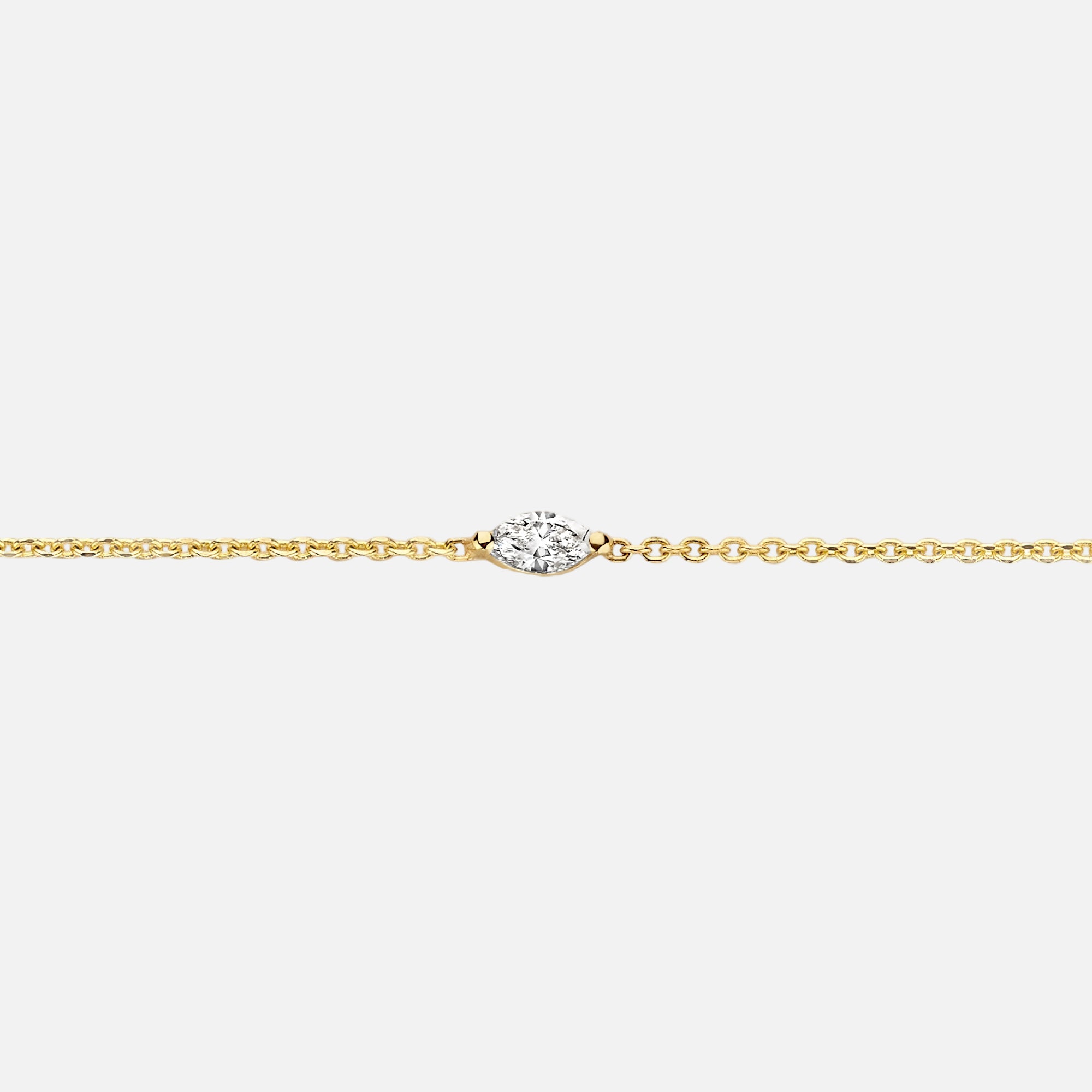
Marquise Solitaire Bracelet
Shop Now
Since October 2024, "sustainable" is a regulated word in India
This is the part almost nobody covers, and it changes how you should read every green claim you see.
India now has two overlapping frameworks. The Advertising Standards Council of India issued its Guidelines for Advertisements Making Environmental/Green Claims, effective from 15 February 2024. Then the Central Consumer Protection Authority, acting under the Consumer Protection Act, 2019, notified the Guidelines for Prevention and Regulation of Greenwashing or Misleading Environmental Claims on 15 October 2024.
What they actually say matters:
- Advertisements cannot use generic terms such as green, eco-friendly, eco-consciousness, good for the planet, minimal impact, cruelty-free, carbon-neutral, natural, organic, pure or sustainable without adequate, accurate and accessible qualifiers, substantiation and disclosures.
- Specific claims such as recyclable, compostable, degradable or climate-positive require statutory or independent third-party verification.
- Any disclosure attached to an environmental claim has to be easy for a consumer to find, and it cannot contradict the claim it is supporting.
- Greenwashing itself is defined to include concealing or omitting relevant information, exaggerating, and using imagery that highlights a positive environmental aspect while downplaying a harmful one.
Read that list again as a shopper rather than as a marketer. It means the word "sustainable" on an Indian product page is not decoration. It is a claim that is supposed to come with proof attached, in language you can understand, on a page you can actually reach.
So the correct first question is no longer "is this brand sustainable?" It is "what specifically is being claimed, and where is the evidence?"
The four things sustainability in jewellery actually refers to
Break the vague word into four separate questions. Brands almost always answer one or two and stay silent on the rest.
1. Where the metal came from
Newly mined gold carries real environmental costs: land disruption, water contamination, tailings that outlast the mine. That is not in dispute.
What is in dispute is whether "recycled" fixes it. More on that below.
2. Where the stones came from
This is where the language gets sloppiest in India. A stone is either a mined gemstone, a lab-grown gemstone, or a simulant. Those are three different things, and calling all of them "diamonds" on a product page is inaccurate regardless of intent.
Lab-grown diamonds are chemically and physically real diamonds, grown rather than mined. Moissanite is a different mineral, silicon carbide, and it is its own stone, not a fake diamond. Cubic zirconia is a simulant, a zirconium dioxide crystal that looks like a diamond and is not one.
Lab-grown stones sidestep mining entirely, though the growing process is energy-intensive, so they are a lower-impact option rather than a solved problem.
3. How and by whom it was made
Who cut it, set it, polished it, and under what conditions. In India, this question also touches the informal karigar economy, which is large, skilled, and mostly undocumented.
4. What happens after you buy it
Whether the piece can be repaired, replated, resized, resold, or exchanged, or whether it goes in a drawer and then in the bin.
This is the question with the largest actual impact and the smallest amount of marketing attached to it. It is also the only one you can verify without trusting anybody.
-
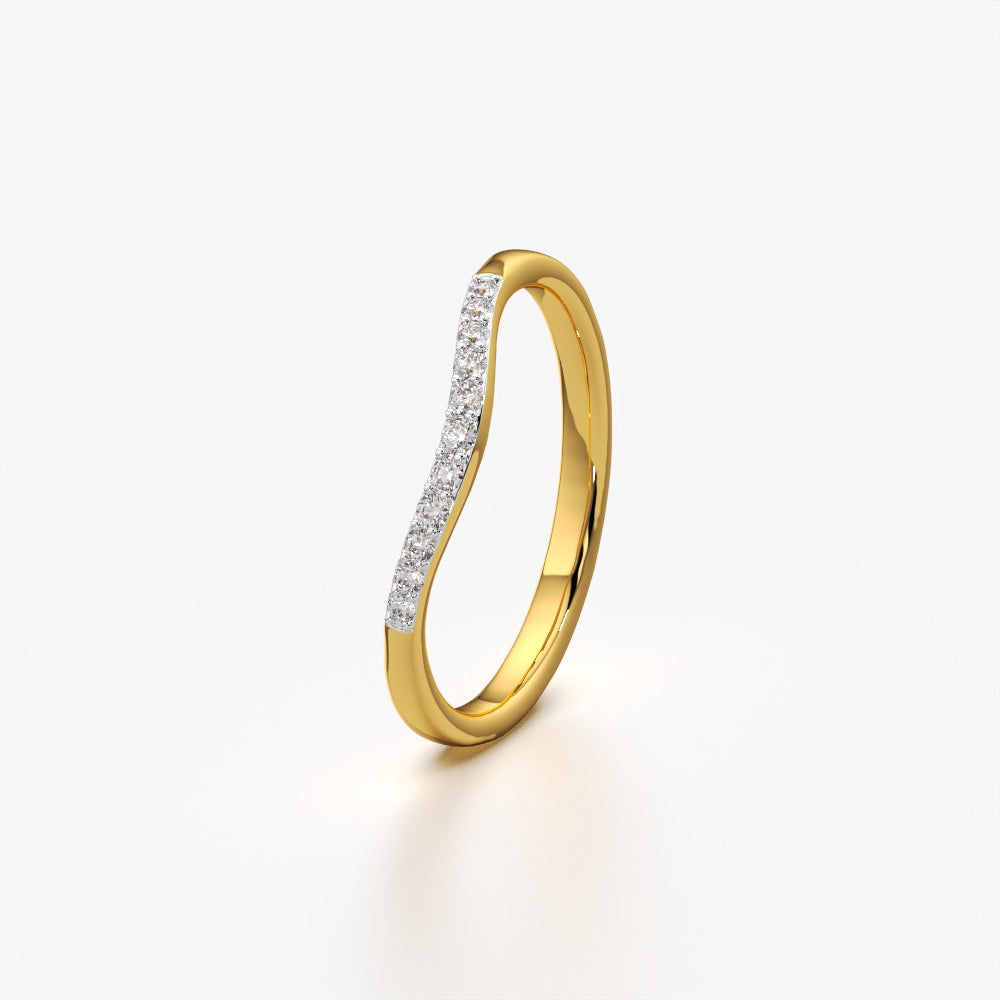
Curved Wishbone Pavé Stacking Ring
Shop Now -
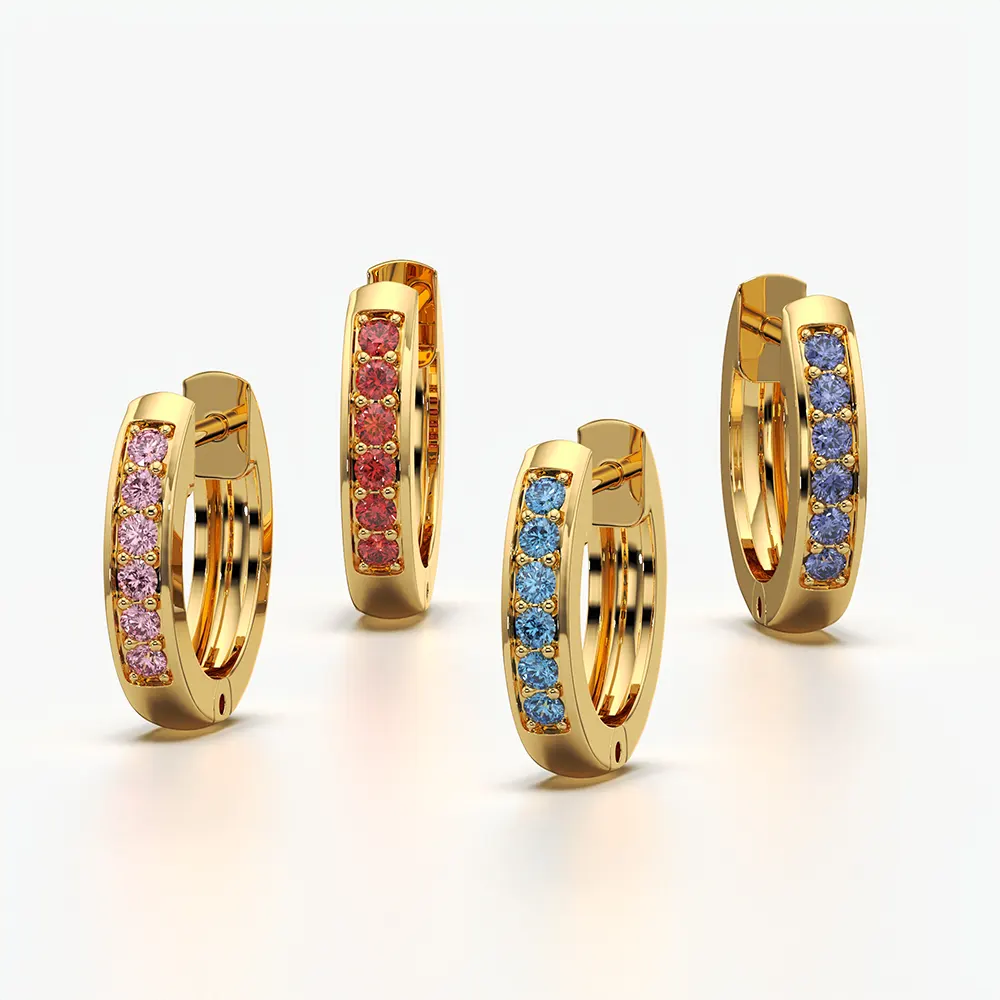
Channel-Set Mini Huggie Hoop Earrings
Shop Now -
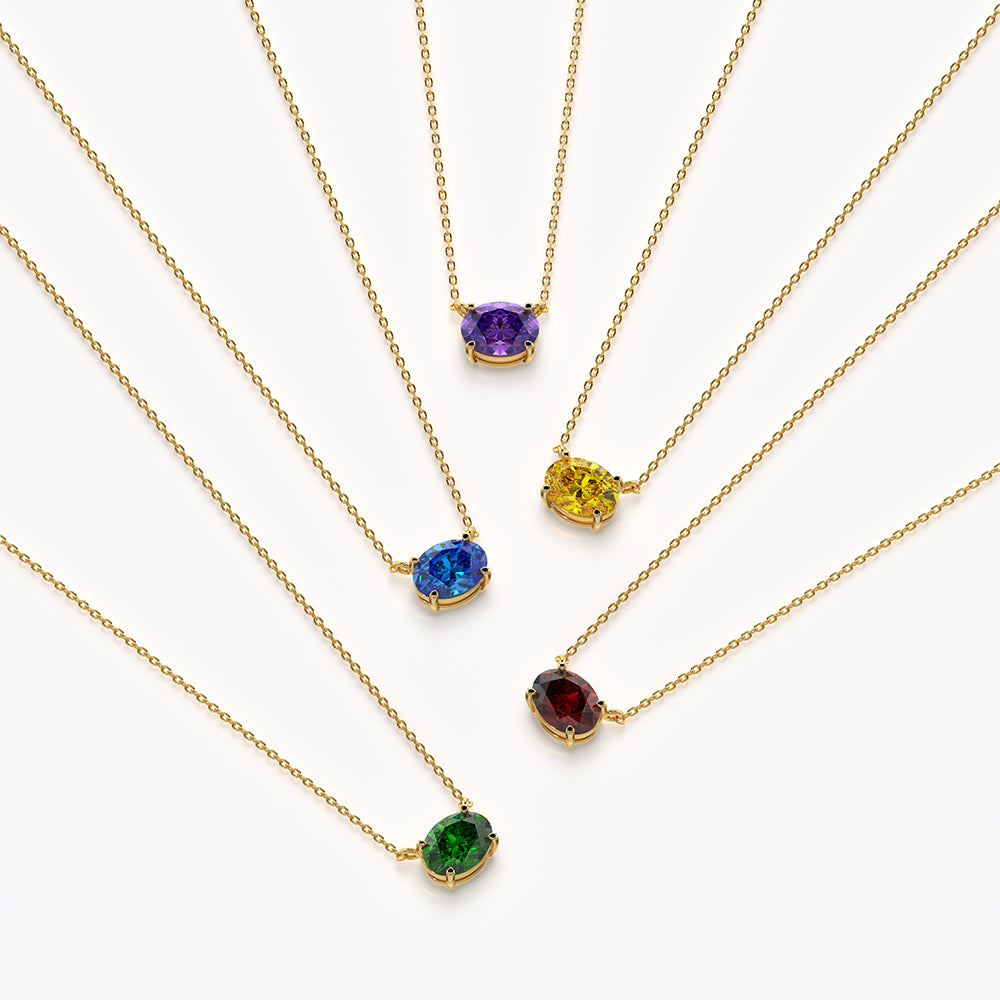
East West Oval Solitaire Necklace
Shop Now -
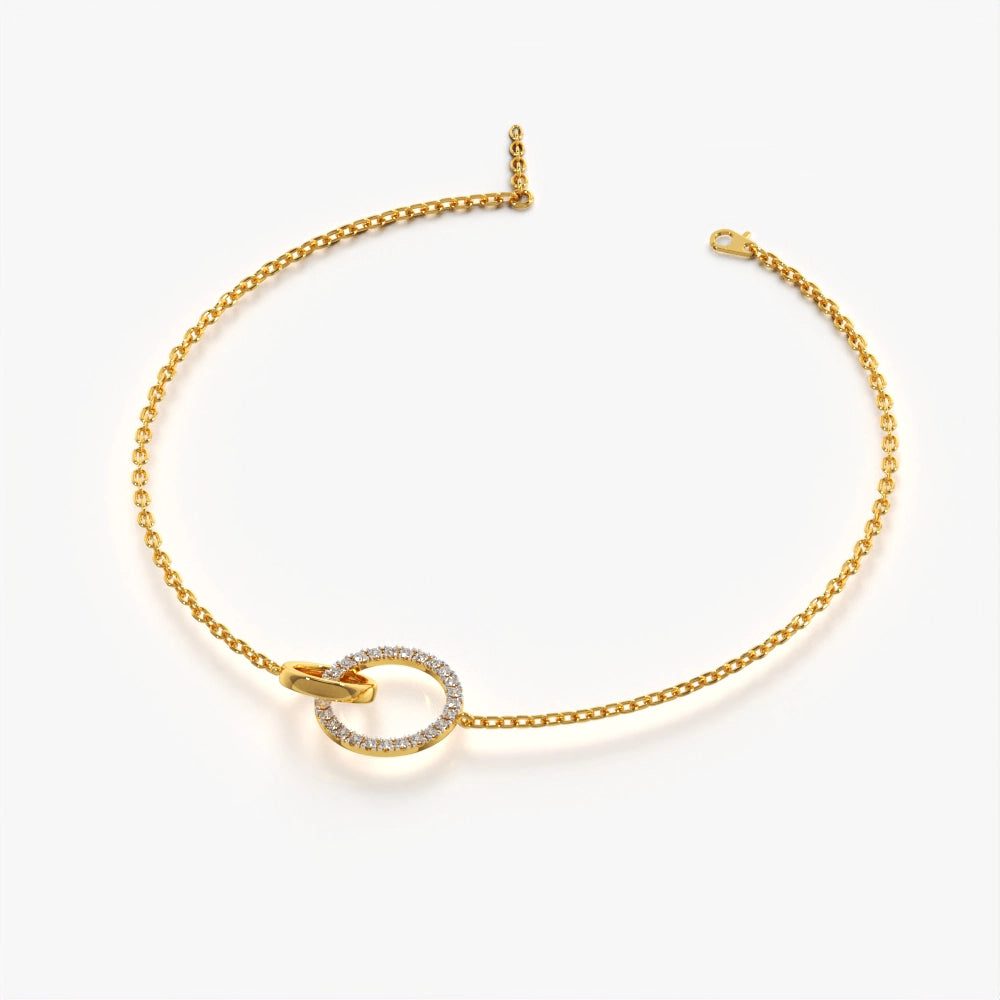
Interlocked Circles Bracelet
Shop Now
The claims that sound green and prove very little
"Made with recycled metal"
This one deserves scrutiny, because internationally it has become the jewellery industry's most contested claim.
The criticism runs like this. Gold is far too valuable to ever reach a waste stream, so it has always been melted and reused. The World Gold Council puts recycled gold at roughly a third of annual supply on average, which was true long before anyone marketed it. The Alliance for Responsible Mining has argued the term should be replaced with "reprocessed", on the grounds that recycling normally means diverting genuine waste, and old jewellery is not waste. Analysts at IMPACT have made the related point that buying recycled gold is unlikely to change demand for newly mined gold, because mining is driven by gold's price and its role as a store of value rather than by jewellery demand alone.
There is a definitional loophole too. Mainstream industry standards allow gold recovered as a by-product of manufacturing to be classified as recycled, and fabrication scrap can be a substantial share of the total.
Silver has a stranger version of the same problem. Only about 26% of the world's mined silver comes from mines that exist to produce silver. The rest arrives as a credit alongside lead, zinc, copper and gold, with lead and zinc mines the single largest source. In practical terms, a silver mine plan is usually a zinc mine plan. Buying less silver jewellery barely touches it.
None of this makes recycled metal worthless. Reprocessing existing metal genuinely uses less energy than refining new ore. It just means "recycled" on its own is a weak claim, not a strong one, and a brand that leans its entire sustainability story on it is telling you very little.
"Eco-friendly packaging"
Packaging is a rounding error next to metal and stones. It is easy, visible, and cheap, which is exactly why it appears so often. Worth having. Not worth mistaking for a supply chain position.
"Ethically sourced"
Sourced from where, verified by whom, to what standard? In India, baseline verification starts with BIS Hallmarking for metal purity. For global supply chain ethics, recognised frameworks include the Responsible Jewellery Council (RJC) Chain of Custody, LBMA Good Delivery, and Fairmined certification for artisanal gold. Pandora, for example, completed a switch to only recycled silver and gold with suppliers certified under the RJC Chain of Custody standard. If a brand names none of these and no equivalent, "ethically sourced" is a sentiment, not a fact.
"Hypoallergenic"
Not a regulated term. "Nickel-free", with the base metal named, is the version that means something, because nickel is the actual common allergen.
India already ran a circular jewellery economy. We just never called it sustainability.
Here is the reframe the global sustainability conversation keeps missing.
The Western model of circular jewellery is new and effortful: take-back schemes, resale platforms, certified recycled supply chains. In India, it has been ordinary household practice for generations. You take your mother's set to the family jeweller; it gets weighed, melted and made into something you will actually wear. Nobody ever called that circularity. It was just what you did.
The numbers back it up. India was thefourth-largestt gold recycling country in 2021, recycling 75 tonnes, about 6.5% of the global total, and roughly 11% of India's gold supply over the preceding five years came from old gold. Estimates put around 25,000 tonnes of gold in Indian households and temples, against annual global mine output of roughly 3,600 tonnes.
And in 2026, price has pushed that behaviour further than any sustainability campaign ever could. World Gold Council data for the second quarter of 2026 shows Indian jewellery demand at 75 tonnes, down 15% year on year and the second-lowest second quarter in the series going back to 2000, with buyers moving towards lighter, lower-carat and studded pieces after a near 60% rise in gold prices and a hike in import duty. Average prices reached about ₹150,744 per 10 grams, and the import duty went to 15% on 13 May 2026. Across the first half of 2026, volumes fell 17% while the value spent rose 40%: people did not stop buying jewellery; they simply got less gold for the same money.
Indian buyers are already dematerialising. Fewer grams, lower carat, more exchange, more design value per rupee. That is a sustainability outcome arrived at through arithmetic instead of ideology, and it is far more durable than a marketing pledge.
The one lever that is entirely yours: how many times you wear it
Every question above is about the brand. This one is about the object.
A piece worn twice and discarded has terrible impact economics no matter what it is made of. A piece worn three times a week for six years has good impact, even if its supply chain paperwork is imperfect. Longevity is not a soft factor. It is the dominant one, and it is the only one you can confirm with your own eyes.
A jeweller writing on this recently put the consumer maths plainly: she stopped buying plated jewellery once she added up what she had spent replacing pieces that faded and were thrown away, and realised the same money would have bought something that lasted. That is the calculation, and it is the same in rupees.
So the durability questions are the sustainability questions:
- What is the base metal under the plating? Brass and other base alloys corrode and are what turn skin green. Sterling silver does not behave that way. If you want the full comparison, see our explainer on gold vermeil vs gold plated vs solid gold and our guide to 925 sterling silver.
- How thick is the gold layer, in microns? Standard plating is often under half a micron. Vermeil requires a minimum of 2.5 microns over sterling silver, which is roughly five times thicker, and thickness is what determines whether a piece survives daily wear.
- Is it repairable and replatable, or disposable by design?
- What does the brand do when the plating eventually wears?
- Can the piece come back to the brand rather than to a bin?
This is where demi-fine sits differently from fashion jewellery. Our comparison of fine, demi-fine, and fashion jewellery covers the category logic in detail.
At KYMEE, every piece is 18K gold vermeil over nickel-free 925 sterling silver at a minimum plating depth of 2.5 microns, and the brand is BIS-registered. That is not a green claim. It is a construction spec, and you can check it. The lifetime plating warranty exists for the same reason: a piece that can be replated is a piece that does not need replacing. There is also a buyback programme for when a piece has finished its life with you, which keeps the metal moving rather than sitting idle.
A 7-question test for any "sustainable jewellery" brand in India
Open the brand's site and answer these. It takes about ten minutes.
- What is the base metal, named explicitly? Not "premium alloy". Sterling silver, brass, stainless steel, or solid gold.
- What is the plating thickness in microns? If the number is absent, assume it is thin.
- Are the stones named correctly? Mined, lab-grown, moissanite, or cubic zirconia, each called what it is.
- Is there a substantiation link behind any green claim? The CCPA guidelines require the evidence to be accessible. If clicking leads nowhere, the claim is doing no work.
- Is a recognised certification named? RJC, LBMA, Fairmined, or equivalent. If not, treat "ethically sourced" as sentiment.
- What is the repair, replating and buyback position? This tells you whether the brand expects the piece to last.
- Do the claims agree with each other across the site? Contradictions between the homepage, product pages and policy pages are themselves a signal.
A brand that answers four of seven clearly is more trustworthy than one that answers zero and uses the word "sustainable" eleven times.
Choosing well without pretending
Buy fewer pieces that you will genuinely wear often. Daily wear rings and simple stud earrings get worn hundreds of times. Occasion pieces get worn twice.
Choose pieces you can service. Solid construction and a sterling silver base can be replated and repaired. Thin plating over brass cannot.
Prefer designs that survive trend cycles. Pendant necklaces, chain link bracelets and dainty rings age better than a piece keyed to one season.
Consider lab-grown stones where the design allows it. KYMEE's customisation service lets you choose your metal and your stone, including lab-grown, cubic zirconia, moissanite or no stone at all, before anything is made. Building one piece you specified is a meaningfully different act from buying four you settled for. Note that across the ready-to-wear range, moissanite is used in mini and accent form, with cubic zirconia in the larger stones.
Then look after what you own. Most plating failure is avoidable, and our jewellery care guide covers the habits that matter in Indian conditions, particularly humidity and hard water.
Browse the full ranges in rings, necklaces, earrings and bracelets.
FAQs
Is sustainable jewellery actually better for the environment?
It can be, but the size of the benefit depends almost entirely on which specific practice is involved. Longevity and repairability produce the most reliable gains. Recycled metal produces a real but smaller and more contested gain. Packaging produces very little.
Is recycled gold really sustainable?
It uses less energy than refining newly mined ore, which is a genuine advantage. But critics point out that gold is never actually waste, that current definitions allow manufacturing scrap to count as recycled, and that global gold mining is driven by gold's investment value rather than by jewellery demand. Treat it as one modest positive, not as proof of sustainability.
Are lab-grown diamonds more sustainable than mined ones?
They avoid mining entirely, which removes the land, water, and tailings impacts. Growing them is energy-intensive, so the advantage narrows depending on the energy source. They are a lower-impact choice rather than a zero-impact one.
Is gold vermeil sustainable?
Vermeil is not a sustainability certification; it is a construction standard: a minimum 2.5 micron layer of gold over sterling silver. What makes it lower impact in practice is that it uses a small quantity of gold, sits on a durable and repairable base, and lasts far longer than conventional plating, which reduces replacement buying.
What is the difference between sustainable and ethical jewellery?
Sustainable leans environmental: materials, energy, waste, product life. Ethical leans human: labour conditions, wages, safety, community impact. Serious brands address both. Most marketing blurs them into one word.
Is "eco-friendly" allowed as a claim in India?
It is allowed, but not on its own. Under the CCPA's 2024 greenwashing guidelines, generic environmental terms need accurate qualifiers, accessible substantiation, and clear disclosures. An unqualified "eco-friendly" label with nothing behind it is exactly what the guidelines were written to address.
How can you tell if a jewellery brand is greenwashing?
Look for specificity. Named base metals, micron figures, correct stone terminology, named certifications, and a clear repair or buyback position. Vague adjectives with no linked evidence, and claims that contradict each other across the site, are the two clearest warning signs.
What should you do with old jewellery you no longer wear?
Do not let it sit in a drawer. Exchange, remake, resell, or return it through a brand buyback. India has done this for generations through the family jeweller, and it remains the single most circular thing you can do with precious metal.