


Which Finger to Wear a Pearl Ring on for Women: Why Every Site Gives You a Different Answer

If you have searched for this question already, you have probably noticed something frustrating. One site says the little finger of the left hand. Another says the little finger of the right hand. A third says the ring finger. A fourth says flatly that the left hand is wrong. These are not fringe blogs. They are established Indian gemstone sellers, and they contradict each other on a question that sounds like it should have one answer.
There is a reason for this, and almost nobody explains it. Once you understand it, the confusion disappears, and you can make the decision yourself in about a minute.
This guide covers what tradition actually says, why the sources disagree, and a second question that matters just as much but rarely gets asked: which finger will your pearl physically survive on.
The short answer
If you are wearing a pearl ring as jewellery, wear it wherever it looks and feels right to you. There is no rule. The ring finger and little finger are the most practical choices because they take the fewest knocks.
If you are wearing a pearl ring as a remedial gemstone on astrological advice, the most commonly given instruction in Vedic practice is to wear it on the little finger, and the specific hand should come from the person who recommended the stone to you, not from a blog. That includes this one.
Those two answers happen to point in roughly the same direction, which is convenient. The rest of this article explains why and what to do with the parts that are genuinely contested.
-
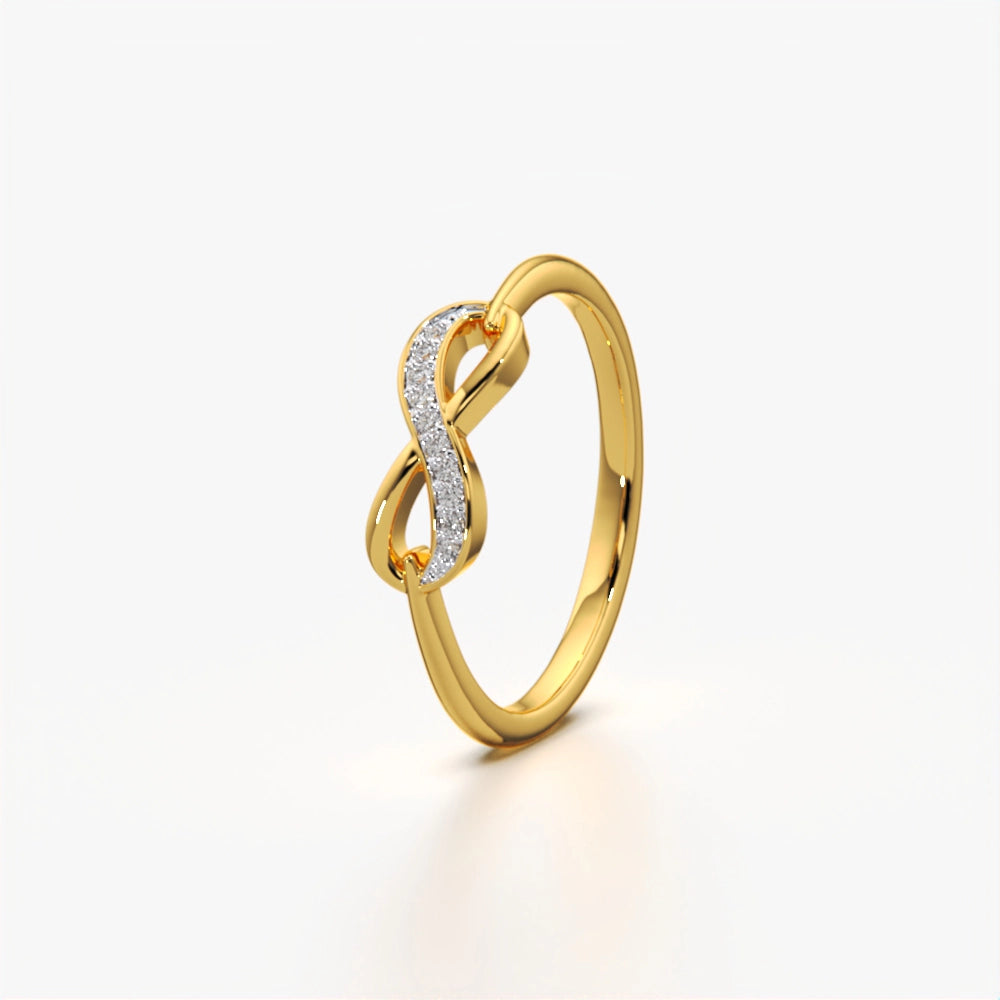
Diamond Encrusted Infinity Ring
Shop Now -
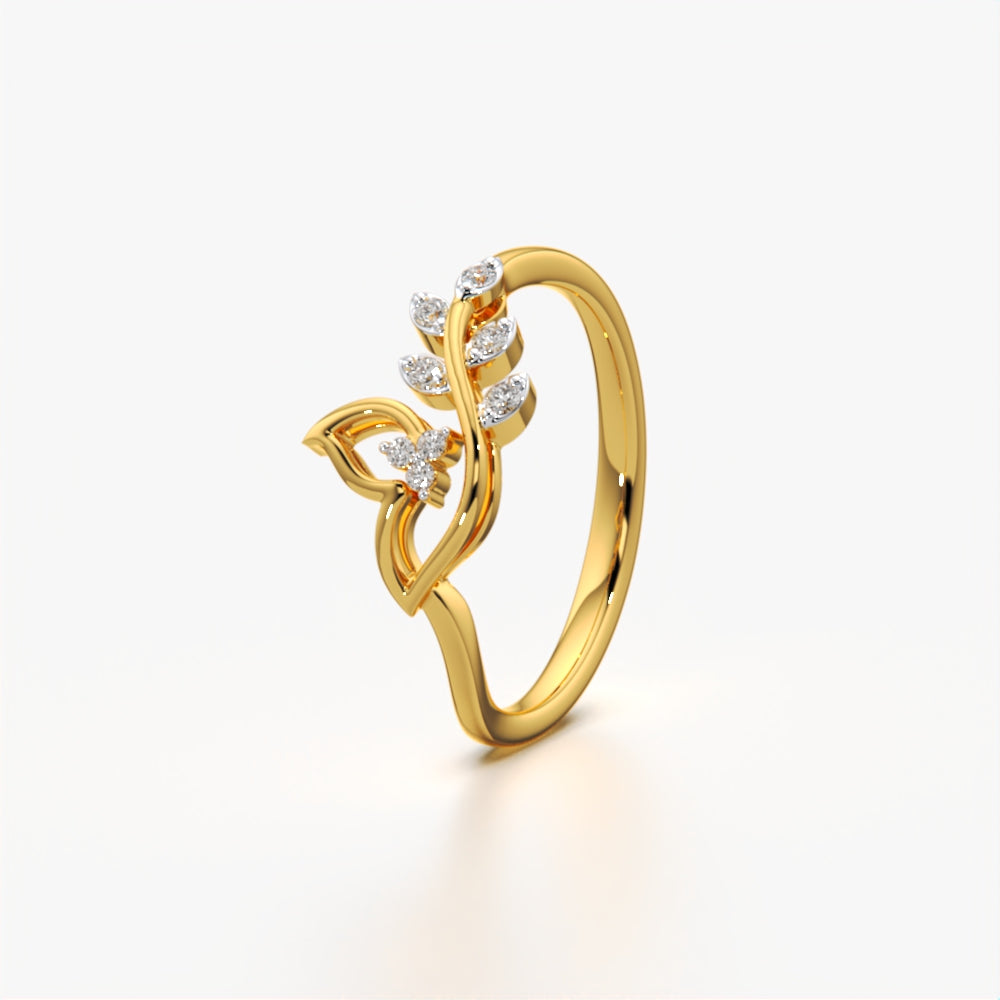
Whispering Vine Ring
Shop Now -
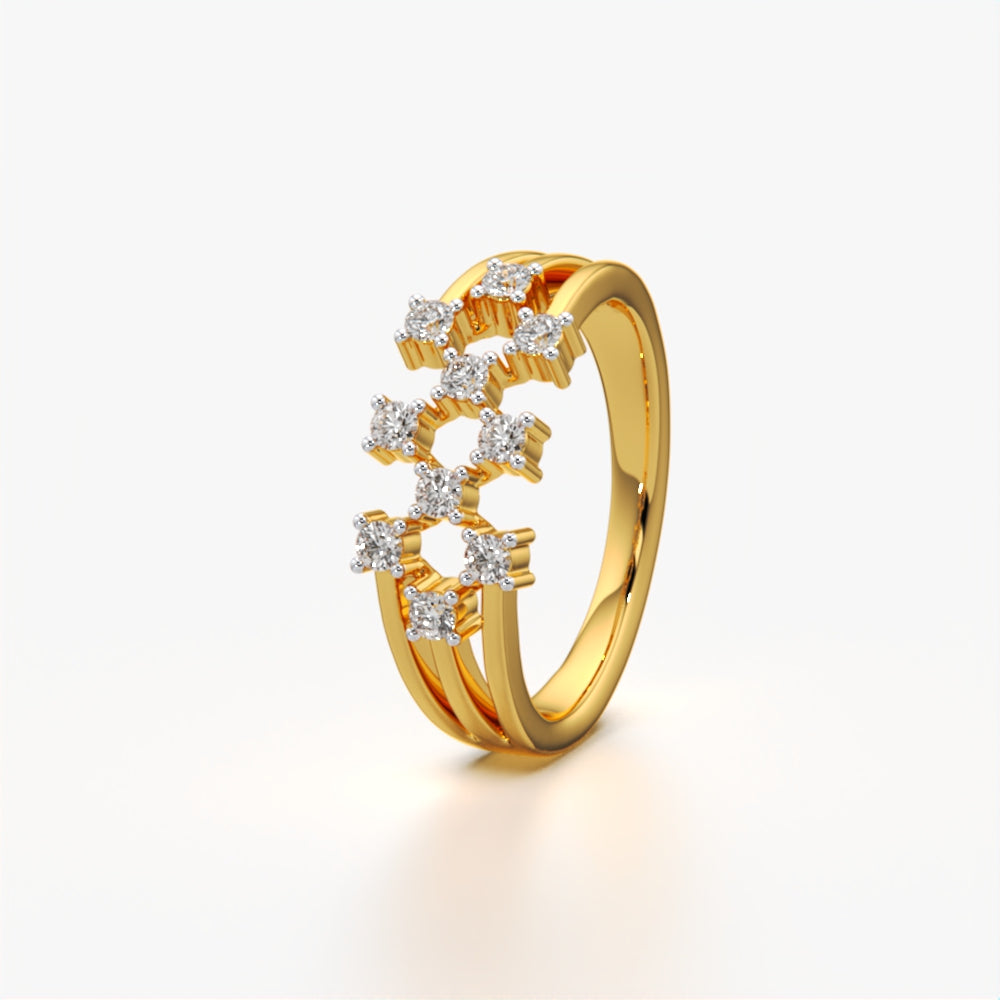
Stardust Stack Ring
Shop Now -
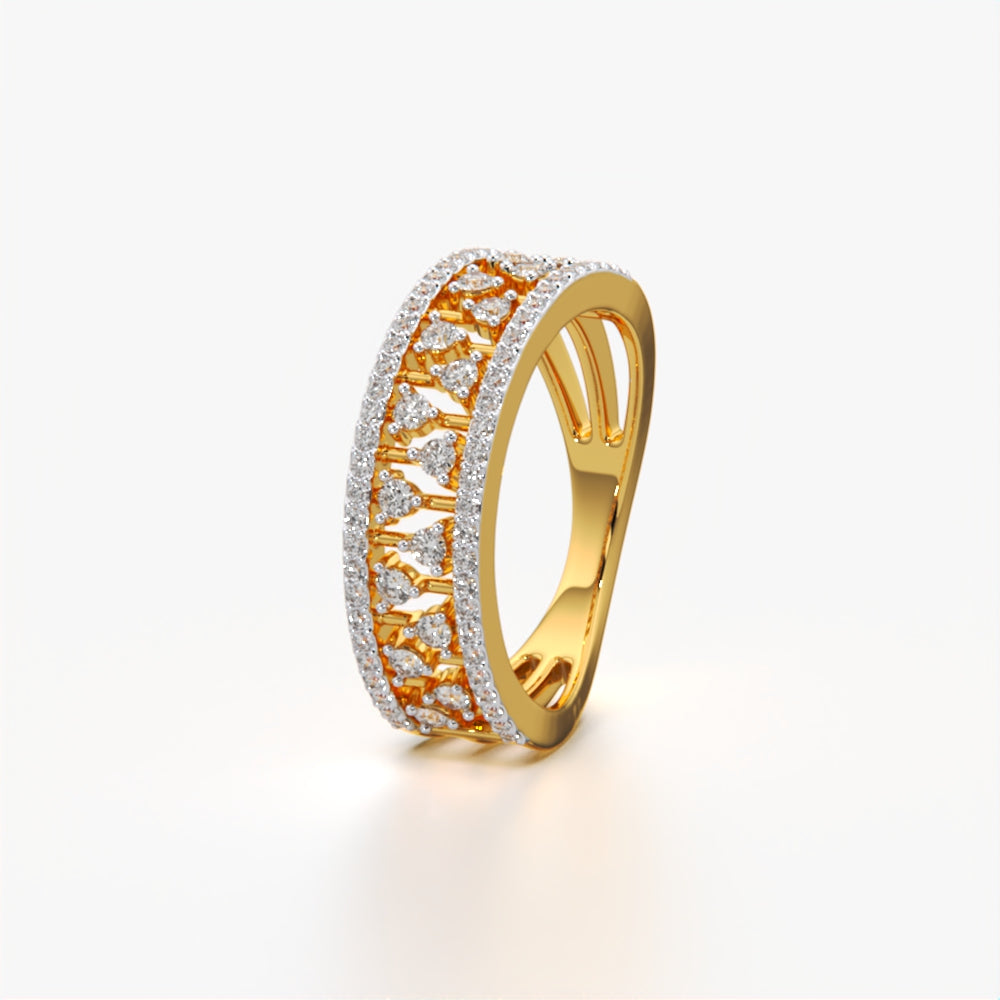
Royal Trellis Ring
Shop Now
Why the sources disagree: Overlapping rules for the Moon
This is the part almost every article skips, and it explains everything.
In classical Vedic astrology, each finger is assigned to a planet:
- Thumb: Mars (some traditions assign Venus)
- Index finger, or Tarjani: Jupiter, Guru, or Brihaspati
- Middle finger, or Madhyama: Saturn, Shani
- Ring finger, or Anamika: the Sun, Surya
- Little finger, or Kanishtha: Mercury, Budh
Look carefully at that list. The Moon is not on it.
The pearl, Moti, is the Moon's stone. Chandra. But the Moon was never assigned a finger in this system. In palmistry, the Moon has a mount, the Chandra Parvat, and it sits on the outer edge of the palm near the wrist, opposite the thumb. It is nowhere near a finger.
So when an astrologer has to tell you where to put a pearl ring, there is no direct answer available. They have to borrow a finger. And practitioners borrow different ones, using different reasoning:
The little finger argument: Mercury governs communication, intuition, and mental clarity, which overlaps with the qualities the Moon is said to govern. Mercury and the Moon are also treated as compatible in most schemes. This is the majority position, and it is why most Indian gemstone sites land here.
The ring finger argument: The Sun and Moon are the two luminaries and are treated as a natural pair. Some practitioners consider the Sun's finger the appropriate home for the Moon's stone. This is the minority position, but it is not made up, and you will see reputable astrologers give it.
Neither camp is misreading the tradition. They are both solving the same gap in it, differently. Once you know that, a contradictory search results page stops being confusing and starts being informative: it is telling you the tradition genuinely does not specify this, rather than that one site is lying.
The same gap explains the left hand versus right hand disagreement. Some practitioners say women should wear gemstones on the left because the left is the receiving side. Others say the working or dominant hand carries the stone's effect, which for most women is the right. Others say the right hand is for everyone, regardless of gender. There is no settled rule, and anyone who tells you there is with total certainty is overstating what the tradition contains.
What this means for you practically: if you are wearing a pearl for remedial reasons, this is exactly the kind of detail your astrologer should specify for your chart, and it is a reasonable thing to go back and ask about. If you are wearing it because it is beautiful, none of this is binding on you.
The finger-by-finger breakdown, with the part usually left out
Most guides tell you what each finger symbolises. Very few tell you what each finger does to a soft stone. Both matter, so here is each finger with both.
Little finger, Kanishtha
Traditionally: Mercury's finger. The most commonly recommended position for a pearl in Vedic practice. Associated with communication, expression, and intuition.
Practically: a good choice. It is the shortest finger and sits at the edge of the hand, so it rarely comes into contact with objects. The main risk is loss rather than damage, because the little finger tapers sharply and rings slip off it more easily than any other finger. If you wear a pearl here, get the fit checked properly.
Style note: small stones look right here. Anything oversized reads awkward on a little finger and increases the chance of catching it on something.
Ring finger, Anamika
Traditionally: the Sun's finger in Vedic astrology, and the marriage finger in Western convention. The minority astrological recommendation for pearl. Worth knowing that the Western "vein of love" idea, the vena amoris, said to run from this finger to the heart, has no basis in anatomy. It is a lovely story, not a fact.
Practically: the safest finger on the hand for a soft stone. It sits between the middle and little fingers, so both neighbours partly shield it, and it does not lead when you reach for things. If durability is your main concern, this is the answer.
Index finger, Tarjani
Traditionally: Jupiter's finger. Associated with authority, leadership, and confidence. Highly visible, which is why bold rings often go here.
Practically: one of the worst fingers for a pearl. The index finger does most of your gripping, grabbing, and pointing. It makes constant contact with bag handles, door handles, phone cases, and keyboards. A soft stone here will dull noticeably faster.
Middle finger, Madhyama
Traditionally: Saturn's finger. Discipline, responsibility, balance. It is the most visually central finger, so statement rings are often worn here.
Practically: it is the longest finger, which means it protrudes furthest and hits things first. For a hard stone, this is fine. For a pearl, it is the highest-impact position on the hand.
Thumb
Traditionally: Mars in most schemes. Associated with willpower and independence.
Practically: avoid pearls entirely. The thumb is in constant opposed motion against every other finger and takes more friction than anything else on the hand.
The question nobody asks: Will your pearl survive that finger?
Here is the fact that reframes this entire topic.
Pearl is the softest stone commonly set into rings. It sits at roughly 2.5 to 4.5 on the Mohs hardness scale, depending on the pearl and the thickness of its nacre. For comparison, moissanite is about 9.25 and diamond is 10.
Now, the detail that actually matters. Ordinary household dust contains fine quartz particles, and quartz sits at about 7 on that scale. That is harder than a pearl. Which means a pearl does not need a dramatic accident to lose its lustre. Wiping the ring with a cloth that has dust on it, pulling on a bag strap, washing dishes, resting your hand on a table: normal life slowly abrades the nacre. The glow that made you want a pearl in the first place is a surface property, and surfaces wear.
Pearls are also chemically vulnerable in a way most stones are not. Nacre is calcium carbonate held together by an organic binder, and acid attacks it. In an Indian kitchen that is not hypothetical. Tamarind, lemon, tomato, curd, and vinegar all react. So do perfume, hair oil, hairspray, sunscreen, and hand sanitiser. Sweat is mildly acidic on its own, and Indian summers produce a great deal of it.
This is why the finger question is not purely symbolic. It is genuinely a question about wear.
And here is the pleasing part: the two systems converge. Tradition, working from planetary reasoning, points at the little finger and sometimes the ring finger. Physics, working from abrasion and impact, points at the ring finger and then the little finger. Two entirely unrelated lines of reasoning arrive at the same corner of the hand. You do not have to choose between honouring the tradition and protecting the ring.
If you are wearing a pearl for remedial reasons
This section describes what the tradition asks for. It is presented as tradition, not as a claim about outcomes, and it is not a substitute for a consultation with someone who has actually read your chart.
Commonly given instructions include wearing the ring for the first time on a Monday, the day associated with the Moon, ideally in the morning. Cleansing the ring before first wear, often by soaking it in water or milk. Reciting a Chandra mantra such as Om Chandraya Namah while putting it on. Setting the stone so that it makes contact with the skin, which usually means an open-back setting.
Two important cautions, and neither is commercial.
First, a great deal of what circulates online about pearls, including claims about curing insomnia, aggression, digestive problems, or immunity, goes well beyond anything the traditional texts support and well beyond anything demonstrated. Treat gemstone remedies as a cultural and spiritual practice if that is meaningful to you. Do not treat them as medical care, and do not delay actual treatment for a health problem because you are wearing a stone.
Second, be aware that a "milk soak" is chemically not ideal for nacre, and repeated soaking is not good for the pearl. If you follow the ritual, keep it brief and dry the ring thoroughly afterwards.
The metal question, and where gold vermeil actually sits
In remedial practice, silver is the metal traditionally preferred for a pearl because silver is associated with the Moon. Gold is generally considered acceptable, and plenty of practitioners permit it, but silver is the default recommendation.
This creates a real question for anyone shopping for modern jewellery, where gold-toned pieces dominate, so it is worth being precise about what gold vermeil actually is.
Gold vermeil is not gold-plated brass, and it is not solid gold. It is a sterling silver piece with a thick layer of gold bonded to it. KYMEE's rings are 18K gold vermeil over nickel-free 925 sterling silver, at 2.5 micron plating thickness. The structural body of the ring, the part with weight and strength, is sterling silver. The gold is the surface.
Whether that satisfies a remedial requirement for a silver setting is genuinely not for a brand or a blog to decide. It is a question for the practitioner who recommended the stone, and different practitioners will answer it differently. What can be stated factually is what the material is: silver underneath, gold on top. If you are shopping with a remedial requirement in mind, take that description to whoever advised you rather than assuming either way. There is more on the construction in KYMEE's explainer on gold vermeil.
If you are simply choosing a metal because you like it, none of this applies, and you should pick the tone that suits your skin and the rest of your jewellery.
Being straight about the pearl ring itself
Worth saying plainly, because it affects how you should read the rest of this article: KYMEE does not currently make a pearl ring. The ring range runs to over two hundred designs, and every one of them is set with cubic zirconia or moissanite, not pearl. Moissanite appears in mini and accent form, and cubic zirconia is used for the larger centre stones.
So there are three honest routes here, depending on what you actually want.
If you specifically want a pearl set in a vermeil band, the place to ask is KYMEE's custom jewellery service. You describe what you want, attach a reference image if you have one, and the team responds with ideas and a quote. Note that the standard stone options on the form are cubic zirconia, moissanite, lab-grown, and no stone, so a pearl request needs to go in the design notes field as a specific ask rather than being selected from the dropdown. Treat it as an enquiry rather than a guaranteed product, and ask directly whether they can source and set the pearl before you plan around it.
If what you actually love is the look, meaning the soft, rounded dome rather than a faceted sparkle, then a cabochon is the shape you are after. A cabochon is a stone polished into a smooth dome rather than cut with facets, which is exactly the visual profile a pearl gives you. The Oval Cabochon Statement Ring in the coloured stone rings range is the closest silhouette in the catalogue, and it will take daily wear in a way a real pearl simply will not.
If you want something you can genuinely wear every day without thinking about it, that is where a harder stone earns its place, and it is worth reading about what moissanite actually is before deciding.
What to wear on the other fingers
If your pearl is going on the little finger or the ring finger, the rest of the hand is open. This is where most people get the styling wrong, usually by competing with the pearl instead of framing it.
A pearl has a soft, matte-adjacent glow. It does not sparkle; it luminesces. Put a large faceted stone next to it on an adjacent finger, and the pearl loses every time. The trick is contrast in scale, not contrast in brilliance.
Slim bands on the neighbouring fingers: A plain or finely set band on the middle or index finger gives the eye somewhere to rest without stealing attention. KYMEE's stackable rings and dainty rings are built for this, and because they are low-profile they also do not knock against the pearl when your fingers close.
Bezel settings, if you want a stone: A bezel encircles the stone in metal rather than gripping it with prongs. It sits lower, snags less, and reads quieter, which is what you want beside a pearl. Several pieces in the daily wear rings range use low-profile settings for exactly this reason.
Keep the statement on the other hand: If you want a solitaire or halo ring, put it on the opposite hand. This is a practical point as much as an aesthetic one: hard stones scratch pearls, and rings on adjacent fingers make contact constantly.
Never stack a hard stone directly against a pearl: A moissanite band sitting flush against a pearl ring on the same finger will damage it. This is not a maintenance risk; it is a certainty over time.
For more on combining pieces, the ring sets range is designed as pre-matched pairs, which removes the guesswork.
Caring for a pearl ring so the question stays worth asking
The rule that covers most of it is last on, first off. Your pearl ring goes on after perfume, makeup, sunscreen, moisturiser, and hair products have been applied and have dried. It comes off before you cook, clean, wash up, shower, swim, or exercise.
Beyond that:
- Wipe it with a soft, dry, clean cloth after each wear. This removes the day's sweat and oils before they sit.
- Never use an ultrasonic cleaner, steam cleaner, or chemical jewellery dip. Any of these will damage nacre.
- Do not soak it. Brief contact with water is fine; prolonged soaking is not.
- Store it separately from your other rings, ideally in a soft pouch. Loose in a jewellery box with harder stones is how pearls get scratched.
- Very dry storage embrittles nacre, and very humid storage softens it. Normal indoor conditions are fine; an airtight box with silica gel is not.
Realistically, a pearl ring is an occasional-wear piece. A few times a week, for work and social settings, is sustainable. Genuine unthinking daily wear is not, and any brand that tells you otherwise is selling rather than advising. General guidance on looking after vermeil and stone-set pieces is on KYMEE's jewellery care page.
One thing to sort out before you buy: the size
This matters more for pearl rings than for most, and it is the single most common cause of disappointment.
A pearl ring usually has a raised setting because the stone is a dome rather than a flat-backed faceted cut. Raised settings are top-heavy. If the band is even slightly loose, the ring rotates on the finger, and the pearl ends up sitting sideways, which looks wrong and puts the stone where your other fingers will knock it.
Indian ring sizes for women typically run from around 8 to 20. Measure at the end of the day, when your fingers are at their largest, and measure the specific finger you intend to wear it on. Your ring finger and little finger can differ by several sizes.
If you are buying this as a gift, do not guess: A ring is the hardest piece of jewellery to gift blind, and a pearl ring is harder still because a loose fit is not merely uncomfortable; it actively damages the stone. Either borrow a ring she already wears on that finger and measure its inner diameter, or choose something size-independent such as a pendant or earrings, and let her pick the ring herself. KYMEE's size guidance sits on the product pages.
Final Takeaway
Whether you choose the little finger for traditional alignment or the ring finger for physical protection, wearing a pearl ring comes down to balancing spiritual intention with practical care. If you are exploring timeless ring styles, low-profile settings, or custom gold vermeil designs, explore KYMEE's ring collections or connect with KYMEE's custom jewellery service to craft your ideal piece.
FAQs
Which finger should a woman wear a pearl ring on?
For general wear, the ring finger or little finger, both because they suit the scale of a pearl and because they take the fewest knocks. For remedial wear on astrological advice, the little finger is the most commonly given instruction, but the specific finger and hand should come from the practitioner who recommended the stone, because the tradition does not settle it uniformly.
Can you wear a pearl ring on your left hand?
Yes. Some sources state that the left hand is incorrect, but this is not a settled rule. Different practitioners assign left or right based on different reasoning, some by gender, some by dominant hand, and some not at all. If you are wearing the pearl for astrological reasons, ask the person who advised you. If you are wearing it as jewellery, wear it on whichever hand you prefer.
Which day should you first wear a pearl ring?
Monday, in traditional practice, because Monday is the day associated with the Moon. Morning is generally preferred. This applies to remedial wear. If you bought a pearl ring because you liked it, any day works.
Can a pearl be set in gold instead of silver?
Traditionally, silver is preferred because of its association with the Moon, but gold is widely considered acceptable. Gold vermeil is a specific case worth understanding: the base is 925 sterling silver and the gold is a surface layer. Whether that meets a remedial requirement is a question for your practitioner, not for a jeweller.
Can you wear a pearl ring every day?
Not really, if you want it to last. Pearl sits at roughly 2.5 to 4.5 on the Mohs scale, softer than ordinary household dust, and it reacts to acids, cosmetics, and sweat. It works well as an occasional and office piece worn a few times a week. For genuine everyday wear, a harder stone in a low-profile setting is the honest recommendation.
How can you tell if your pearl is real?
The traditional check is to rub the pearl gently against the edge of a tooth. A real pearl feels slightly gritty because of its layered nacre structure, whereas most imitations feel perfectly smooth. Real pearls also show small natural irregularities in surface and lustre, while imitations tend to be flawlessly uniform. Neither test is conclusive, so for anything expensive, get a lab report.
Does the pearl need to touch your skin?
In remedial practice, yes. Open-back settings are used specifically so the stone contacts the skin. This is a requirement of the tradition rather than a jewellery-design necessity, and it does slightly increase the pearl's exposure to sweat, so wipe the ring more diligently if you wear it this way.
Can you wear a pearl ring with your other rings?
Yes, with one firm exception: never let a hard stone sit directly against the pearl, especially on the same finger. Slim bands on other fingers are ideal. Keep faceted statement pieces on the opposite hand.
Do you need to consult an astrologer before wearing a pearl?
If you are wearing it as a remedial gemstone, that is the entire premise of the practice, so yes. If you are wearing it because you find it beautiful, no. A pearl ring is not a spiritually risky object, and you do not need permission to enjoy one.
What if you want the pearl look but need something more durable?
Look for a cabochon, which is a stone polished into a smooth dome rather than faceted. It gives you the same soft, rounded profile in a much harder material. A bezel setting adds further protection by enclosing the stone's edge in metal.