


Why You Feel Overdressed (And How Minimal Jewellery Fixes It Instantly)

You are in the lift. The doors close; there is a mirror, and something shifts. Nothing has changed since you left the house, but suddenly the earrings feel loud. You start doing the maths on whether you have time to take them off before your floor.
Nobody else has said anything. Nobody will. But the feeling has already done its work, and you will spend the next four hours slightly aware of your own neck.
Almost every post written about this treats it as an arithmetic problem. Wear two statement pieces, not three. Take one thing off before you leave. Match the metal to the occasion. That advice is not wrong, but it answers a question you may not actually be asking, because there are two completely different problems producing this identical feeling, and only one of them is fixed by removing something.
Two problems that feel exactly the same

The first problem is real visual overload: The pieces are genuinely competing, the proportions are off, and an outside observer would agree that something is too much. This is a styling problem. It is solvable in about ten seconds.
The second problem is a calibration mismatch: You look completely normal. A stranger passing you would register nothing. But your internal sense of what is appropriate for a Tuesday has not caught up with what you are wearing, so your own body keeps flagging it as an error.
The second one is far more common, and it is the reason "just take something off" so often fails. You remove a piece, feel briefly better, remove another, and end up wearing nothing at all, which is not what you wanted either. You were not overloaded. You were uncalibrated. Removing things treats a symptom that was never there.
Learning to tell the two apart is the actual skill, and it takes about a minute.
The reason this hits differently

Here is the part that gets left out of every guide written for a global audience.
In India, gold is not a neutral material. It is occasion-coded, and the coding runs deep. Gold arrives at weddings. It comes out for Diwali and Karwa Chauth and family functions. It is bought on Akshaya Tritiya, photographed at receptions, and then, for most of the year, it lives in a locker.
That means most Indian women have spent their entire lives building an internal reference library in which gold jewellery equals event. Not "gold is dressy." Something much more specific: gold means somebody is getting married, or a festival is happening, or the family is being photographed.
So when you put on a gold chain and walk into a Wednesday morning standup, the alarm going off in your head is not aesthetic judgement. It is a category error. Your brain has filed the object under "wedding" and is now reporting a mismatch between the object and the calendar.
Your colleagues, incidentally, have no such alarm. They see a woman wearing a chain. The reference library is yours alone, and it is running silently in the background, which is exactly why the feeling is so hard to argue with.
Understanding this changes the fix. You are not trying to look less dressed up. You are trying to recode gold from occasion-wear to personal-wear, and the fastest way to do that is not to wear less of it, but to wear it more often in smaller amounts until the category quietly reassigns itself.
Your body notices before the mirror does
-

Classic Half Eternity Pavé Band
Shop Now -
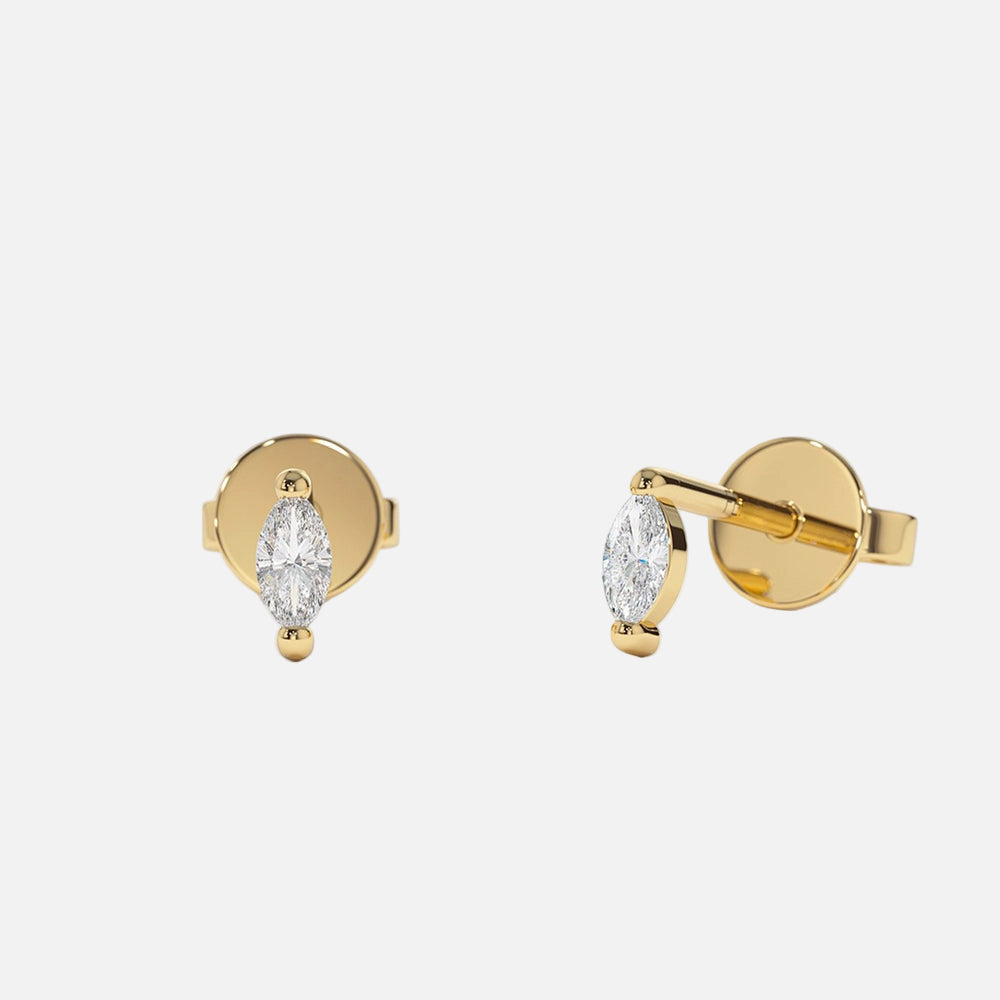
Mini Marquise Solitaire Stud Earrings
Shop Now -

Half-Pavé Angled Bar Necklace
Shop Now -
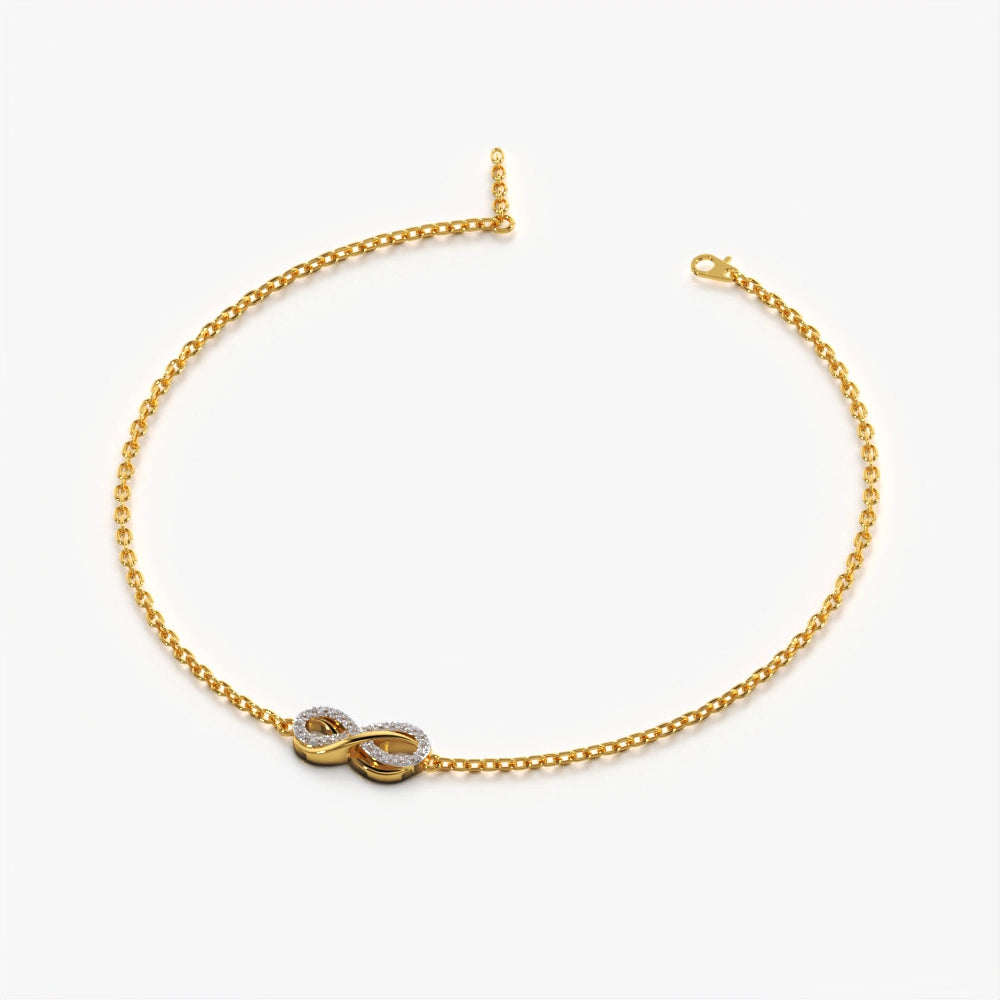
Pave Twisted Infinity Bracelet
Shop Now
Ask most women when they realised they felt overdressed, and they will describe a physical moment, not a visual one. The earring brushed the jaw. The bangle knocked against the desk during a call. The pendant slid sideways under the seatbelt. The ring caught on a dupatta.
This matters more than it sounds, because feeling overdressed is very often a sensory feedback loop rather than a styling failure.
Here is how it works. A piece announces itself physically. Your attention goes to it. Attention to your own appearance reads, internally, as self-consciousness. Self-consciousness gets interpreted as "I am dressed wrong." Then you touch the piece to check, which puts your attention back on it, and the loop tightens.
The useful diagnostic is embarrassingly simple. If you have adjusted a piece more than twice, that is the piece. Not the biggest one. Not the newest one. The one your hands keep going back to.
This also explains why weight matters so much more than size. A heavy, small earring will bother you all day. A larger, genuinely lightweight one will disappear within twenty minutes. It is the reason serious daily-wear jewellery is engineered around weight distribution rather than dimension, and why lightweight construction is the single most underrated factor in whether you actually wear something. KYMEE's pieces are built on 18K gold vermeil, meaning at least 2.5 microns (5x thicker) of real gold over nickel-free 925 sterling silver, which keeps the weight closer to silver than to solid gold while the surface still reads as gold. Whether that trade-off suits you is a personal call, but it is the reason a vermeil hoop can be worn from 9 AM to 9 PM in a way a solid gold hoop of the same size often cannot.
It was almost never about how many pieces
The count-based rules are the most repeated advice on this topic and the least useful, because you can look overdone in two pieces and perfectly edited in six.
What actually creates the overloaded effect is competing focal points. Two pieces at similar visual volume, in the same zone, both asking for attention. A bold pair of drops with a bold pendant. Two wide rings on adjacent fingers. A chunky bracelet next to a large watch face.
The fix is not subtraction. It is a volume ladder: one piece is the loudest, everything else steps down clearly beneath it, and the zones are spread out.
Which means a look with one pair of small pavé studs, a fine chain, two slim stacking bands, and a thin bracelet reads as considered, while a look with exactly two pieces can read as chaotic if both are shouting. This is the principle underneath everything else in how statement pieces and everyday pieces are meant to work together, and once you can see it, the count rules become irrelevant.
The five fixes that work in under a minute
Remove the loudest piece, not the newest one
The instinct is to remove whatever you added last, because it feels like the culprit. Usually, it is not. Find the piece with the highest visual volume and take that one off first. Often, the newest piece was fine, and the old one you stopped noticing years ago is the thing throwing off the balance.
Move the weight downward
Jewellery near the face carries roughly three times the perceived weight of jewellery on the hands, because faces are where people look. If a look feels heavy, swap the drop earrings for small studs and put the interest into stacked rings instead. Same number of pieces, entirely different reading.
Add, do not subtract
This is the counterintuitive one, and it contradicts the most quoted styling rule in existence.
When a single dressy piece feels out of place, the problem is often that it is standing alone and therefore reads as deliberate. One dressy piece looks like an occasion. Three coordinated pieces, one of which is dressy, look like a personal style.
If your pendant feels too formal for a normal weekday, do not remove it. Add a thin second chain and a small ring in the same tone. The dressy piece stops being an announcement and becomes part of a system. This is why layered chains frequently feel more casual than a single pendant, despite objectively being more jewellery.
Break the matched set
Nothing signals "occasion" faster than a matching set worn as a set. The set is a costume. Split it. Wear the earrings from one and the chain from another, or station-style pieces where the rhythm does the work instead of a single hero motif. Mismatch is what makes it look like yours rather than like something you were given.
Let one metal repeat
Mixing metals works, but it needs repetition to look intentional. If there is gold at the ears, there should be gold at the hands. A single unrepeated metal tone reads as an accident, and accidents feel like being dressed wrong.
"Minimal" does not mean "small"

This is where a lot of people get stuck. They buy tiny things, feel invisible, and conclude minimal jewellery is not for them.
Minimal is not a size instruction. It is an informational instruction. A minimal piece gives the eye one clear idea and stops. A maximal piece gives it five ideas at once and asks you to sort them out.
A wide, sculptural gold cuff with no stones and one clean line is minimal. A tiny pendant crowded with six different textures and a dangling charm is not, regardless of how small it is.
Stone treatment is the clearest place to see this. A single large stone creates one high-intensity point that the eye locks onto, which is what makes a solitaire read as formal. Many tiny stones scattered across a surface create light and movement without a fixed target, which is what makes pavé read as everyday.
That distinction is baked into how KYMEE handles stones, and it is worth knowing before you shop. Moissanite appears only in mini and accent form, in pavé bands, small clusters, and delicate stackers. Larger centre stones are cubic zirconia. The practical result is that even the sparkling pieces tend toward light and movement rather than a single arresting point, which is what keeps them from tipping into occasion-wear. If you specifically want one commanding stone, this is the wrong catalogue for you, and knowing that upfront saves you a return. The broader logic behind this material approach is covered in what demi-fine jewellery actually is and how it differs from both fine and fashion jewellery.
Build a base you cannot overdress
The most reliable long-term fix is not a styling trick. It is owning a small number of pieces so unremarkable in your own life that they stop registering as decisions.
A fine chain, 16 to 18 inches: Worn daily until you forget it exists. This is the piece that does the recoding work.
Small studs: Not for any occasion. For every day, including the ones where you do nothing. Studs earn their place because they do not move, do not swing, and do not catch in a dupatta, which removes them from the sensory feedback loop entirely.
One or two slim bands: Visual interest at the hands, which is the lowest-risk zone in the entire body.
A thin bracelet, if your sleeves allow it: Optional, and genuinely optional.
That is four pieces. Worn together, they read as edited rather than dressed up, and worn for a month, they will stop feeling like anything at all. KYMEE's site is organised around exactly this distinction, with a dedicated edit for work-appropriate pieces sitting separately from the party and festive filters, which is a more useful way to shop than browsing by category when the whole problem you are solving is contextual appropriateness. As a BIS-registered jeweller working only in 18K gold vermeil, the catalogue skews toward this everyday register by default rather than treating daily wear as a scaled-down version of occasion jewellery.
If nothing in a standard catalogue matches the specific quiet thing you have in your head, KYMEE also runs a made-to-order service where the piece is built to your brief. Worth knowing about if you have a very particular idea of what "not too much" looks like for you, which many people do.
Sometimes you genuinely are overdressed, and that is fine
It would be dishonest to end this without saying it: occasionally, the feeling is accurate.
If you are wearing three pieces of similar visual weight in the same zone, if the metal tones are unrepeated and unrelated, if you have on a full matching set on a working Tuesday, or if you are wearing something for the first time and have not yet worn it enough to relax in it, the feeling is telling you something true. Listen to it and edit.
But being slightly more dressed than the room is not a failure. It is a preference, and it stops feeling like an error the moment it becomes consistent. The women who never seem overdressed are rarely wearing less. They are wearing the same things often enough that nobody, including them, reads it as an occasion anymore.
That is the whole trick. Not restraint. Repetition.
FAQs
How do you stop feeling overdressed at work specifically?
Anchor to one zone. Pick either the ears or the neck, put your interest there, and keep the other two zones quiet. Offices are dense with faces and screens, so anything that moves or catches light near the jaw is amplified. Small hoops or studs with a fine chain are the most reliable combination.
Is it strange to wear gold jewellery every day in India?
It is increasingly common and no longer reads as unusual in most urban workplaces. The discomfort is usually generational conditioning rather than actual social feedback, and it fades with consistent wear. Demi-fine pieces make this easier because they carry lower financial anxiety than solid gold, which removes a second source of self-consciousness.
How much jewellery is too much for the office?
There is no number. Two competing bold pieces will look like more than five well-laddered subtle ones. Judge by whether any two pieces are fighting for the same attention, not by count.
Can you look overdressed even in small, minimal jewellery?
Yes, and it is the most common version of the problem. A tiny matching set worn as a set still reads as occasion-wear. Small does not equal casual. Mismatched and repeated does.
Should you remove jewellery if someone comments on it?
No. A comment is usually curiosity or a compliment landing awkwardly. Removing the piece confirms it was a mistake, which is the one thing that actually makes it look like one.
What is the fastest single change if you only do one thing?
Move the visual weight from your ears to your hands. It takes ten seconds and changes the entire look without changing how much you are wearing.
Does minimal jewellery work with Indian wear?
Very well, and often better than heavy pieces. A fine chain against a plain kurta or a saree blouse does more than a wide necklace, because it lets the fabric and the drape stay the focus. The approach to matching pieces to necklines and fabric weight applies in the same way across Indian and Western silhouettes.