


The Zero-Maintenance Jewellery Routine: What to Wear If You Literally Never Want to Take It Off

There is a specific kind of tiredness that has nothing to do with jewellery being uncomfortable.
It is the tiredness of decisions. Of standing at a drawer at 8:40 in the morning deciding which earrings go with a kurta you have already changed twice. Of pulling a ring off at the kitchen sink and spending the next four days wondering where you put it. Of untangling two chains that were fine when you left them.
Most people who say "I want jewellery I never have to take off" are not actually asking about waterproofing. They are asking to stop thinking about it.
That distinction matters, because the entire internet answers the wrong question. Search for jewellery you can wear all the time, and you will get material claims. Steel is waterproof. Solid gold survives everything. Wear it in the shower, wear it to the gym, wear it forever. Those claims are sometimes true and sometimes marketing, but either way, they answer a question about metallurgy when you asked a question about your life.
This guide answers the actual question. It is built around one idea that changes what you buy: a zero-maintenance routine is one with the fewest decisions and the fewest removal events, not one with the most water resistance.
What "zero maintenance" actually means

Wearing jewellery carries three separate burdens, and they are almost always confused with each other.
Decision burden: How often you have to choose. Every morning you pick something is a decision. Every outfit change that prompts a jewellery change is another.
Removal burden: How many times per week a piece physically comes off your body. Each removal is a moment where the piece can be misplaced, dropped, put down on a surface you will not remember, or left behind in a hotel bathroom.
Care burden: Cleaning, storing, untangling, checking clasps.
Almost every "everyday jewellery" guide addresses only the third. But the third is the smallest of the three. Care burden is roughly thirty seconds a day and two minutes a week. Decision burden is daily and cumulative. Removal burden is where jewellery is actually lost.
So a genuinely zero-maintenance routine is one where you have solved decisions and removals first. Care becomes trivial once those two are handled, because you are handling fewer pieces, less often.
-
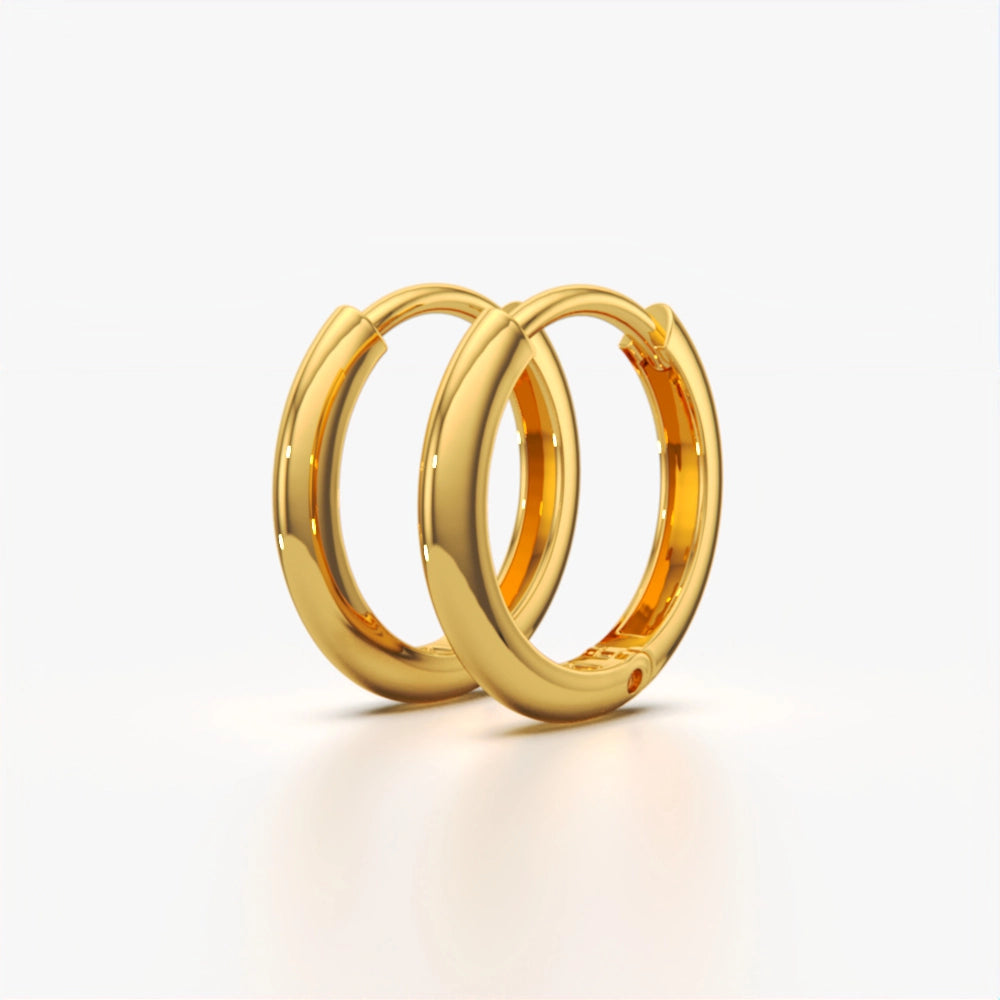
Classic Huggie Hoop Earrings
Shop Now -
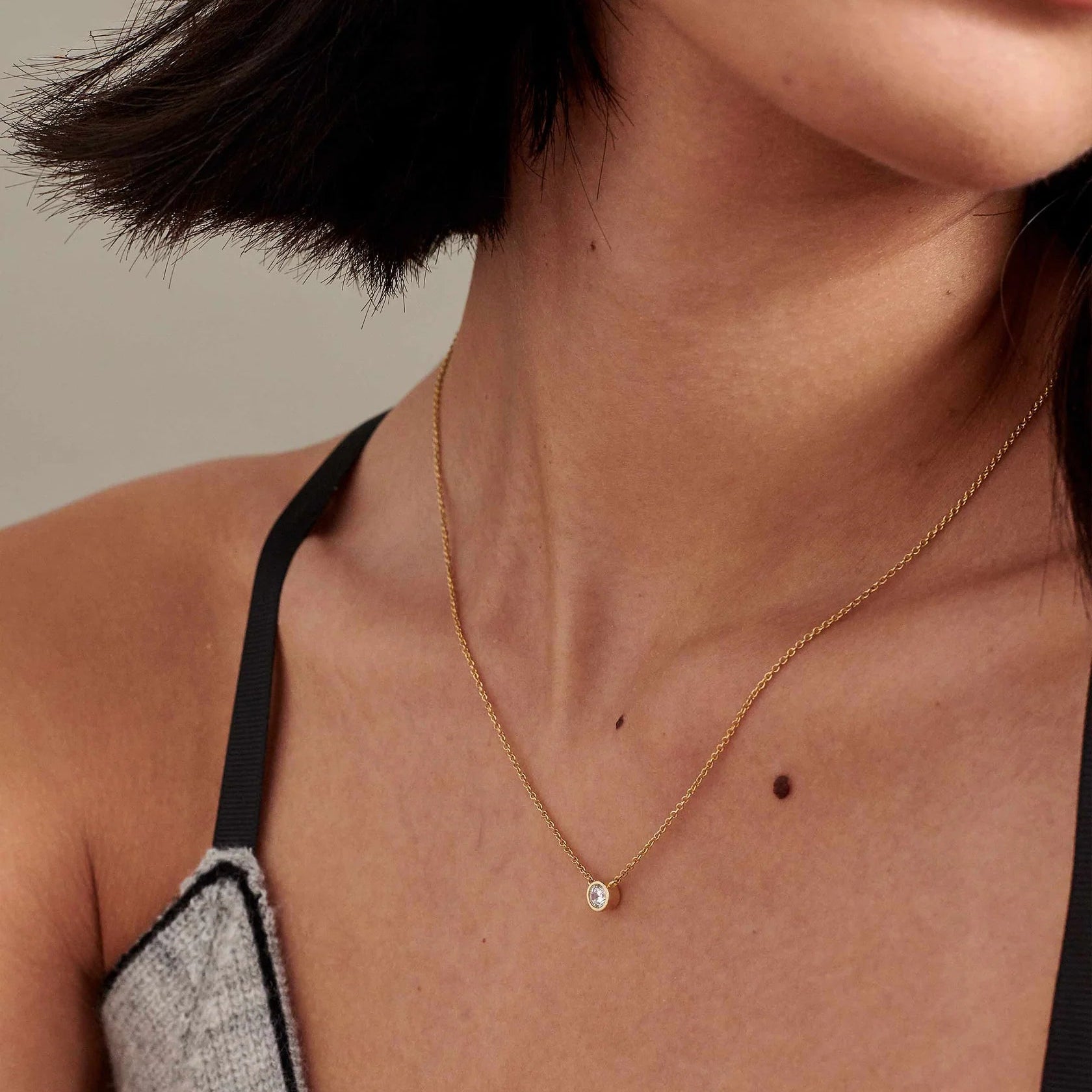
Bezel Solitaire Pendant Necklace
Shop Now -

Dainty Bezel Round Solitaire Ring
Shop Now -
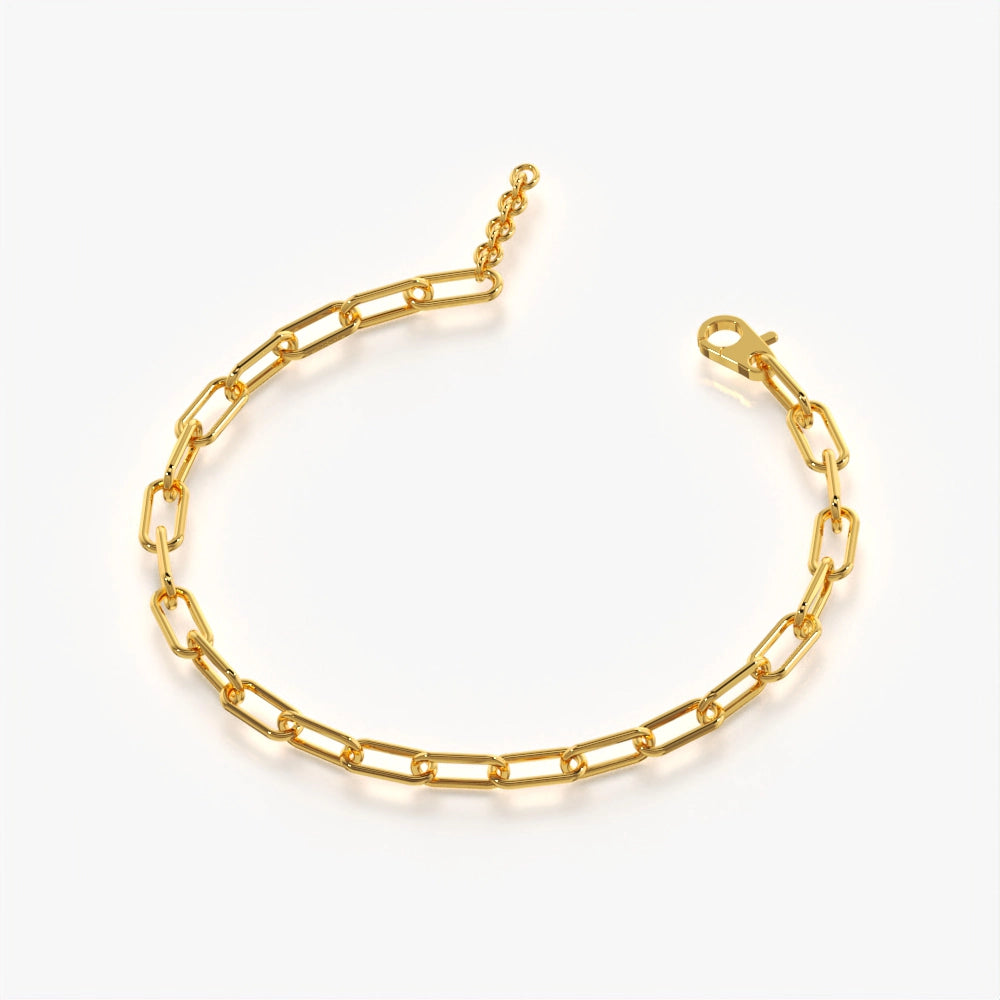
Classic Paperclip Link Bracelet
Shop Now
Count your removals before you buy anything

Here is the exercise. Take everything you currently own and sort it into three tiers by how many times a week it comes off your body.
Tier 0: zero to one removal per week. These pieces live on you. In practice, this is almost always earrings, and occasionally a chain. You take them off when you are deliberately caring for them, not because a task demanded it.
Tier 1: about seven removals per week. Comes off at night, goes back on in the morning. A pendant, a bracelet you take off before bed, a ring you leave on the bedside dish.
Tier 2: fifteen to thirty removals per week. Comes off multiple times a day. Rings during cooking. A bracelet before a workout. Anything that catches on a laptop edge or a dupatta.
Now the useful part. Think about the pieces you have lost, damaged, or bent over the last five years. They will be overwhelmingly Tier 2.
This is not a coincidence, and it is not carelessness. Loss is a function of handling frequency. A piece that leaves your body twenty times a week is exposed to twenty opportunities to be set down on the wrong surface. Wear is similar. Most plating loss happens through friction and moisture, and a piece that goes on and off repeatedly gets handled with wet hands, gripped, twisted over a knuckle, and dropped into pockets.
The bathroom sink is the single most common loss site in the world, and it is a removal site, not a wearing site. Jewellers and plumbers both report the same pattern: pieces go down drains, get wrapped in tissue and thrown away, or get left on the ledge of a sink that belongs to somebody else. One jeweller describes a customer who had to dig up her bathroom tiles to retrieve a lost earring, and notes that leaving earrings at the side of a sink is one of the most common ways they disappear.
The rule that follows from this: if you want zero maintenance, move as much of your stack as possible into Tier 0 and Tier 1, and keep your Tier 2 pieces deliberately few and deliberately inexpensive to replace.
The four moments that genuinely require removal

Nobody honest will tell you that any piece of jewellery, in any material, should never come off. Even the "waterproof" claims come with quiet caveats about chlorine, sauna heat, and abrasive cleaners.
What is more useful is knowing exactly which moments matter, because there are only four, and each one takes about ten seconds.
Water with anything dissolved in it: Not a splash. Not rain. Shampoo, soap, conditioner, chlorine, and seawater are the problem, because they carry surfactants and salts that get into settings and under links and stay there. KYMEE's own jewellery care page lists water as the first of the four things that dull gold vermeil fastest, with pool and seawater called out specifically.
Anything you apply to skin or hair: Perfume, deodorant, sunscreen, serum, hairspray, oil. The order matters more than the substance. Jewellery goes on after everything else has settled, and comes off before anything is reapplied. This is the "last on, first off" habit, and it is the highest-return thirty seconds in this entire guide.
Cleaning chemicals and sanitiser: This one deserves particular attention in India, and I will come back to it.
Sustained friction against a hard surface: Gym equipment, weights, a helmet strap buckle, a laptop edge, dough.
That is the complete list. Sleeping is a fifth situation, but it sits differently: it is not chemically damaging; it is mechanically damaging, and only for some categories. A fine chain twisting against a pillow for eight hours is how chains kink permanently. A flush stud is fine.
Everything else in your day is safe. Rain is fine. Washing your face is mostly fine if you take a moment. Sweating is fine if you wipe down afterwards. Most people are far more anxious about this than the reality requires, and that anxiety is itself a maintenance burden.
Build the stack by zone, not by outfit

Once you accept that the goal is fewer decisions and fewer removals, the way you shop changes completely. You stop buying by occasion and start buying by body zone, because removal frequency is determined almost entirely by where a piece sits.
Ears: the zero-decision anchor
Ears are the lowest-removal zone on the body. Nothing you do with your hands touches your ears. Earrings do not get caught in a dupatta the way a pendant does. They do not press against a desk the way a bracelet does. They are not in the water when you wash a vegetable.
This is why the single highest-leverage move in a zero-maintenance routine is to stop changing your earrings.
Pick one pair. Wear them for months. This sounds like a sacrifice, and it is genuinely not. There is a reason so many people who own a lot of jewellery converge on the same behaviour: a pair of studs that stays in permanently, and everything else rotating around it.
Something worth noticing in how people describe this: the pairs that stay in longest tend to be the ones that are physically annoying to remove. Screw backs and threaded closures get left in precisely because taking them out is a small chore. Removal friction, which sounds like a design flaw, turns out to be the feature that produces the behaviour you wanted.
For the base pair, look for a flush profile that does not catch on a pillow or a hair tie, a closure that does not loosen through the day, and a scale small enough that it reads as neutral against everything from a kurta to a blazer. Stud earrings are the obvious category here. Hoop earrings work too if you go small and choose a huggie style, where the hinge closes flush against the lobe rather than a wire that can work its way open.
If you want more detail on how different earring shapes behave across a working week, there is a longer piece on daily wear gold vermeil earrings that goes into the styling side.
Neck: one chain, chosen for length before design
The neck is the second lowest-removal zone, and a chain is the piece most people describe as the one they forget they are wearing.
The mistake here is choosing by pendant. Choose by length first. A chain that sits too high collects sweat in the hollow at the base of the throat. A chain that sits too low is directly under the diagonal line where a sling bag strap or a seatbelt crosses your chest, which is the most underrated cause of plating wearing off on one side.
Get the length right, and the neck becomes a Tier 0 or easy Tier 1 zone. Get it wrong, and you will fidget with it all day, which is a decision cost even though it never actually comes off.
Keep the pendant low-relief and closed-back rather than open and filigreed. Open settings catch fabric, and in India, fabric is constantly being dragged across your chest as you reposition a dupatta or a pallu.
A pendant necklace with a small, smooth profile is the default. There is a much more detailed breakdown of chain behaviour and length in the daily wear necklaces guide if you want to go deeper before buying.
For anyone who wears a mangalsutra daily, this zone is already effectively Tier 0 by custom, which makes the length and profile decision more consequential, not less.
Wrist: the friction zone
Wrists are where the theory of continuous wear meets reality and loses.
Your wrist rests on a desk edge. It rests on a laptop's front edge for hours. It goes into a bag. It grips a two-wheeler handlebar. It is the closest jewellery zone to your hands, which means it is adjacent to every wet task without actually being able to escape one.
You can absolutely have a Tier 1 bracelet. You are unlikely to have a Tier 0 one. Accept that and choose accordingly: a flat, low-profile chain link bracelet with a secure clasp, rather than a charm-heavy piece with dangles that snag. Avoid anything with a lobster clasp so small you cannot fasten it one-handed, because a bracelet you cannot put on alone is a bracelet you will stop wearing.
If you want the wrist zone to be genuinely low-effort, a bangle style with no clasp at all removes the fiddliest part of the interaction. Browse the wider bracelets range with clasp mechanism in mind rather than just the look.
Fingers: the highest-removal zone in an Indian home
This is where honest advice diverges most sharply from what you will read on international sites.
In a typical Indian household routine, hands go into water many times a day. Not just handwashing. Rinsing dal, kneading atta, washing rice, cleaning vessels, washing produce, and the general reality of a kitchen where a great deal of food preparation is done by hand rather than with tools.
A ring is therefore structurally a Tier 2 piece here, no matter what it is made of. And rings have a specific physical problem: the band traps a thin film of moisture against your skin that does not evaporate. This is well documented outside the jewellery world. Clinical studies of healthcare workers found substantially higher bacterial counts on ring-wearing fingers compared to non-ring-wearing fingers, with the risk increasing as the number of rings worn increased. The relevance for jewellery is not hygiene panic; it is that the underside of a ring band is a permanently damp micro-environment, and damp is the condition that degrades finishes fastest.
So the honest position on rings and zero maintenance is this: a ring can be a wonderful daily piece, but it will never be a never-take-it-off piece in an Indian kitchen, and any brand telling you otherwise is not describing your life.
What you can do is reduce the cost of each removal. Choose a low-profile band that clears a knuckle easily so removal takes one second and does not require twisting. Choose a bezel setting over a high prong setting, because prongs are what catch on dough, cloth, and sponges. And keep the number of rings low, because removal cost multiplies.
Look at daily wear rings and dainty rings for low-profile options. If you like the look of a stack, stackable rings at least come off as a unit, which is one removal event instead of three.
The India variables that change the maths

Most everyday-jewellery advice is written for a temperate climate and a dishwasher.
Here is what actually applies.
Hand sanitiser is a bigger factor than showering: This is the one people miss. A shower happens once or twice a day. Sanitiser can happen fifteen times, and unlike water, it is alcohol-based and evaporates, leaving residue in settings and around links. KYMEE's care page names hand sanitiser explicitly alongside soap and harsh cleaners as one of the four things that dull vermeil fastest, and it is the only one of the four that most people apply without thinking. If you wear a ring or a bracelet, sanitiser goes on your hands and straight onto the metal. Wiping your hands dry with a cloth afterwards, rather than rubbing them together until it evaporates, meaningfully reduces this.
Hard water leaves deposits that dull: Across much of western and northern India, tap water carries enough dissolved mineral content to leave a faint film on metal as it dries. You will not see it on day one. You will see it at week six as a general loss of brightness that people usually blame on the plating. Drying pieces properly rather than letting them air dry is the fix.
Monsoon changes the storage question, not the wearing question: Humidity does not damage jewellery you are wearing, because your body heat keeps it dry. It damages jewellery sitting in a closed box in a cupboard in July. This is the strongest practical argument for the Tier 0 approach: pieces you wear continuously are pieces that are not sitting in a humid drawer oxidising.
Turmeric, oil and dough are the real kitchen enemies: Not because they are corrosive but because they get into crevices and stay. A high prong setting or an openwork pendant that meets haldi will hold a faint yellow cast in the gaps. Smooth, closed, low-relief shapes solve this entirely.
Helmet straps and two-wheeler commutes: If you ride, the strap buckle sits exactly where a short chain sits, and the wind at the neck combined with an hour of vibration is a genuine wear condition. Longer chain, or tuck it under the collar.
The mechanics of a piece that stays on

If you take nothing else from this guide, take this list. It is about hardware, not design.
Closures that resist casual removal: Screw backs and threaded posts stay in because taking them out is a deliberate act. Push backs come out in a pillowcase.
Hinged closures over open wires: A huggie hoop closes with a hinge and a click. An open hoop relies on tension and will eventually loosen.
Bezel over prong: A bezel wraps the stone in a rim of metal. There is nothing to catch and nothing to bend. Prongs are beautiful, and they are the number one reason people take rings off before doing anything with their hands.
Closed backs over open backs: An open-back setting lets light through, which looks lovely, and lets in sweat, soap, and turmeric, which does not.
Clasps you can operate with one hand: A clasp requiring two hands and a mirror is a clasp that adds a decision every morning.
Weight low, profile flat: A piece that sits flush does not press into you when you sleep, does not catch on knitwear, and does not rotate.
Materials matter too, and you should know what you are buying rather than reading a marketing word. Gold vermeil means a layer of real gold over a sterling silver base. KYMEE's vermeil is specified as 18K gold at a minimum of 2.5 microns over nickel-free 925 sterling silver, which is a thicker gold layer than standard gold plating and a precious metal base rather than brass. That combination is what makes the finish worth caring for rather than disposable, and it is also why the four removal moments above are worth the ten seconds each.
There is a fuller comparison of how weight and construction affect all-day comfort in the piece on lightweight jewellery, and a direct answer to the water question in can you shower with gold vermeil.
The routine
Here it is. Three habits. Together they take under three minutes a week.
The ten-second rule
Before water, soap, sanitiser, or sweat, whatever comes off comes off. Not everything. Just what that specific moment requires. Rinse before the kitchen. Everything before the shower. Nothing before rain.
Ten seconds, four times a day, is under a minute. That is the entire cost of owning finished metal.
The landing spot
This is the habit that prevents loss, and it is the one nobody teaches.
Choose one spot per removal location. A small dish, a hook, a shallow bowl. Not a surface. A container. The distinction matters because a piece on a flat surface can be swept into a pile of tissues, knocked to the floor, or moved by somebody else.
Two hard rules about placement:
Never near a drain: Not on the sink ledge. Not on the edge of the wash basin. Not on a shelf above either. If the only place to put a ring is next to a sink, put it in your mouth for the duration of the handwash instead, which sounds absurd and is the single most reliable trick in existence.
Never a temporary container: No tissue, no pocket, no handbag pouch. A tissue-wrapped ring gets thrown away. This happens constantly.
You want a dish by the kitchen sink, a dish on the bedside, and nothing else. Two spots. Any piece not on your body is in one of those two dishes.
The Sunday reset
Two minutes, once a week.
Wipe each piece with a soft, dry cloth, paying attention to the underside of a pendant, the inside of a ring band, and the back of an earring, which is where sweat and residue concentrate. If something needs more, a barely damp cloth with mild soap, then thoroughly dry.
Do not use abrasive polishing cloths or commercial dip cleaners on vermeil or plated pieces. They are formulated to remove a surface layer, which is fine on solid metal and is exactly wrong on a plated one.
Store anything not in daily rotation separately, with clasps fastened and chains laid flat or hung. Fastening the clasp before storage is the small step almost everyone skips, and it is the difference between a chain you can put on in five seconds and a knot you spend ten minutes on. KYMEE's care page covers the storage specifics in more detail.
What to skip if you want this to work
Anything that requires a decision: A piece that only works with certain necklines is a piece you have to think about. Zero maintenance means the answer is always yes.
Statement earrings as a daily base: They can live in your collection. They cannot be the anchor.
More than two rings. Removal cost multiplies and the whole system collapses.
Anything you are precious about: If you would be devastated to lose it, it should not be in your Tier 0 rotation, because Tier 0 pieces travel everywhere with you, including into situations you did not plan for. Keep the sentimental piece safe and wear something you love but can replace.
Sets: A matched set is three decisions pretending to be one.
A realistic starter stack
Five pieces. Two of them you will genuinely never think about again.
- One pair of studs: Flush, small, secure closure. This is your Tier 0 anchor, and it does not change.
- One chain, correct length: Low-relief pendant or none. Tier 0 or easy Tier 1.
- One bracelet: Flat, secure clasp, or clasp-free bangle. Tier 1.
- One ring: Low profile, bezel set, easy over the knuckle. Tier 2, and that is fine.
- One second pair of earrings for the days you want something different, which will be fewer days than you expect.
That is it. Roughly daily wear in shape, and you can build the whole thing across earrings, necklaces, bracelets, and rings.
Five pieces, one morning decision that takes zero seconds because there is nothing to decide, and about three minutes of care a week.
When nothing off the shelf fits
Two variables decide whether a piece becomes Tier 0 or gets abandoned in a drawer, and both are dimensional rather than aesthetic: chain length and stone size.
Standard chain lengths are built around an average that may not be yours. If every chain you own sits either too high in the hollow of your throat or exactly under your bag strap, the problem is not the chains; it is that you need a length between the two standard options. Similarly, a stone one size smaller is often the difference between a ring that catches on everything and one you forget you are wearing.
If that is your situation, KYMEE runs a custom service where you specify the design, metal, and stone yourself. For a piece intended to stay on permanently, those two specifications are the ones worth being deliberate about.
One clarification while you are choosing stones, because the terminology on the site is inconsistent in places: KYMEE uses moissanite only in mini and accent sizes, and cubic zirconia for larger stones. Neither is a diamond, and any label suggesting otherwise is a labelling error rather than a description of the product.
FAQs
Can you wear gold vermeil jewellery 24/7 without taking it off?
Not entirely. Gold vermeil is a layer of 18K gold over sterling silver, and while it handles daily wear well, it should come off before showering, swimming, applying skincare or perfume, using cleaning chemicals or hand sanitiser, and before the gym. Earrings are the exception most people manage continuously, because they avoid nearly all of those situations.
What is the lowest-maintenance type of jewellery?
Stud earrings. They sit in a zone that almost never encounters water, chemicals, or friction; they require no clasp handling; they do not need to be matched to an outfit, and a secure closure means they can stay in for weeks at a time. A single pair of well-chosen studs removes more daily effort than any other piece of jewellery you can buy.
Can you sleep in gold vermeil jewellery?
Flush studs and small huggies are generally fine to sleep in, and the risk is to the piece rather than to you. Fine chains are not recommended, because eight hours of twisting against a pillow is the most common cause of kinks and broken links. Rings and bracelets are best removed, since they press against skin and bedding all night.
Does gold vermeil turn your skin green?
It is significantly less likely than standard gold-plated jewellery, because the base is 925 sterling silver rather than brass or copper. Mild discolouration can still occur in some people due to sweat, skin acidity, humidity or product buildup on the metal. Keeping pieces clean and dry is the main preventative.
How often should you clean everyday jewellery?
A soft, dry cloth wipe once a week is enough for pieces in continuous wear, focusing on the underside of pendants, the inside of ring bands and the backs of earrings where residue collects. Avoid abrasive polishing cloths and commercial dip cleaners on any plated or vermeil piece, as they are designed to remove a surface layer.
Is it bad to wear rings all day in the kitchen?
It is hard on the piece. Rings trap moisture against the skin under the band, and kitchen work adds oil, turmeric, dough, and detergent, all of which settle into settings and around prongs. A bezel-set, low-profile ring handles it far better than a high prong setting, but the simplest solution is a small dish by the sink and a ten-second removal habit.
What jewellery should you take off before applying perfume?
All of it. Perfume, deodorant, sunscreen, hairspray and serums leave a film on metal that dulls the finish over time. The habit is "last on, first off": jewellery goes on after your whole routine has settled, and comes off before anything is reapplied.
How do you stop losing earrings and rings?
Reduce removal events and control where removal happens. Choose pieces that stay on rather than pieces you take off constantly, use a small dish or bowl rather than a flat surface, keep only two designated spots in the house, and never place jewellery near a sink, drain, or in a tissue. Most loss happens at the point of removal, not while wearing.