


What is a Solitaire Diamond? Meaning, Price, and the One Confusion Nobody Clears Up

Ask three people in India what a solitaire diamond is, and you will get three different answers. A jeweller will tell you it is a single diamond above a certain carat weight. A design catalogue will tell you it is a ring style. Your aunt will tell you it is "the big one" that costs a few lakhs.
Here is the interesting part: none of them is entirely wrong. The word "solitaire" carries two meanings in India, and most guides on the internet quietly pick one and ignore the other. That is exactly why so many buyers walk into a showroom confused and walk out overpaying, or worse, buying something they did not actually want.
This guide clears the whole thing up. You will learn what a solitaire diamond really means, how Indian jewellers use the term differently from the rest of the world, what it costs, what the setting styles and shapes are, and, importantly, whether the centre stone even needs to be a mined diamond at all. By the end, you will know exactly which version of a solitaire fits your life and your budget.
The Short Answer

A solitaire diamond is a single diamond set alone in a piece of jewellery, with no side stones or clusters competing for attention. One stone. One focal point. That is the entire idea.
The word comes from the French "solitaire", rooted in the Latin "solitarius", meaning alone or solitary. The most familiar example is the classic engagement ring with one sparkling stone on a plain band, but solitaire pendants, solitaire nose pins, and solitaire stud earrings follow the same principle: a single stone doing all the talking.
Simple enough. Except in India, that is only half the story.
The Two Meanings of "Solitaire" in India
This is the part most blogs skip, and it is the single biggest source of confusion for Indian buyers.
Meaning 1: A design style (the global definition)
Internationally, "solitaire" describes the setting, not the stone. Any piece of jewellery featuring one prominent gemstone qualifies, whether that stone weighs 0.10 carat or 5 carats. By this definition, a tiny single-stone ring on a college student's finger is just as much a solitaire as a celebrity's engagement ring.
Meaning 2: A big single diamond (the Indian trade definition)
Walk into most Indian jewellery showrooms, and "solitaire" means something more specific: a single diamond above a certain weight. The unofficial industry threshold in India sits around 0.30 carat, or 30 cents in trade language (1 carat equals 100 cents). Some jewellers and buyers set the bar higher, treating 50 cents and above as "true solitaire territory".
Why 0.30 carat? Partly practicality. Major grading laboratories like GIA commonly certify individual diamonds from around 0.30 carat upward, so that weight became the informal line where a diamond earns its own certificate, its own identity, and its own premium.
Why this matters to you
When a jeweller quotes you a "solitaire price", they are pricing the stone. When an online store shows you a "solitaire ring", they are describing the design. Knowing which meaning is in play helps you compare prices intelligently, ask sharper questions, and avoid paying a stone-sized price for what is really a style decision. Keep this dual meaning in mind because the rest of this guide (and every purchase you make) becomes much easier once you separate the design from the stone.
-
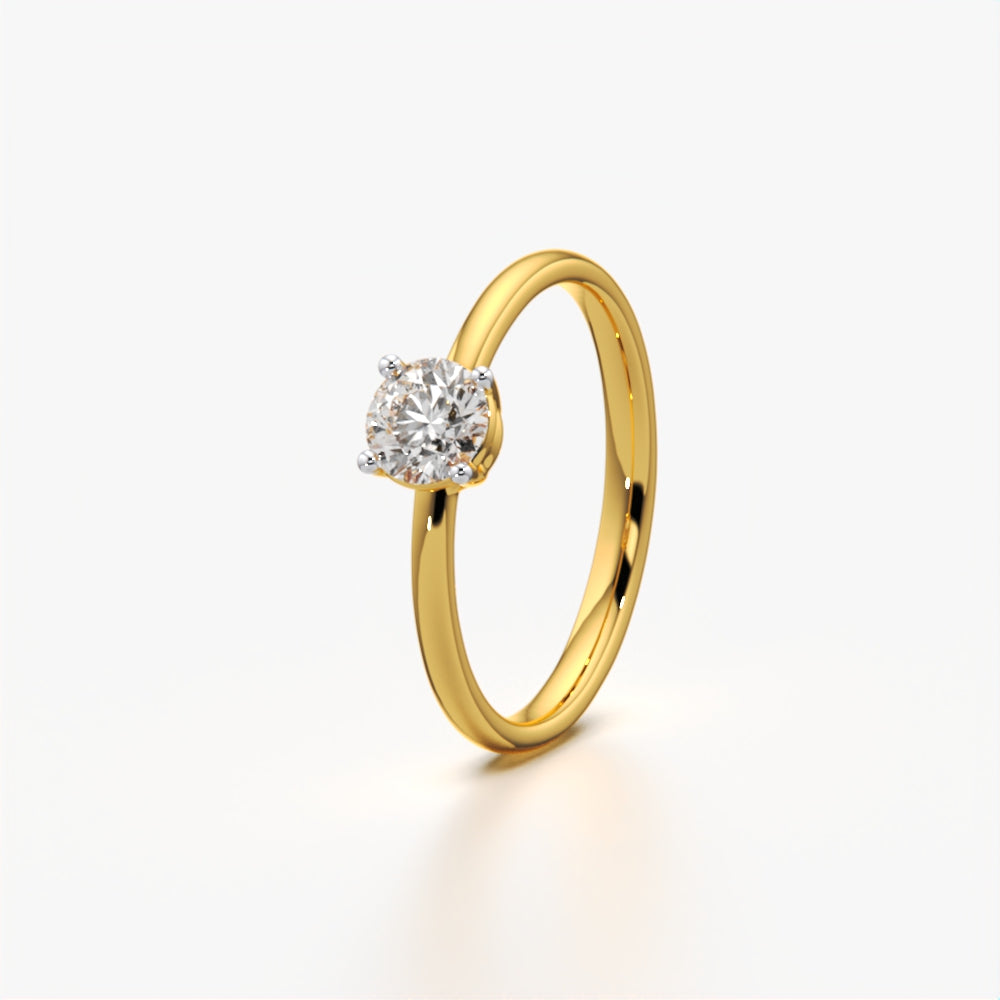
Classic Four-Prong Round Solitaire Ring
Shop Now -
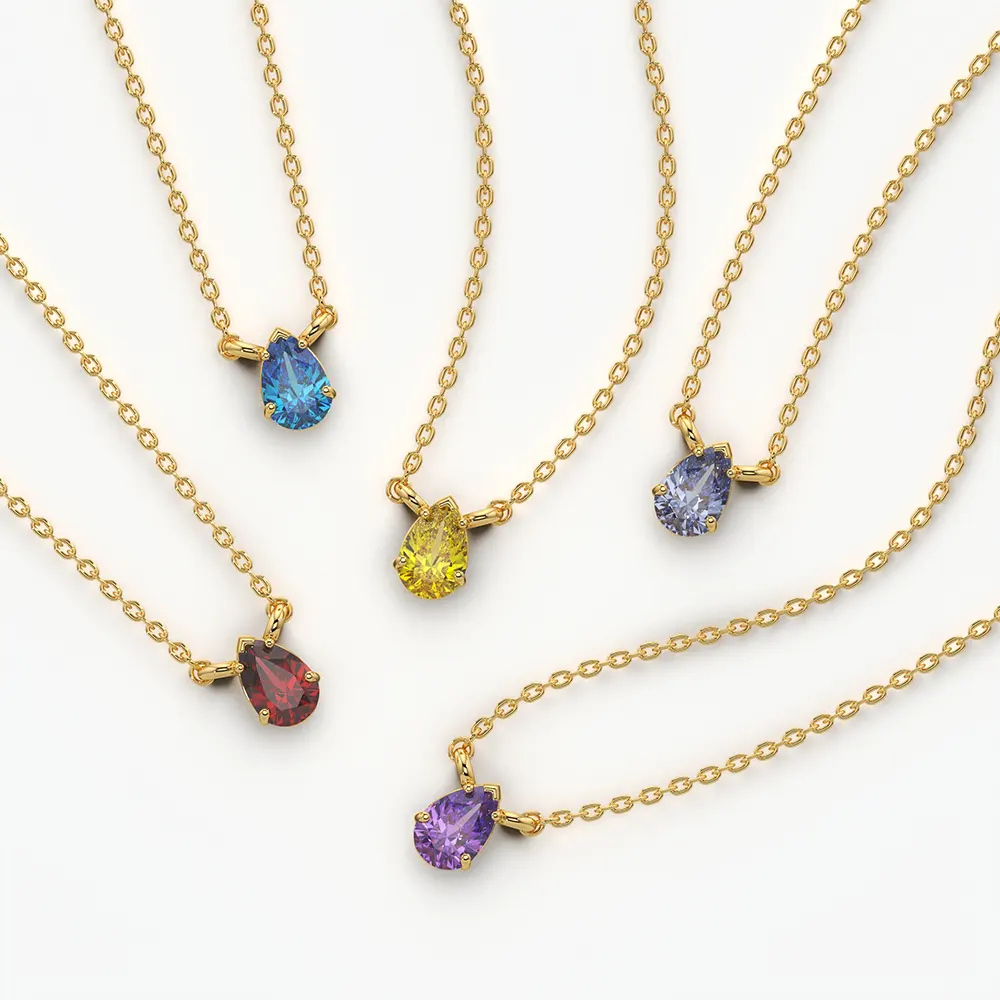
Pear Solitaire Pendant Necklace
Shop Now -
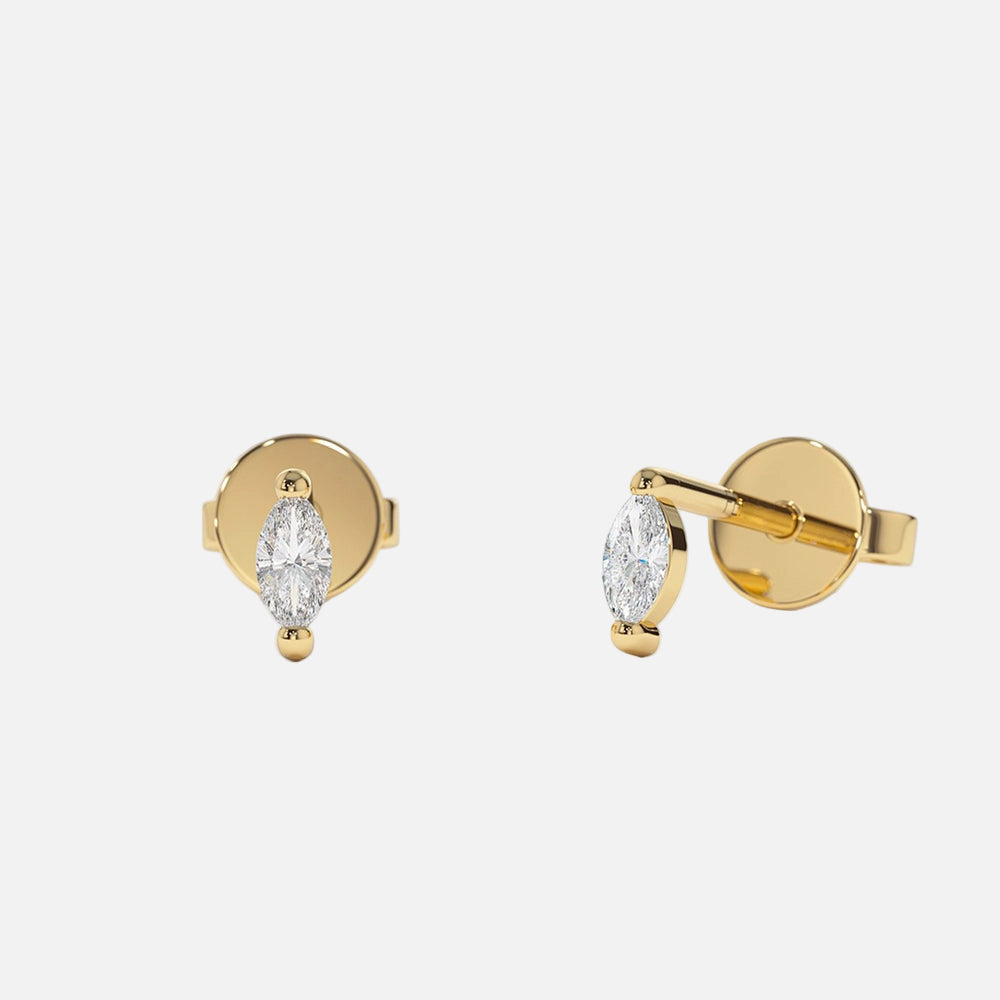
Mini Marquise Solitaire Stud Earrings
Shop Now -
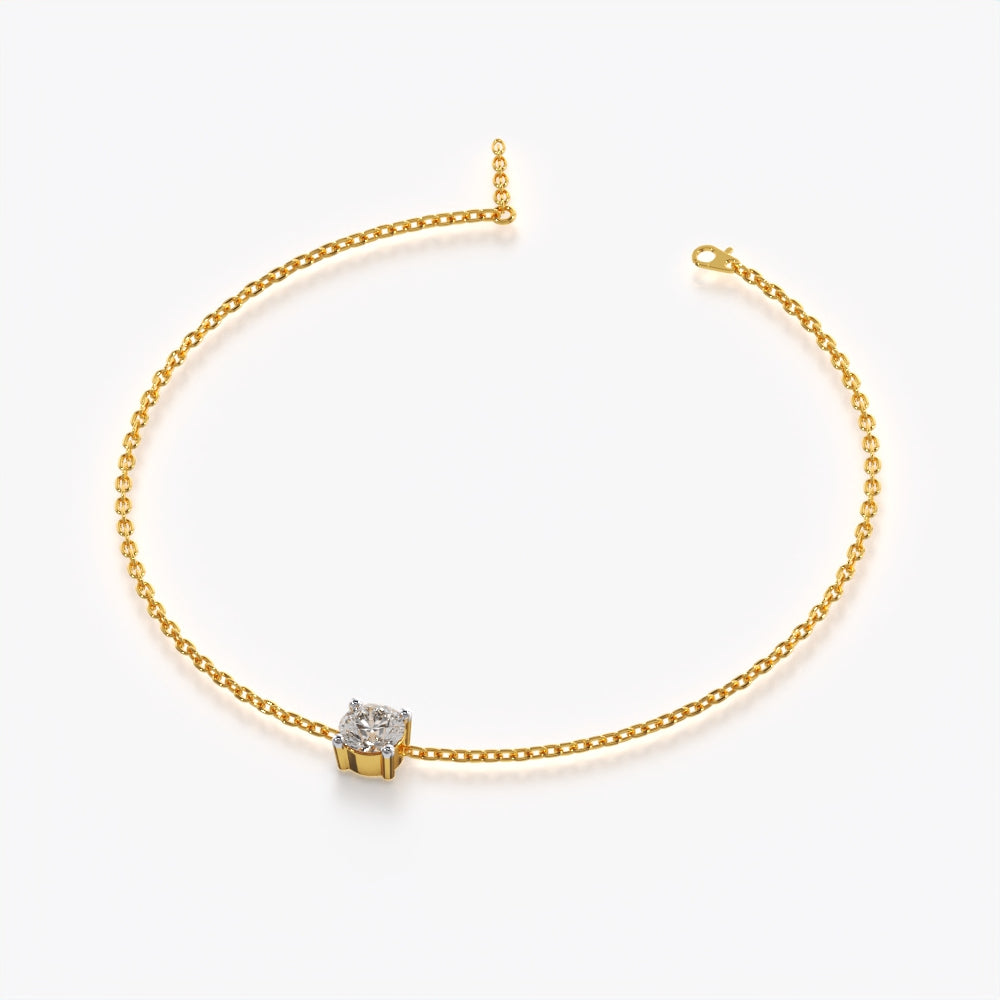
Dainty Solitaire Bracelet
Shop Now
Solitaire vs Diamond: What is the Actual Difference?

Another question Indians search for constantly, so let us settle it in two lines.
A diamond is the material: crystallised carbon, graded on the 4Cs. A solitaire is the format: one stone presented alone. Every solitaire diamond is a diamond, but not every diamond is a solitaire. Ten small diamonds clustered on a band are diamonds, but the ring is not a solitaire. One 0.50 carat stone alone on a band is both.
And here is the twist that unlocks smarter buying: a solitaire does not even have to be a diamond. A single sapphire, emerald, Moissanite, or cubic zirconia set alone is still, by design, a solitaire. Hold that thought, because it changes the price conversation completely later in this guide.
A 30-Second History of the Solitaire
Single-stone rings existed in ancient Rome, but the modern solitaire was born in 1886, when Tiffany & Co. introduced a six-prong setting that lifted the diamond above the band so light could enter from every angle. Then came De Beers' famous "A Diamond is Forever" campaign in 1947, which cemented the diamond solitaire as the default engagement ring across the world.
India added its own layer. Here, the solitaire became more than an engagement symbol; it became a milestone marker. A promotion, a 25th anniversary, a daughter's wedding, a self-reward after years of work. That cultural weight is why the word carries such prestige in Indian households, and why the "big stone" definition took hold here.
The Anatomy of a Solitaire Ring
A solitaire looks minimal, but three decisions shape everything about it.
1. The centre stone
The hero of the piece. Its shape, size, and material decide most of the cost and character (more on stone options shortly).
2. The setting
How the stone is held.
The main styles:
- Prong setting: Four or six slim metal claws grip the stone. Maximum light entry, maximum sparkle. The classic choice, though prongs need an occasional check-up.
- Bezel setting: A metal rim wraps around the stone's edge. Sleek, modern, and the most secure option for busy hands and daily wear.
- Tension setting: The band's pressure holds the stone so it appears to float. Striking and contemporary.
- Cathedral setting: Arched shoulders rise from the band to support the stone, adding height and old-world elegance.
One clarification worth knowing: the moment smaller stones encircle the centre stone, the ring becomes a halo, not a solitaire. Both are beautiful; they are simply different styles. You can see the contrast side by side in KYMEE's solitaire rings and halo ring collections.
3. The band
Plain and polished for the classic look, knife-edge for a sharper profile, or textured for personality. A slim band makes the centre stone look larger, a styling trick worth remembering.
Popular Solitaire Shapes

The shape (technically the "cut style") sets the mood of the ring:
- Round brilliant: The most popular shape worldwide and the sparkliest, engineered to return the most light. Also the most expensive per carat because cutting it wastes the most rough stone.
- Oval: Looks larger than a round of the same weight and elongates the finger. Strongly trending in India right now.
- Princess (square): Clean, modern lines with impressive brilliance.
- Emerald (rectangular step cut): Fewer, larger facets create a calm, mirror-like "hall of mirrors" effect. Quiet luxury in stone form.
- Pear and marquise: Distinctive silhouettes that maximise perceived size.
- Cushion: Soft, rounded corners with a romantic, vintage feel.
If you plan to wear the ring daily, shapes with pointed tips (pear, marquise, princess) benefit from protective settings, since points are the most vulnerable spots.
The 4Cs for Solitaire Buyers
The 4Cs matter for every diamond, but they matter more in a solitaire because there is nowhere for a stone to hide. No side stones to distract, no cluster to blend into.
Here is the solitaire-specific way to think about each:
- Cut: The most important C, full stop. Cut quality controls how much light the stone returns. A well-cut smaller diamond will outshine a poorly cut bigger one every single time. Never compromise here.
- Carat: One carat equals 0.2 grams, divided into 100 cents (or points). A 1 carat round measures roughly 6.5 mm across. Prices do not rise in a straight line; they jump sharply at milestone weights like 0.50, 0.75, and 1.00 carat. Smart buyers often choose a 0.90 carat stone that looks virtually identical to a 1 carat stone but costs noticeably less.
- Colour: Graded from D (colourless) down the alphabet as warmth increases. In a solitaire, colour shows clearly, so G to H grades are the popular sweet spot: near-colourless to the eye without the D-grade price. A yellow gold band also forgives slight warmth in the stone.
- Clarity: Refers to internal inclusions. Chase "eye-clean" rather than flawless; VS and good SI grades typically look identical to higher grades without magnification.
And one non-negotiable if you are buying a real diamond: insist on certification from a reputed laboratory such as GIA or IGI. In a category where two identical-looking stones can differ in price by lakhs, the certificate is your only objective proof of quality.
What Does a Solitaire Diamond Cost?

Now to the question behind every solitaire search.
Prices vary enormously, but here are realistic 2026 ranges for context:
- Natural diamond, 1 carat: Roughly ₹2 lakh at entry-level quality, climbing past ₹10 to ₹12 lakh for premium colour, clarity, and cut, before adding the metal and making charges.
- The Indian sweet spot: Most solitaire purchases in India actually happen between 0.30 and 0.75 carat, where a certified natural stone plus setting commonly lands under ₹2 lakh.
- Lab-grown diamond, 1 carat: Roughly ₹30,000 to ₹1.2 lakh. Chemically and optically identical to mined diamonds, at a fraction of the price.
Why does one large stone cost so much more than many small ones of the same combined weight? Rarity. Nature produces small diamonds abundantly and large, clean ones rarely, so a single 1 carat stone is worth far more than ten 10-cent stones put together. This is also why solitaires carry prestige: the price reflects scarcity, not just sparkle.
Remember to factor in the metal (gold or platinum), making charges, and GST, which together can add a meaningful percentage on top of the stone price.
Does the Centre Stone Have to Be a Diamond? Honestly, No
Here is where separating the design from the stone pays off. The solitaire look, that clean single-stone elegance, comes from the setting. The price comes from the stone. Change the stone, and you change the budget by 10x or even 100x while keeping the same look on your hand.
Your four realistic options:
| Stone | What it is | Sparkle character | Best suited for |
|---|---|---|---|
| Natural diamond | Mined carbon crystal | Balanced white brilliance | Heirlooms, engagements, long-term value |
| Lab-grown diamond | Real diamond, grown in a lab | Identical to natural | Bigger certified stones on a mid-range budget |
| Moissanite | Silicon carbide, a gem in its own right (9.25 hardness) | Extra fiery, rainbow-like flashes | Daily-wear brilliance that lasts, at a fraction of diamond prices |
| Cubic zirconia (CZ) | Lab-made crystal, the classic diamond simulant | Bright, clean, diamond-like sparkle | Everyday fashion, work wear, travel, trend experimentation |
The honest guidance: match the stone to the job. If the ring marks a once-in-a-lifetime commitment and you want lasting monetary value, buy a certified natural or lab-grown diamond from a trusted jeweller. But if what you actually want is the solitaire look for daily life, office wear, festive styling, or gifting, simulated stones are the rational choice, not a compromise. Millions of buyers worldwide have quietly reached the same conclusion.
There is even a practical hybrid habit growing in Indian metros: women who own a real solitaire often wear a well-made simulant version to work, the gym, or on trips, keeping the precious one safe at home. Same look, zero anxiety.
The Everyday Solitaire: Where 18K Gold Vermeil Fits in

This is exactly the gap that demi-fine brands like KYMEE were built for. If lakhs on one finger feel excessive for daily wear, but cheap gold-plated fashion rings that turn your skin green feel worse, the middle path is 18K gold vermeil: a thick layer of real 18K gold (at least 2.5 microns) bonded over solid 925 sterling silver. You get the warmth and richness of real gold on a precious metal base, without the fine jewellery price tag. If the term is new to you, KYMEE's guide on what gold vermeil is breaks it down in plain language.
KYMEE applies this exact philosophy to the solitaire. Its solitaire rings collection recreates the classic single-stone silhouettes, prong-set rounds, bezel-set minimals, ovals, and emerald cuts, in anti-tarnish, hypoallergenic 18K gold vermeil, with most designs sitting in the ₹3,000 to ₹6,000 range. For the stones, the approach is refreshingly transparent: the larger centre stones are high-clarity cubic zirconia chosen for their diamond-like brilliance, while Moissanite is offered in mini stone form for those who want a touch of genuine gemstone fire in daintier designs. No vague "American diamond" hand-waving, just clarity about what you are buying.
To be equally clear about what this is not: a gold vermeil solitaire is not an investment piece, and a good brand never pretends otherwise. It is jewellery made for wearing, not for locker storage. That distinction is precisely its strength. It is the solitaire you can wear to the office every day, stack casually with stackable rings, pair with ethnic wear during the festive season, or gift meaningfully without a lakh-rupee decision. Browse the wider rings collection and the daily wear edit, and you will notice the same single-stone principle echoed across solitaire pendant necklaces and classic stud earrings too.
And if you have a specific solitaire design in your head, a particular shape, band style, or engraving, KYMEE also offers customised jewellery through its customised jewellery service, where you can bring a personal design to life instead of settling for the closest match on a shelf. The guide on how to design custom jewellery is a useful starting point if you go this route.
How to Choose Your Solitaire: A Simple Decision Path
Cut through the overwhelm with six questions, in this order:
- Purpose first: Engagement heirloom, milestone gift, or everyday style? This single answer decides your stone category before you look at a single design.
- Set the budget honestly: Under ₹10,000 points you to quality CZ or mini Moissanite in gold vermeil. ₹30,000 to ₹1.5 lakh opens up lab-grown diamonds. Above that, natural diamonds enter the frame.
- Pick the stone: Use the comparison table above. For real diamonds, prioritise cut, then buy just under milestone carat weights, and always demand certification. For a deeper walkthrough, KYMEE's guide on how to buy diamond jewellery covers the decisions most guides miss.
- Choose the metal: White metals make stones look icier; yellow and rose gold add warmth and suit Indian skin tones and ethnic wear beautifully.
- Match the setting to your lifestyle: Hands-on job or gym regular? Bezel. Maximum sparkle? Prong. Modern statement? Tension.
- Get the size right: Measure your finger at the end of the day when it is warmest, and remember that wider bands fit more tightly.
One more styling note: a solitaire pairs effortlessly with a plain wedding band, which is a big reason the style has survived every trend cycle. For more wearing ideas, from stacking to festive pairing, see KYMEE's guide on modern ways to wear a solitaire ring.
-
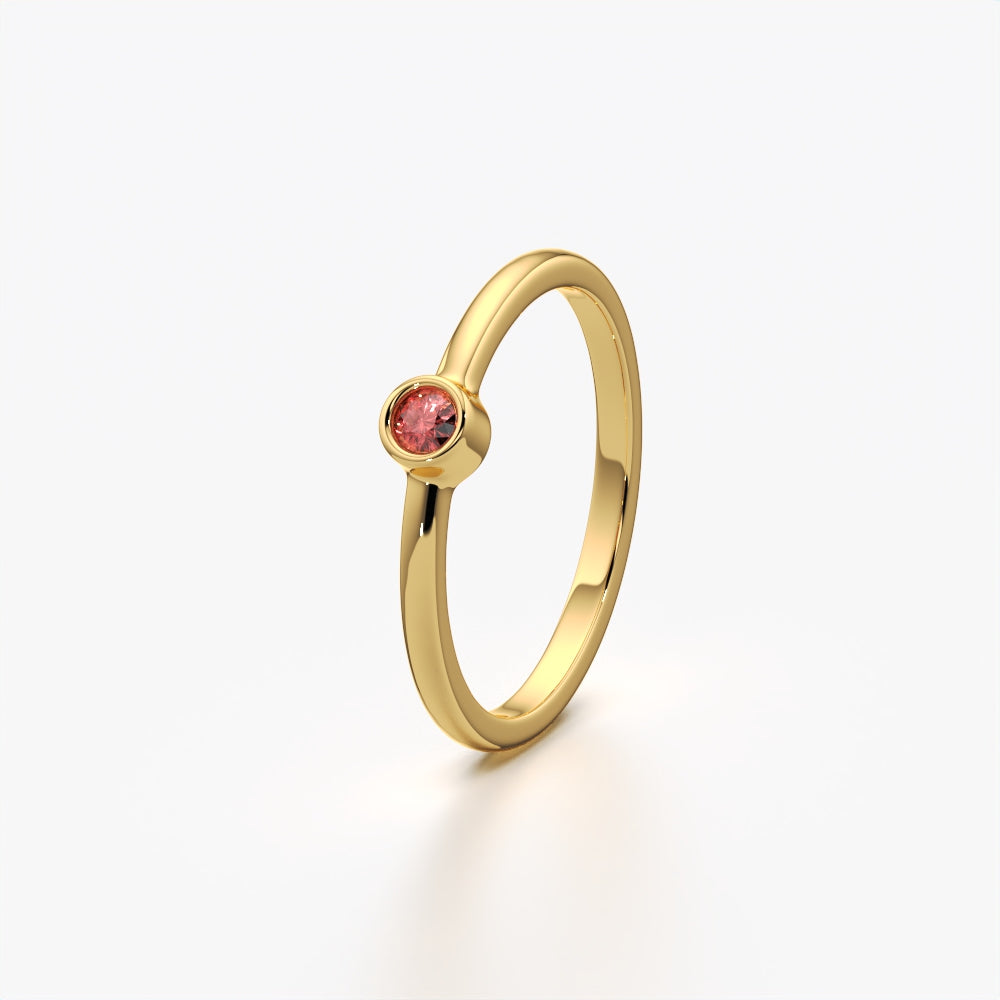
Dainty Bezel Round Solitaire Ring
Shop Now -
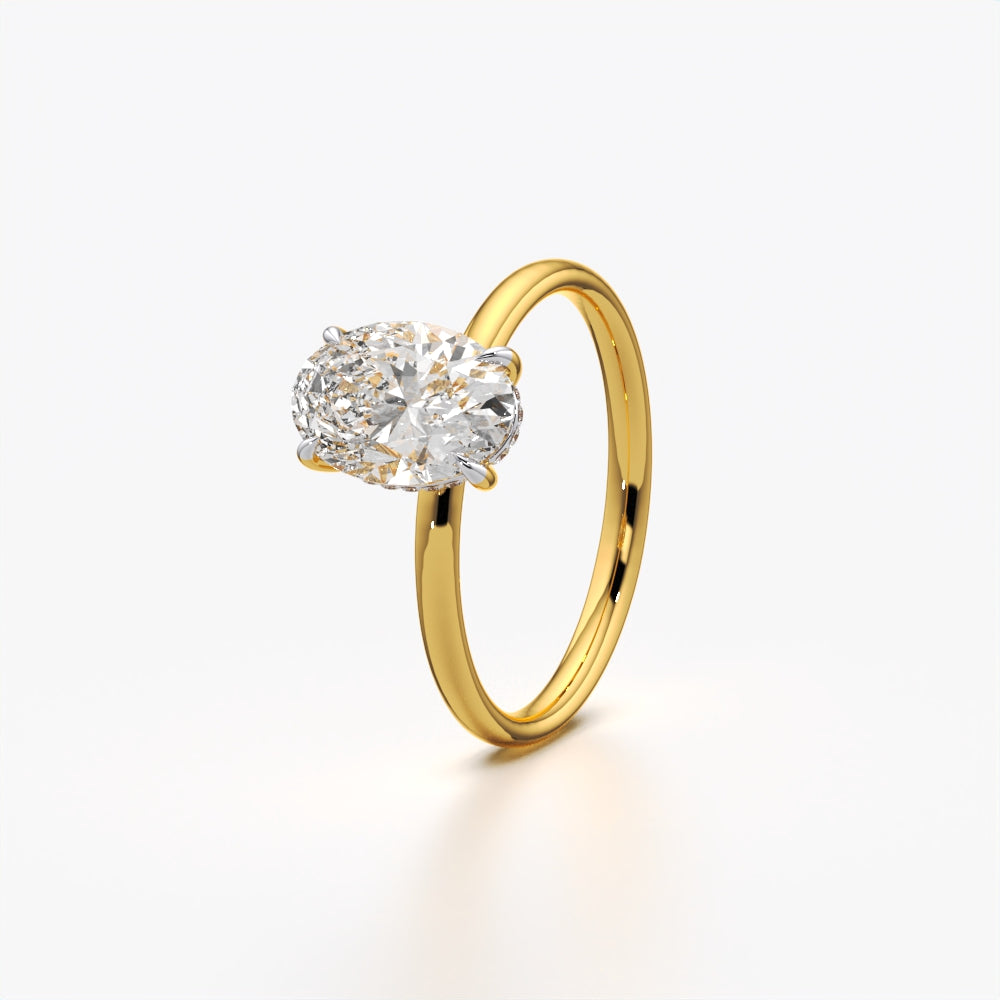
Classic Oval Solitaire Ring
Shop Now -
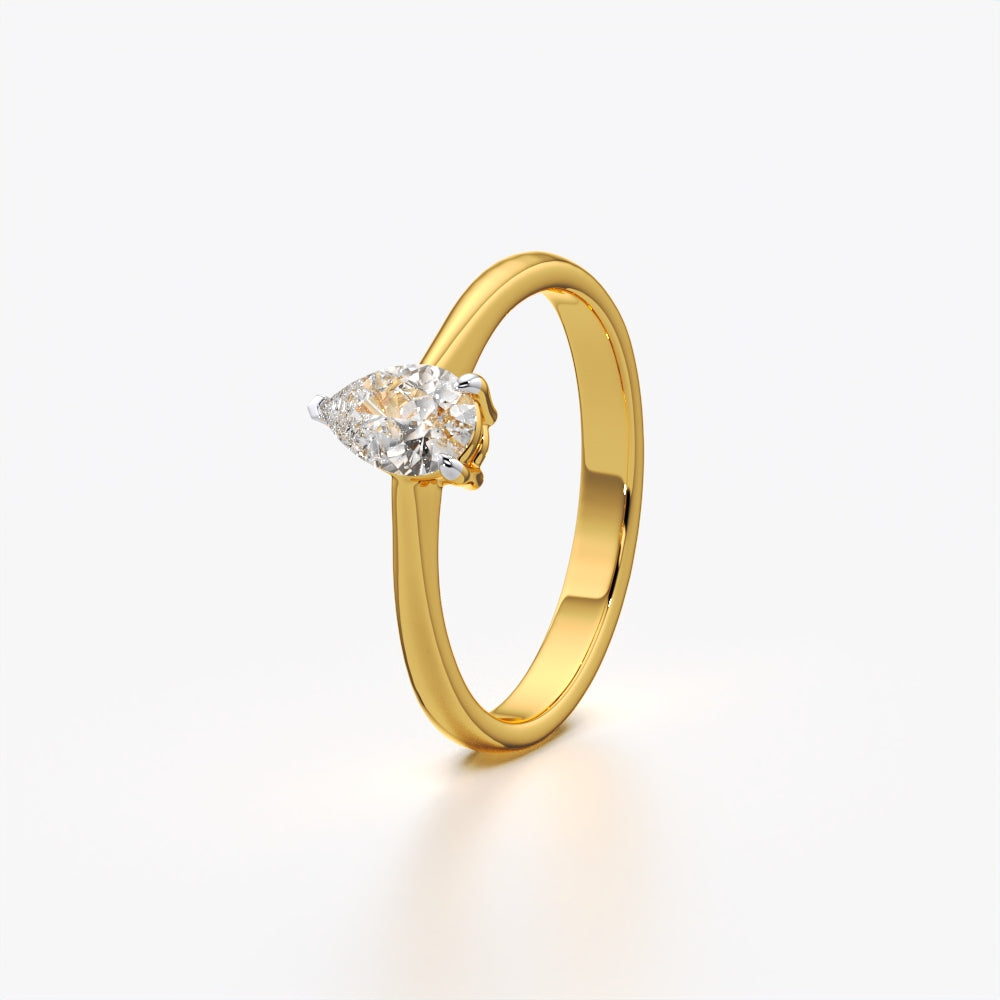
Pear Cut Classic Solitaire Ring
Shop Now -
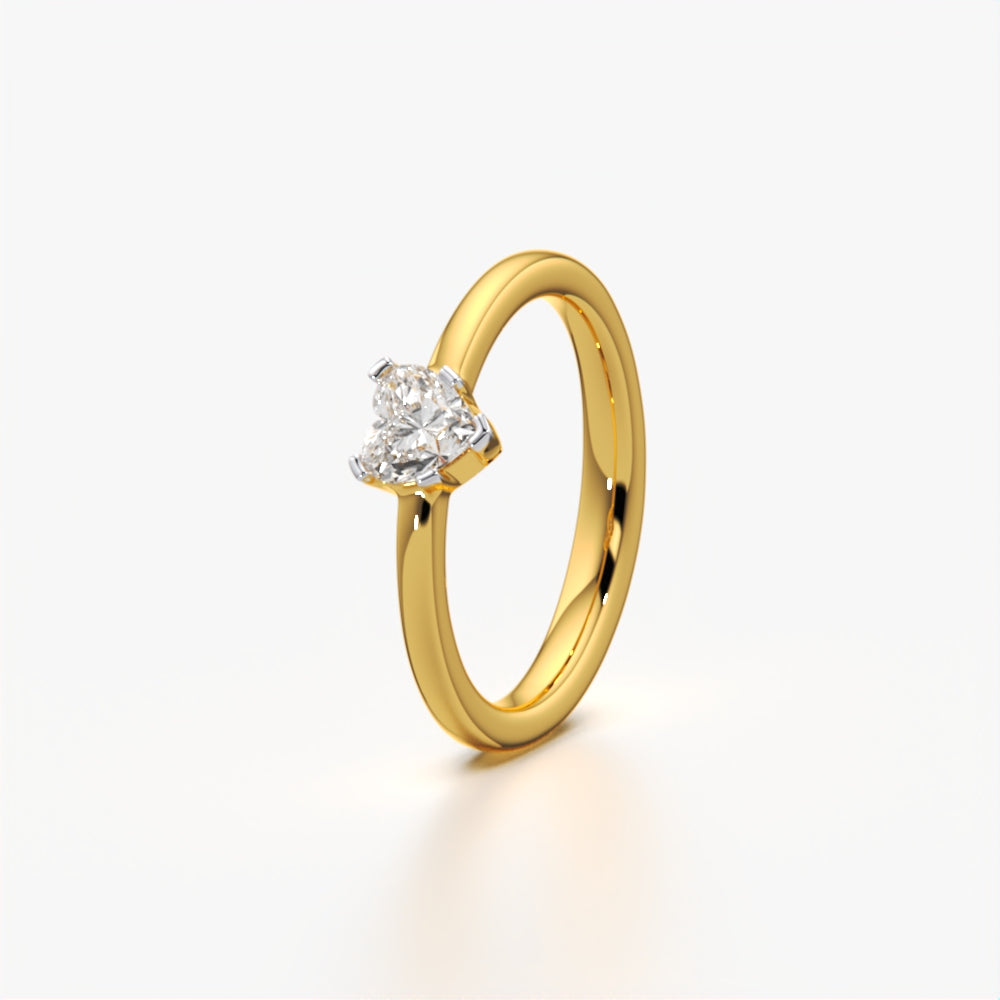
Heart Shaped Solitaire Ring
Shop Now
Caring for a Solitaire (Any Solitaire)
A single exposed stone collects oils and dust fast, which dulls the sparkle more than people realise.
The routine is simple:
- Soak in warm water with a drop of mild soap, brush gently with a soft toothbrush, rinse, and pat dry with a lint-free cloth.
- Remove the ring before swimming, workouts, harsh cleaning chemicals, and applying perfume or lotion.
- If it is prong-set, glance at the prongs every few months to confirm the stone sits tight.
- Store it separately in a soft pouch so harder stones cannot scratch it and it cannot scratch softer pieces.
For gold vermeil pieces, this same care goes even further: wipe after wear, keep it dry, and the gold layer stays bright for years. KYMEE backs its vermeil with anti-tarnish plating and warranty support, but good habits are still the cheapest insurance.
Final Thoughts
So, what is a solitaire diamond? It is one stone, standing alone, carrying all the attention. In India, it is also a word with two lives: a design style the world recognises, and a big-stone benchmark our jewellers use. Once you see both meanings clearly, the buying decision stops being intimidating and becomes almost mechanical: the setting gives you the look, the stone sets the price, and your life decides which combination makes sense.
If that combination is a certified diamond for a forever moment, invest well and insist on the certificate. If it is the timeless solitaire look for the everyday, in real 18K gold vermeil with honest stones and honest pricing, KYMEE's solitaire rings were made for precisely that brief. Either way, you are no longer guessing. And that, more than any carat weight, is what makes a solitaire worth wearing.
FAQs
Is a solitaire always a diamond?
No. Solitaire describes the single-stone design. The stone can be a natural diamond, lab-grown diamond, Moissanite, CZ, or a coloured gem like sapphire. In everyday Indian usage, though, "solitaire" usually implies a diamond unless stated otherwise.
What is the minimum carat weight for a solitaire in India?
There is no official rule. Design-wise, any single stone qualifies. Trade-wise, most Indian jewellers treat around 0.30 carat (30 cents) as the informal threshold, roughly the weight from which individual certification becomes standard.
What is the difference between a solitaire ring and a diamond ring?
A diamond ring is any ring containing diamonds, whether one or fifty. A solitaire ring specifically features one centre stone alone. So a solitaire diamond ring is a type of diamond ring, but a cluster or pavé diamond ring is not a solitaire.
Why does one big diamond cost more than several small ones of the same total weight?
Rarity. Large, clean rough diamonds are far scarcer in nature, so the price per carat rises steeply with size. One 1 carat stone can cost several times more than ten 10-cent stones combined.
Are CZ or Moissanite solitaires okay for daily wear?
Yes, and for many people, they are the smarter daily option. Moissanite is nearly as hard as a diamond and keeps its fire for decades. Quality CZ delivers excellent sparkle for years with basic care, and at prices in the ₹3,000 to ₹6,000 range, replacing or refreshing a design is painless rather than painful.
Can you design your own solitaire ring?
Yes. Fine jewellers offer bespoke services at fine-jewellery prices, and at the accessible end, KYMEE's customised option lets you customise a piece in 18K gold vermeil without the traditional custom-jewellery cost.
Is a solitaire only for engagements?
Not at all. Solitaire pendants, studs, and fashion rings are everyday staples now. In India, especially, the solitaire has expanded from a bridal symbol into a self-purchase and workwear category, and that shift is exactly what made affordable versions mainstream.