


How to Accessorize for Work: A Practical Guide for Offices, Commutes and Video Calls

To accessorize for work, wear a few light, quiet pieces that look polished and stay out of your way for the whole working day: small studs or huggies, one necklace that sits at your collarbone, one or two slim rings, and, if you like, a fine bracelet on the wrist you don't use for your mouse. Let one piece lead each day and keep the rest quiet. Match how much you wear to your dress code and your role, and leave out anything that clinks, snags, or presses under a headset.
That's the short version, and it's where most office jewellery guides stop. This one goes further, because a working day in India asks more of your accessories than a mirror check does. Your ID card hangs right where your pendant wants to sit. Your headset presses on your earrings through three calls in a row. Your bracelet taps the laptop all afternoon. You ride a scooter or squeeze into a metro before you even reach your desk. And on some days, your only audience is a video call that can't see your hands at all.
Below you'll find a seven-point check you can run in a minute before leaving home, what each piece has to survive, what to wear with Indian office dress codes, what changes by role, the 2026 office calendar (including Navratri colour days), the non-jewellery accessories that matter, and a five-piece work capsule with prices.

The short answer
- Earrings: studs or small huggies. They're the one piece every meeting sees, on screen and off.
- Necklace: a pendant or bar that sits at your collarbone. It stays clear of your ID card and shows on camera.
- Rings: one or two slim bands with low settings. Nothing that spins or catches on knitwear.
- Bracelet: one fine chain on your non-mouse wrist. Watch on one wrist, bracelet on the other.
- Watch, bag, belt, and shoes: simple, structured, and in one metal and leather family.
- The rule: one hero piece a day, everything else quiet. Your mangalsutra, wedding ring, nose pin, or sacred thread don't count towards it.
- The test: if it clinks, snags, presses, or needs fixing before lunch, it isn't work jewellery.
Why accessorizing for work has changed
Most Indian offices now run on a mixed week. In 2026, TCS expects staff in the office five days a week, Infosys has asked senior employees (job level 6A and above) to come in four days a week, and Wipro asks for three days with at least six hours on site. In May 2026, the Prime Minister also urged employers to bring back work from home and video conferencing where they could, to save fuel.
So for many people, the working week is part office days and part camera days. That changes what your accessories need to do:
- On office days, people see you up close and from every angle, and your jewellery has to get through the commute, the lanyard, the laptop and the meeting room.
- On camera days, only your face, ears and collarbone are in the frame. Your hands are out of shot, but any bangles you're wearing sit right next to the laptop microphone.
The good news is that one small set of pieces can cover both, if you choose it with the whole day in mind.
The workday test: seven checks in one minute
Run through these in the order your day happens. If a piece fails one, swap it before you leave.
| Check | How to do it | If it fails |
| 1. Commute | Think through your route: a helmet, a crowded metro or local train, an open auto, a bag strap over your shoulder | Swap long drops and big hoops for studs or huggies. Tuck long chains under your collar or carry them in your bag |
| 2. Lanyard | Hang your ID card over your necklace | If the badge knocks, hides, or tangles your pendant, go shorter (collarbone length) or clip the badge at your waist |
| 3. Keyboard | Rest both hands on your laptop as if typing | If a bracelet touches the palm rest or edge, move it to the other wrist. If a ring's stone knocks the keys, choose a flat band |
| 4. Clink | Shake your wrist and turn your head quickly | Anything that clinks will clink on the desk and on your microphone. Wear one fine chain or one slim bangle, not a stack |
| 5. Headset | Put on the headphones or earbuds you use for calls | If anything presses, choose flat studs or small huggies on call-heavy days |
| 6. Camera | Open your front camera at arm's length | That's your meeting frame. Whatever sits inside it, usually your earrings and the top of your necklace, is doing all the work |
| 7. 4 pm | Ask yourself: will I have forgotten I'm wearing this by 4 pm? | Heavy earrings drag, and prongs catch on knits, dupattas and saree pallus. Go lighter and lower |
This is the difference between jewellery that looks good at 9 am and jewellery that still looks good, and still feels fine, at 6 pm.
-

Infinity Pave Stud Earrings
Shop Now -
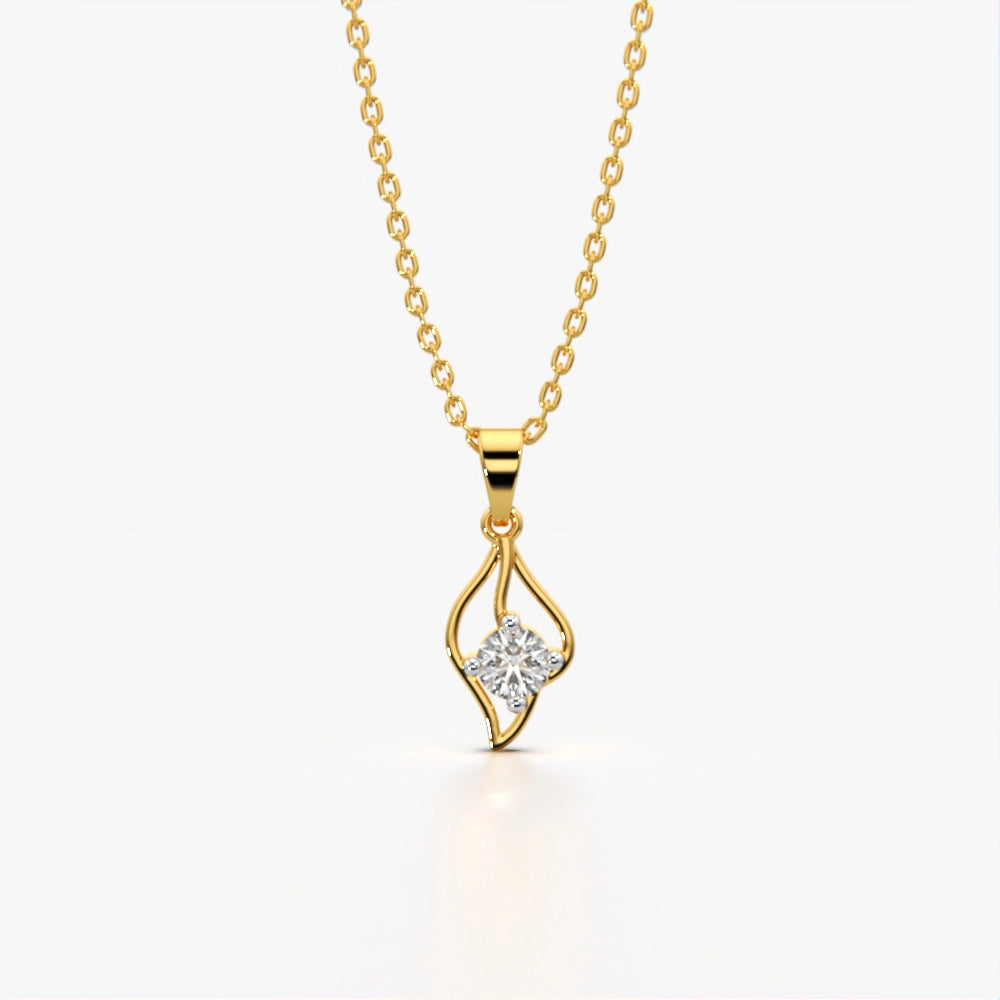
Tulip Glow Solitaire Pendant Necklace
Shop Now -
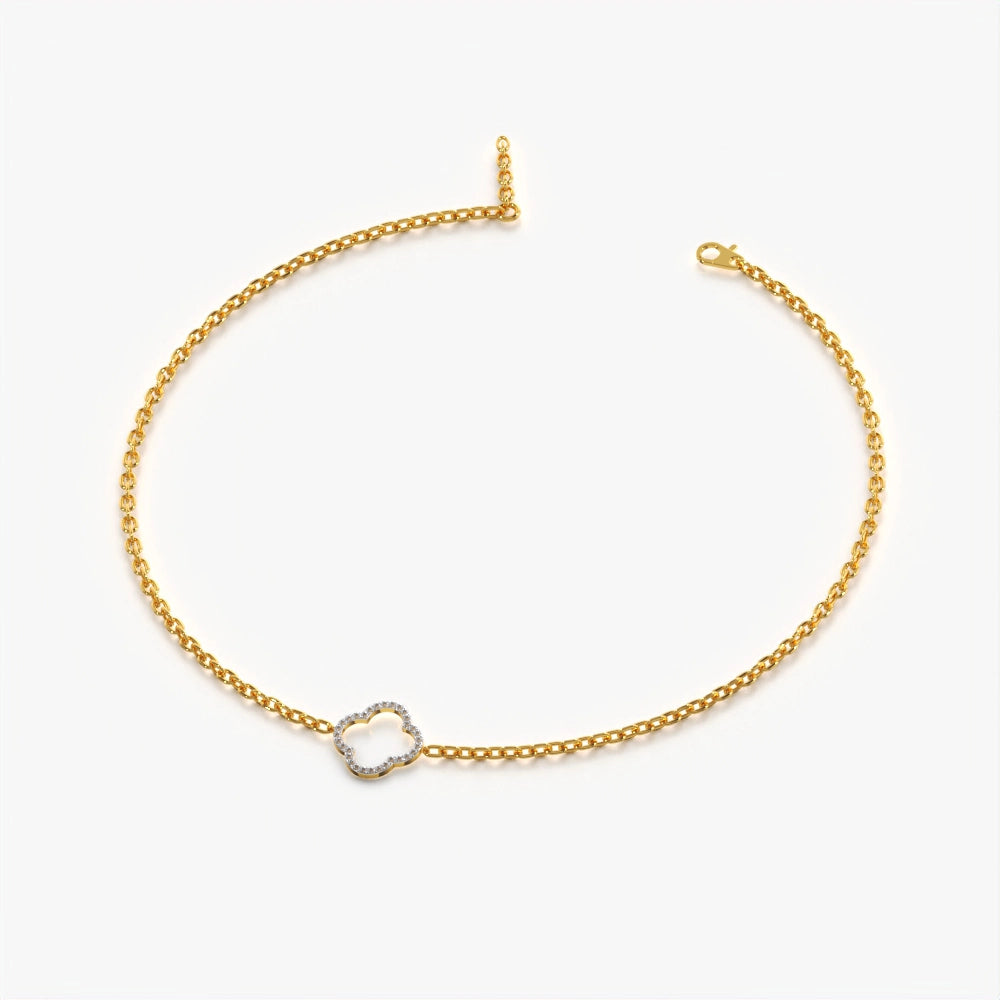
Open Pave Clover Bracelet
Shop Now -
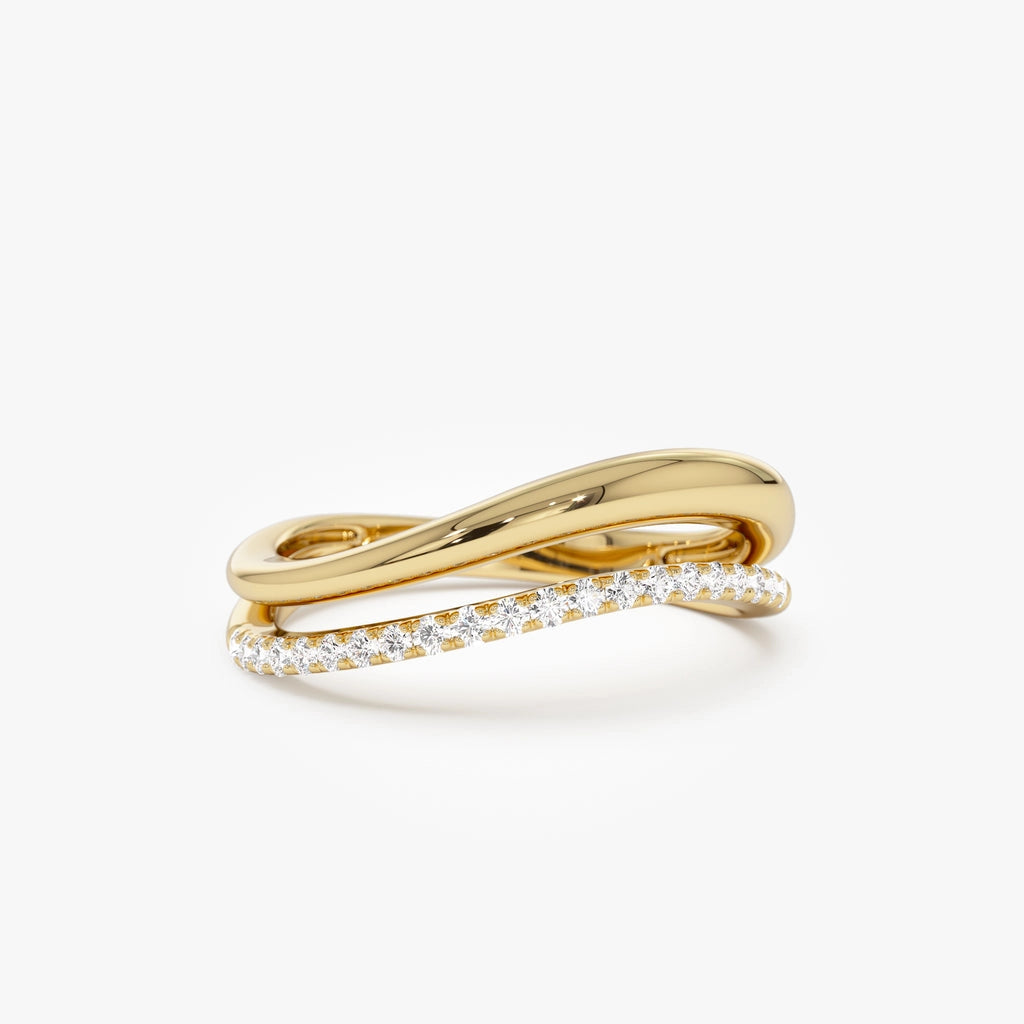
Interlocking Wave Double Band Ring
Shop Now
Earrings: the one piece every meeting sees
Earrings are the most useful work accessory you own. They're in every video call frame, they're at eye level across a meeting table, and they frame your face when you present.
What works best:
- Studs sit flat against the lobe, pass the headset check, and suit every dress code from formals to sarees. Pearls and small stones are the classic office choice.
- Huggies are small hoops that hug the lobe. They look a little more finished than studs and still sit comfortably under headphones. A hinged click closure is easy to fasten without a mirror.
- Small J-hoops, threaders, and short drops are for days when you want your ears to lead, such as a presentation or a client meeting. Our guide to daily wear earrings covers the shapes that carry a whole wardrobe.
What to keep for after work: large hoops, chandbalis, long drops and heavy jhumkas. They catch on helmet straps and dupattas, swing on camera, and pull on the lobe over a nine-hour day.
Headsets and earrings: over-ear and on-ear headphones both press on the area around your lobe, so on days packed with calls, flat studs or small huggies are the most comfortable choice. If you work in customer support and wear a headset for your whole shift, keep to studs. In-ear buds leave the lobe alone, so most small earrings are fine with them.
A simple ear stack for work: one huggie and one tiny stud, if you have a second piercing. Two pieces per ear reads polished in most offices. Four or five starts to read weekend. Our earring stacking guide has more combinations.
Browse stud earrings, hoop earrings (you'll find huggies here), and threader earrings, or all earrings.
Necklaces: solve the lanyard problem first
Almost no styling guide mentions this, but most people who work in an Indian office wear an ID card on a lanyard all day. The cord runs from the back of your neck down to a badge that hangs around the middle of your chest. That's exactly where a longer pendant wants to sit, so the two knock together, twist around each other, and hide each other.
Where each necklace length sits (from KYMEE's necklace size chart):
| Length | Where it sits | With an ID lanyard |
| 14 inches | Choker, snug around the neck | Clear of the badge. Can rub against the cord at the back of your neck |
| 16 inches | Collar, just above the collarbone | Clear of the badge. The easiest length for work |
| 18 inches | Princess, at the collarbone | Clear of the badge on most people, and it shows in a video frame |
| 20 inches | Matinee, just below the collarbone | Starts to meet the lanyard cords. Check in a mirror |
| 24 inches | Opera, at the bust | Lands where the badge hangs. Knocks, twists, and gets hidden |
Four ways to make a necklace and an ID card get along:
- Go to collarbone length. A 16 or 18 inch necklace sits inside the V of the lanyard, above the badge. It's also the length that shows on camera.
- Choose a pendant that lies flat. A bar, or a stone in a closed frame, stays face up. A pendant that flips shows its back half the day, especially with a lanyard moving over it.
- Layer in the right order. Put the necklace on first and the lanyard over it. With a collared shirt, let the collar sit between the two.
- Move the badge. Clip it to a waistband, belt loop or trouser pocket, or use a retractable badge reel. People in office-wear forums say clips pop off skirt waistbands easily, so a plain lanyard is the reliable fallback. If you keep the lanyard, choose a plain one in a colour close to your metal, so it doesn't compete with your necklace.
Match the necklace to your neckline. A collarbone pendant works with a round-neck kurta, a crew-neck top or an open collar. With a high neck or a mandarin-collar kurta, skip the necklace and let your earrings lead. For more, see how to choose a necklace for your neckline and our guide to the best daily wear necklaces.
Browse pendant necklaces or all necklaces.
Rings: low, slim and few

Your hands do more at work than any other part of you: typing, using a mouse, holding a phone, carrying files, shaking hands, rinsing a mug in the pantry. Rings take the knocks.
- Choose low settings. Tall prongs catch on knitwear, chiffon dupattas and laptop sleeves. Flat bands, pavé bands and bezel settings don't.
- Keep it to one or two rings, plus any wedding or engagement ring you always wear.
- Watch the air conditioning. Fingers shrink in a cold office and swell in the heat outside, so a ring that fits at 9 am can turn by the afternoon. Bands cope with this better than rings with one heavy stone on top, which roll round to the palm side. If you're buying a new ring, measure late in the day at room temperature and check KYMEE's ring size chart.
- If your job means washing your hands or using sanitiser all day, keep rings to a minimum. KYMEE's jewellery care guide notes that hand sanitiser and soap can dull a gold vermeil surface.
- Sensitive skin during 9-hour shifts: Trapped sweat under cheap alloy metals can cause skin redness or discoloration during long workdays. Opt for 925 sterling silver bases coated in nickel-free 18K gold vermeil to ensure hypoallergenic comfort from morning commute to evening calls.
- Styling with Smartwatches: If you wear an Apple Watch or Fitbit with a silicone band, avoid stacking fine gold chains directly against it. The industrial silicone strap clashes visually with delicate jewellery and can wear down gold plating through continuous friction. Wear your smartwatch on your dominant or typing wrist, and reserve your non-dominant wrist for a single fine metal bracelet or kada.
Browse daily wear rings, stackable rings, or all rings.
Bracelets and watches: the non-mouse wrist rule

The wrist you use for your mouse spends the day on the desk, so anything on it gets scraped and knocks the table.
- Wear your bracelet on the other wrist. For most people, that's the left. KYMEE's guide on which hand to wear a bracelet on makes the same point about typing and writing.
- Keep your watch and bracelet on separate wrists. Metal against metal scratches both, and a smartwatch case scratches more easily than you'd think.
- Get the fit right. People who wear bracelets at a laptop all day say it's the loose one that bangs on the desk. A snug fit, or a chain with an adjustable extender, moves less.
- Wear one bangle, not a stack. A single slim bangle or kada is quiet. Five glass or metal bangles are lovely at a festival and loud on a video call.
- Save tennis bracelets for meeting days. On a typing day, the stones rest on the laptop edge for hours, which is hard on the stones and the laptop.
Browse chain link bracelets, tennis bracelets, or all bracelets.
Always-on pieces: your mangalsutra, wedding ring, nose pin, and sacred threads

Many people in India wear some pieces every day for reasons that have nothing to do with the office. They don't count towards your "how much is too much" limit. They're part of you, so style everything else around them.
- Mangalsutra. Many women keep a long traditional mangalsutra for family functions and festivals, and wear a shorter, lighter one on work days. A collarbone-length pendant mangalsutra also avoids the lanyard clash, and a mangalsutra bracelet is an option if you'd rather keep your neckline free. See traditional and modern mangalsutra styles, and KYMEE's mangalsutra collection, which includes bar, pendant, and bracelet designs.
- Wedding and engagement rings. If your engagement ring has a tall setting, add only flat bands beside it, and move any other rings to your other hand.
- Nose pins. A small stud is widely worn in Indian offices, including in conservative fields like finance, where Indian professionals in online forums describe it as simply part of the culture. A larger nose ring or nath reads festive. Airlines, hotels, and some retail roles have grooming codes, so check yours.
- Sacred threads, kadas, and rudraksha. Keep any extra bracelet on the other wrist, so the two don't rub.
How much is too much? One hero, the rest quiet

Most guides say "wear one statement piece". A more useful way to think about it is to decide each morning which zone leads today, and keep everything else quiet. A quiet piece is small, doesn't move, and doesn't catch the light from across the room.
Choose the zone from the main thing you're doing that day:
| Your main moment today | Let this lead | Keep this quiet |
| Presenting, standing up | Earrings or a pendant, which are seen from across the room | Hands and wrists |
| Back-to-back video calls | Earrings, which are always in frame | Bracelets and bangles: off camera, but next to the mic |
| A client meeting across a table | Earrings and a small pendant | Bracelets |
| Demos, signing papers, handshakes | One good ring or bracelet | Earrings stay small |
| A heads-down desk day | Nothing needs to lead | Everything light and comfortable |
| Plans straight after work | Carry the hero piece in a pouch and put it on at 6 pm | Keep the office look simple |
The quick count: one hero, up to two or three quiet pieces, plus your always-on pieces. If you catch yourself fiddling with something, that's one too many.
What to wear with Indian office dress codes
| What you're wearing | Earrings | Necklace | Hands and wrists | Watch out for |
| Western formals (shirt, trousers, blazer) | Studs or small huggies | A small pendant inside an open collar, or none | One band and a watch | Blazer cuffs catch on chunky bracelets |
| Business casual (knits, tees, chinos, Friday denim) | Huggies, small J-hoops or a two-piece ear stack | A bar pendant, or two short chains layered | Two slim rings and a fine chain bracelet | Prongs snag on knits |
| Kurta or kurti with a dupatta | Studs, small drops or threaders | A short pendant with round necklines. None with high or mandarin collars | A slim bangle or kada | Dupattas catch on prongs and hook earrings |
| Saree (common in banking, teaching and government offices) | Studs or short drops | Your mangalsutra or a collarbone pendant | One bangle or a watch | A pinned pallu catches on long drops and hoops |
| Indo-western (kurta with trousers, a jacket over a dress) | J-hoops or threaders | A bar or geometric pendant | One stand-out ring | Too many ethnic and western pieces at once |
| Uniform or scrubs | Studs, if allowed | Usually none, or worn under the uniform | As your policy allows | Follow your workplace rules first |
For more on pairing, see how to match jewellery with every outfit.
What changes by role and industry
| Where you work | What works | Good to know |
| Finance, law, consulting, corporate client work | Classic studs, a small pendant, a watch | Conservative rooms reward quality over quantity |
| IT and tech | More freedom. Anything that passes the headset and keyboard checks | Long call days make ear comfort the priority |
| Creative, media, marketing | Statement earrings or a bold ring are welcome | Still let one piece lead |
| Healthcare | Studs and a necklace worn under scrubs if allowed | The WHO's hand hygiene guidelines strongly discourage wearing rings and other jewellery during patient care. A plain wedding band may be accepted in routine care, but not in an operating theatre. Your hospital's policy comes first |
| Teaching | Studs, huggies and a short pendant | Younger children grab at hoops and long chains |
| Retail, hospitality, aviation | Whatever your grooming standard allows, usually small studs | Many employers specify the size and number of earrings |
| Customer support and BPO | Flat studs | A headset for the whole shift means you can't wear anything bigger |
| Field sales and two-wheeler commuters | Studs, huggies and short chains | Keep a hero piece in your bag for the client visit |
If you're getting ready for a job interview rather than a normal workday, the rules tighten a little. Here's what jewellery is appropriate for a job interview.
The 2026 office calendar: Navratri, Karwa Chauth and Diwali
Navratri colour days at the office (12 to 19 October 2026)
Sharad Navratri runs from Sunday 11 October to Monday 19 October 2026, with Dussehra on Tuesday 20 October. Many offices, especially in Maharashtra and Gujarat, dress in a colour of the day. Gold goes with all of them, so the easiest approach is to wear your usual work pieces and add one small touch of the day's colour.
| Date | Colour | An easy accessory idea | If you'd like a KYMEE piece |
| Mon 12 Oct | White | Pearls or white stones | Open Teardrop Pearl Studs |
| Tue 13 Oct | Red | One red stone at the neck | Ruby Red Emerald-Cut CZ Halo Pendant Necklace |
| Wed 14 Oct | Royal blue | Blue stones set in a bar | Blue Baguette Trio Bar Necklace |
| Thu 15 Oct | Yellow | Plain polished gold, no stones | Classic Huggie Hoop Earrings |
| Fri 16 Oct | Green | A green stone on the wrist | Mixed Cut Green Stone Cluster Bracelet |
| Sat 17 Oct (six-day offices) | Grey | Silver-toned details | Triple Square Cluster Pendant Necklace, which has a white rhodium setting |
| Mon 19 Oct | Peacock green | Repeat Friday's green, or wear gold only |
The two remaining colours, orange (Sunday 11 October) and purple (Sunday 18 October), fall on weekends.
Going to garba after work? Swap to flat studs and a single band before you leave the office. You'll clap hundreds of times, and prongs catch on mirror work.
Karwa Chauth (Thursday 29 October)
Karwa Chauth falls on a working day this year. If you're fasting, you'll probably go from your desk to the evening puja, so keep the office look light, carry your festive earrings in a pouch, and change after work.
Diwali office parties (before Sunday 8 November)
Diwali falls on a Sunday this year, so most office celebrations will happen in the days before. The simplest desk-to-party switch is to keep your studs and necklace, and add one piece that moves, such as a short drop or a J-hoop. You don't need a second outfit's worth of jewellery.
-
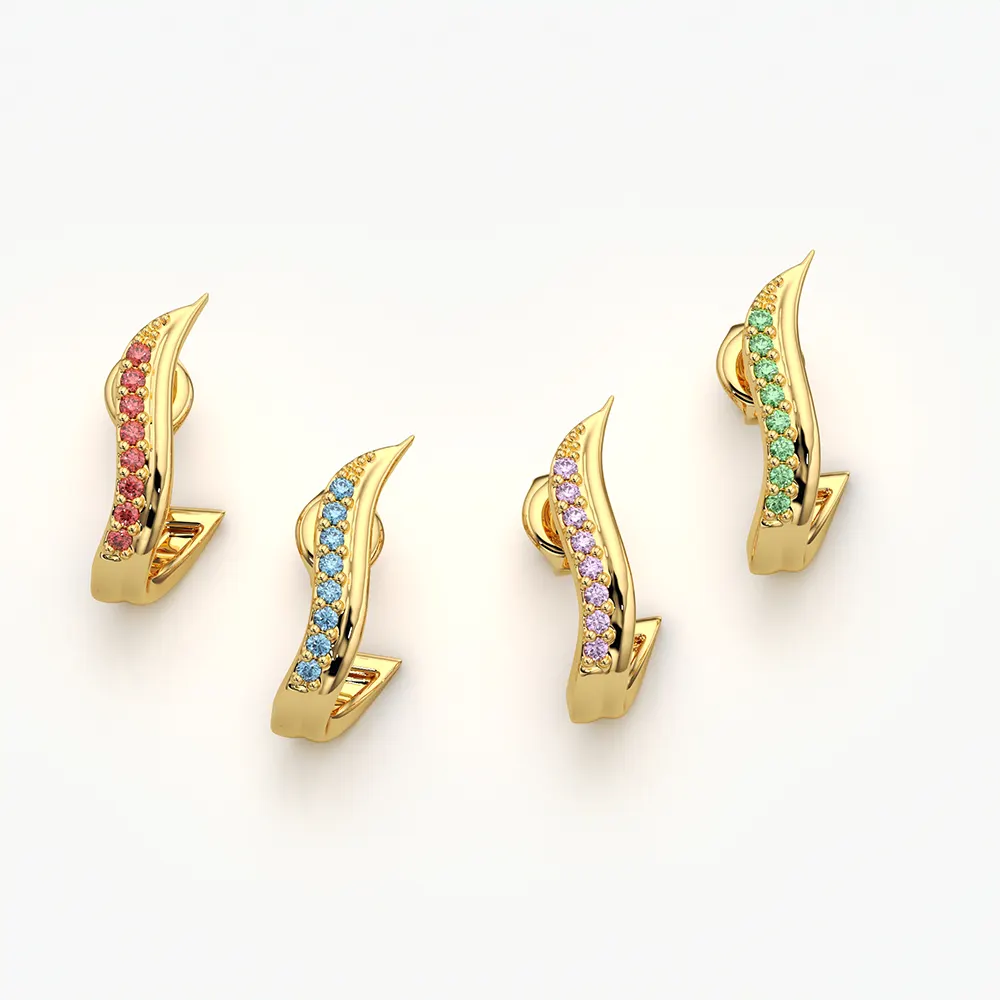
Wave Curve Pave Half Hoop Earring
Shop Now -

Blue Baguette Trio Bar Necklace
Shop Now -
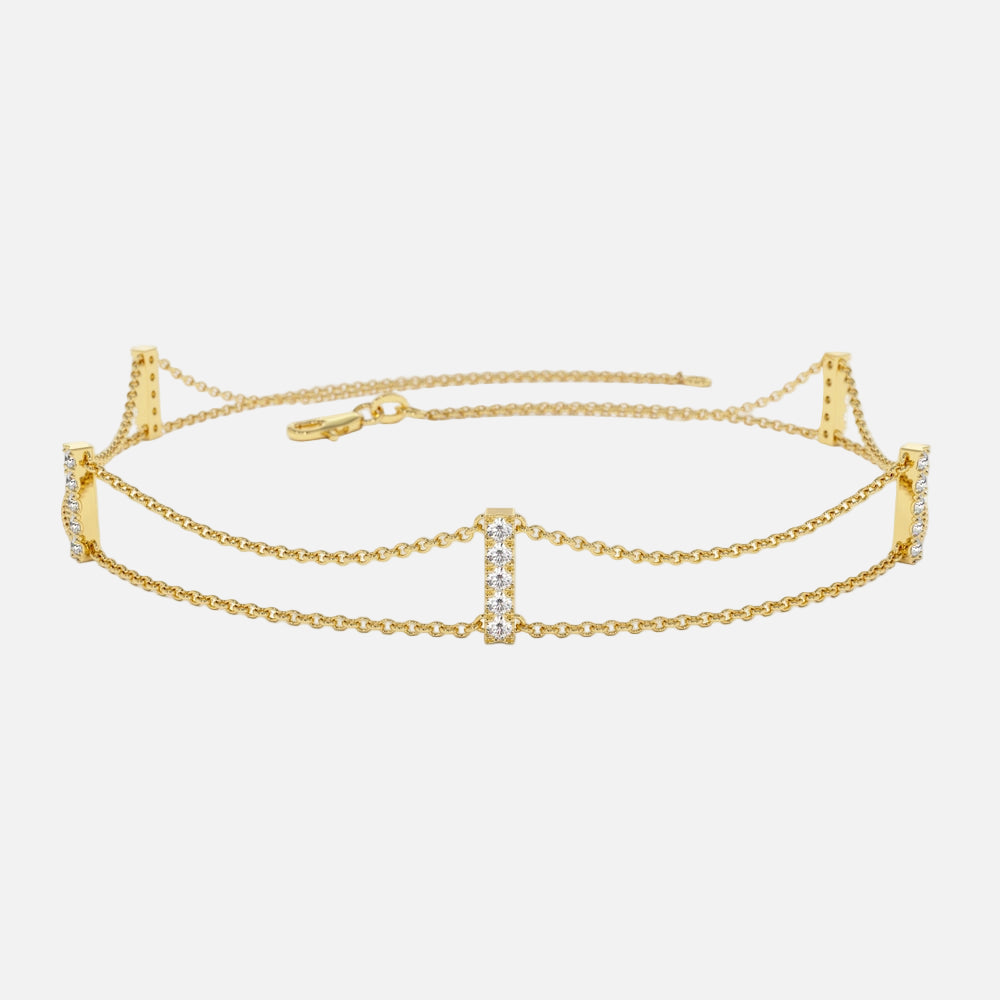
Double Chain Pave Bar Bracelet
Shop Now -
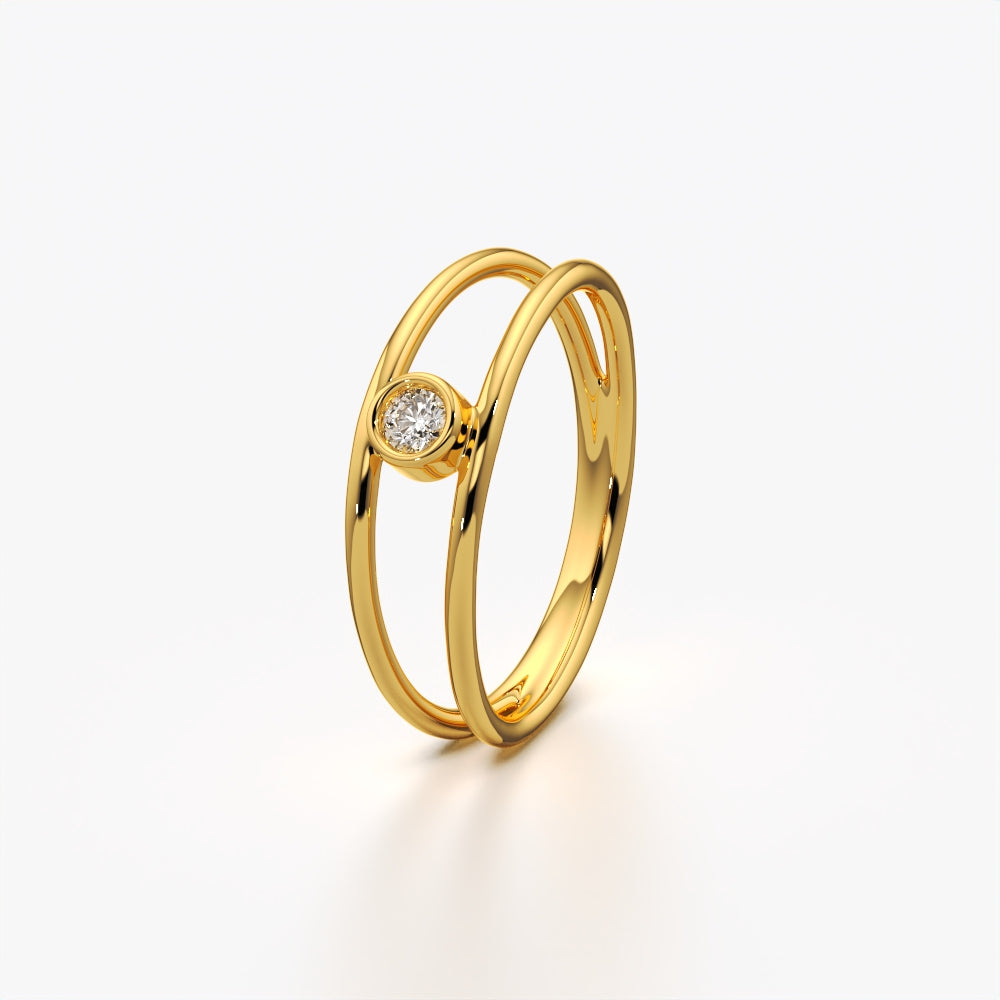
Double Band Bezel Solitaire Ring
Shop Now
Beyond jewellery: the other accessories that do the work
"Accessorize" covers more than jewellery. These are the pieces that make the biggest difference in an Indian office.
- A watch: Analogue or smart, both are fine. It's the one accessory that's useful in every meeting. Keep it on the opposite wrist to your bracelet.
- A structured bag: One that holds a 14-inch laptop, stands up on its own on the floor, and closes properly. A neutral colour goes with everything you own.
- A belt: Match the leather to your shoes and the buckle to your jewellery.
- A stole or light scarf: Air-conditioned offices run cold, and a stole in a solid colour does more for a plain outfit than most jewellery. Wear it with studs rather than pavé or prongs, which catch on fine weaves.
- Eyewear: If you wear glasses all day, your frames are part of your look. Bold frames and bold earrings compete, so let one of them lead.
- Hair accessories: A plain claw clip or a slim hairband keeps hair off your headset and out of your earrings.
- Shoes: Comfortable enough for the commute and the walk to the meeting room. Block heels, loafers, juttis and clean trainers (where allowed) all work.
- A small pouch: Keep one in your bag or desk drawer, so you can take jewellery off before the gym or the washing up, and carry a hero piece for the evening.
For men: the short version
The same checks apply. A good watch does most of the work. Add a wedding band or one slim ring, a single bracelet or kada on the non-watch wrist, and a belt that matches your shoes. On formal days, cufflinks or a tie bar are enough. Skip anything that clinks on the desk or presses under a headset.
Build a work capsule: five pieces for every office day
You don't need a lot of jewellery for work. You need a small set that passes the workday test and mixes freely. Here's what each piece has to do, with one KYMEE option for each.
Every piece below is 18K gold vermeil over nickel-free 925 sterling silver, with a gold layer of at least 2.5 microns. The small accent stones are moissanite, and the larger stones are cubic zirconia (CZ). None of them is a diamond. Weights are approximate, and prices can change.
| The job | What to look for | A KYMEE option | Stones | Listed weight |
| Everyday studs | Light, a secure back, flat to the lobe | Open Teardrop Pearl Studs | Freshwater-style pearl | ~0.90 g |
| Call-day huggies | Hug the lobe, click shut, sit under headphones | Channel-Set Mini Huggie Hoop Earrings | Mini moissanite | Not listed |
| Lanyard-proof necklace | Collarbone length, lies flat | Half-Pavé Angled Bar Necklace | Moissanite pavé | ~2.33 g |
| One quiet ring | Low profile, no top-heavy stone | Slim Full Pavé Eternity Band | Moissanite | ~1.20 g |
| Non-mouse-wrist bracelet | Fine, adjustable, no dangling charms | Classic Paperclip Link Bracelet | None | ~2.70 g |
Why these five work together
- The studs and huggies take turns: Studs for everyday, huggies for call-heavy days when you want a little more shine with nothing pressing under your headset. The pearl studs weigh about 0.90 g, so you'll forget them by lunch. The huggies close with a hinged click, which you can manage by feel on a moving metro.
- The bar necklace solves the lanyard: KYMEE describes it as sitting flat against the collarbone, which is exactly where it stays clear of an ID badge and shows on camera. Half the bar is polished, and half is pavé, so it looks quiet in a meeting room and still catches a little light on screen.
- The eternity band is thin and low: At about 1.20 g, it passes the keyboard check and won't catch on knitwear. With stones all the way round, it has no heavy top to spin. Full eternity bands usually can't be resized, so check your size on the ring size chart before you order. It comes in Indian sizes 5 to 20.
- The paperclip bracelet adjusts: It has a lobster clasp and an extender chain, so you can wear it snug, which is what stops a bracelet from banging on the desk. With no stones, there's nothing to scrape on a laptop edge.
Swaps, if the capsule doesn't quite suit you
| If you'd rather have | Try | Details |
| A stud with some sparkle | Open Heart Pavé Stud Earrings | Half moissanite pavé, half polished gold, ~0.85 g |
| A more architectural stud | Geometric Caged Pavé Studs | A kite-shaped moissanite top over an open gold cage, ~1.77 g |
| Plain gold huggies, no stones | Classic Huggie Hoop Earrings | Smooth polished hoops with a click clasp, ~3.13 g |
| Huggies with more detail | Floral Cluster Huggie Hoop Earrings | A floral cluster of moissanite and CZ, ~1.47 g |
| A classic solitaire pendant | Tiny Solitaire Pendant Necklace | One round CZ on a fine cable chain, ~2.44 g |
| A little colour at the neck | Blue Baguette Trio Bar Necklace | Blue CZ baguettes in a horizontal frame that sits close to the collarbone, ~2.15 g |
| A ring with more movement | Moissanite Infinity Twist Crossover Band Ring | One polished strand and one moissanite strand crossing at the top, ~1.60 g, Indian sizes 5 to 20 |
| A mangalsutra for your wrist | Tilted Square Black Bead Mangalsutra Bracelet | A small square set with mini moissanite, three black beads on each side, adjustable extender, ~1.50 g |
| A bracelet with a small focal point | Open Pavé Clover Bracelet | An open moissanite clover on a fine cable chain, ~2.19 g |
| One hero pair for presentation days | Twin Bar J-Hoop Earrings | A plain bar and a pavé bar joined by three bezel-set moissanites, push-back, ~2.33 g |
You'll find everything KYMEE has picked out for the office in its office wear jewellery edit, and more everyday pieces in daily wear jewellery.
What a work capsule costs per day
The five capsule pieces add up to ₹26,795. A three-day hybrid week works out at roughly 140 office days a year once holidays and leave are taken out, and a five-day week at roughly 230. Spread over one year, the capsule costs about ₹190 per office day on a hybrid week, or about ₹115 on a five-day week, and less for every year you keep wearing it.
For comparison, 22K gold in Delhi was about ₹13,780 to ₹13,950 a gram in 2026. The gold alone in one 2-gram pair of 22K studs comes to roughly ₹27,500 to ₹27,900, before making charges and 3% GST.
That comparison cuts both ways. Solid gold holds metal value and can be exchanged or passed down, while gold vermeil doesn't carry resale value in the same way. If you want an heirloom or an investment, buy hallmarked gold and check the six-character HUID code. If you want a set of gold-look pieces to wear every working day, vermeil is made for that kind of wear. Keep in mind that on any plated jewellery, pieces that rub against surfaces all day, like rings and bracelets, show wear sooner than earrings and necklaces. There's more on the difference between gold vermeil and why lightweight jewellery suits a working day.
Want something that isn't in the range?
If you have a work piece in mind that KYMEE doesn't stock, such as a bar necklace engraved with your initials, a shorter everyday mangalsutra, or a plain band in a particular width, you can have it made. KYMEE's create-your-own form asks for the piece type (ring, earrings, necklace, bracelet, mangalsutra, or something else), your budget, and a sketch or photo, and the team replies within 24 hours with ideas and a quote. KYMEE uses moissanite only as small accent stones, so any larger stone in a custom piece is cubic zirconia (CZ).
Caring for jewellery you wear to work
Work jewellery gets more wear than anything else you own, so a few habits go a long way. These follow KYMEE's jewellery care guide:
- Put jewellery on last: Let perfume, lotion, sunscreen and makeup dry first.
- Go easy with sanitiser and soap: Both can dull a gold vermeil surface. If your day involves a lot of sanitising, keep rings to a minimum and let your hands dry completely before putting a ring back on.
- Keep it away from water, steam and moisture: Take pieces off before the gym, after work, and wipe off commute sweat with a soft, dry cloth when you reach your desk.
- Store pieces separately: A soft pouch in your desk drawer stops pieces from scratching each other, and it's a good place to keep a spare pair of studs.
- Clean gently: Use a soft, dry, lint-free cloth for everyday wiping, and a slightly damp cloth with mild soap for build-up, then dry completely. Our guide to cleaning gold vermeil has the step-by-step, including how to store jewellery in humid weather.
- Monsoons, sweat, and Sindoor care: Indian monsoons and intense humidity increase tarnish risks on plated metals. Wipe down pieces with a microfibre cloth immediately after commuting. If you apply daily Sindoor, let it dry completely before putting on chain necklaces to prevent fine powder from settling into chain links or dulling gold vermeil surfaces. Always store your daily office capsule in airtight anti-tarnish zip pouches with silica gel sachets.
FAQs
What jewellery is appropriate for work?
Small, light pieces that don't move or make noise: stud or huggie earrings, a pendant at collarbone length, one or two slim rings, and a fine bracelet or a watch. Let one piece lead each day. How much you wear should match your dress code, your role, and how conservative your workplace is.
How much jewellery is too much for the office?
A good limit is one hero piece, two or three quiet ones, and anything you always wear, such as a mangalsutra or wedding ring. If a piece clinks on the desk, catches on your clothes, or you keep adjusting it through the day, you're wearing more than that day needs.
Can you wear hoops to work?
Yes, small ones. Huggies and hoops that sit close to the lobe look polished in most offices and fit under headphones. Large hoops are better kept for after work: they catch on helmet straps, dupattas, and hair, swing on video calls, and can look too casual in conservative workplaces.
Is a nose pin professional in Indian offices?
A small nose stud is widely worn and accepted in Indian workplaces, including conservative fields such as finance. Larger nose rings and naths read as festive rather than everyday. Airlines, hotels, hospitals and some retail roles have grooming rules, so check your workplace policy if you're in a customer-facing job.
What jewellery should you wear on video calls?
Only your face, ears and collarbone are usually in frame, so earrings and the top of a necklace do all the work. Choose studs, huggies or small hoops, plus a collarbone-length pendant. Skip bangles and chunky bracelets: they're out of shot, but they clink right next to your laptop microphone.
Can you wear a necklace with an ID card lanyard?
Yes. Choose a 16 or 18 inch necklace that sits at or above your collarbone, inside the V of the lanyard and clear of the badge. Put the necklace on first and the lanyard over it. If they still clash, clip the badge to your waistband or use a badge reel.
Which hand should you wear a bracelet on at work?
Wear it on the hand you don't use for your mouse or pen, which for most people is the left. That wrist spends less time on the desk, so the bracelet knocks and scrapes less. Keep your watch and bracelet on separate wrists so they don't scratch each other.
Should you wear your mangalsutra to the office?
That's your choice, and many women do. A shorter, lighter mangalsutra or a pendant-style design suits office wear and sits clear of an ID lanyard, and a mangalsutra bracelet is another option. Many women keep a longer traditional mangalsutra for festivals and family occasions.
Can you wear gold jewellery to the office every day?
Yes. Gold and gold-toned pieces suit almost every dress code. For everyday office wear, choose light, low pieces made for daily wear, in solid gold or in gold vermeil over 925 sterling silver. Put them on after perfume and lotion, and take them off for the gym.
What accessories should every working woman own?
A reliable watch, a structured bag that fits a laptop, a pair of everyday studs, a pair of small huggies, a collarbone-length pendant, one slim ring, a neutral stole for cold offices, and a pouch for carrying jewellery. With those, you can put together an office look for any dress code in a few minutes.
How should men accessorize for work?
Start with a good watch. Add a wedding band or one slim ring, a single bracelet or kada on the non-watch wrist, and a belt that matches your shoes. Cufflinks or a tie bar are enough for formal days. The same rule applies: nothing that clinks, snags, or needs adjusting.
Is gold vermeil good for office jewellery?
Gold vermeil suits office wear because it pairs a sterling silver base with a thicker gold layer than ordinary gold plating, and the pieces are light. KYMEE's vermeil uses 925 sterling silver with at least 2.5 microns of 18K gold. It doesn't hold resale value like solid gold, and rings and bracelets show wear sooner than earrings.