


Navratri Jewellery 2026: 9 Days, 9 Colours, and How to Style Each One

Navratri 2026 begins on Sunday, 11 October and runs through Monday, 19 October, followed by Vijayadashami/Dussehra on Tuesday, 20 October. The colour order is tied to the weekday Navratri begins on, and because 2026 begins on a Sunday, the sequence opens with orange.
The colour list tells you what to wear. It doesn't tell you what jewellery to wear, and at Navratri jewellery has a harder job than at almost any other festival. It has to match nine different colours and look right under puja lamps in the morning. Then it has to last through three hours of garba in October heat, with a swinging dupatta, sweat and a crowd.
This guide covers the full 2026 colour calendar and how gold and coloured stones look against each shade. It also gives you a day-by-day styling plan and a simple kit that covers all nine nights without buying nine new sets.
-
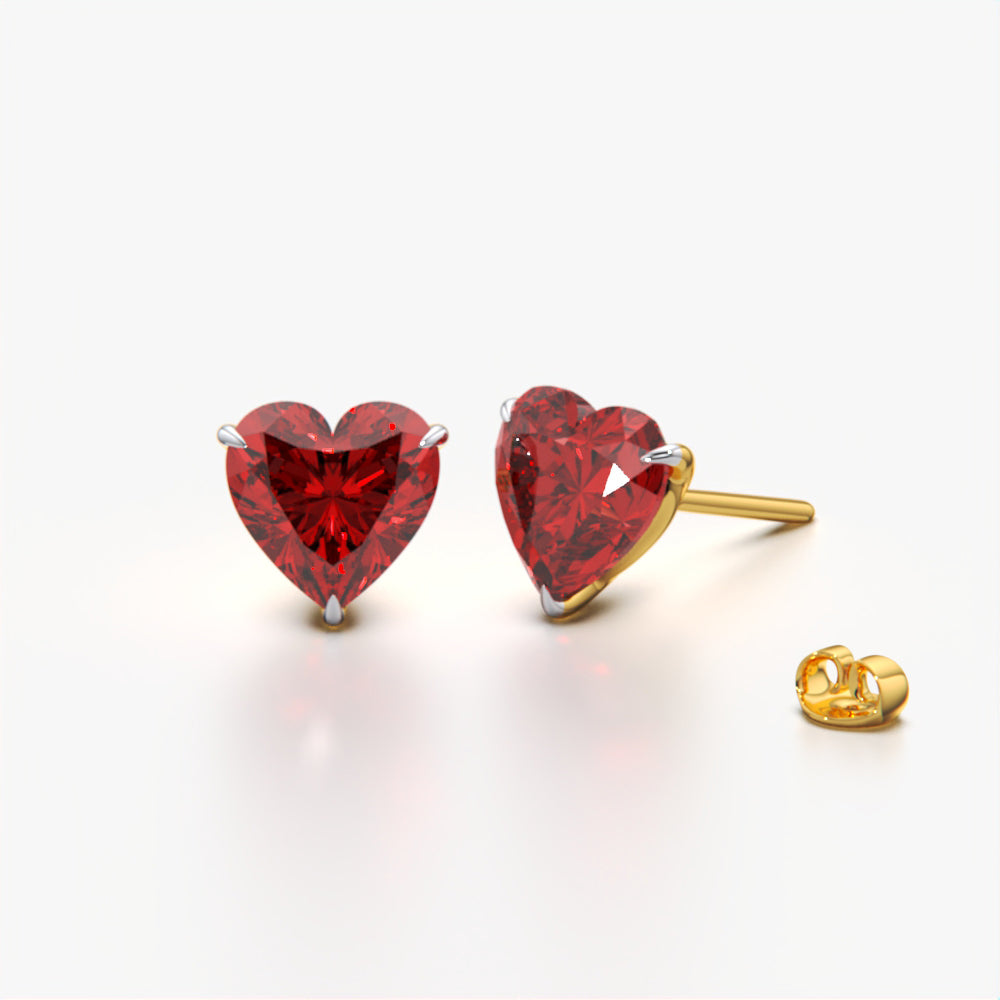
Red Heart Solitaire Stud Earrings
Shop Now -
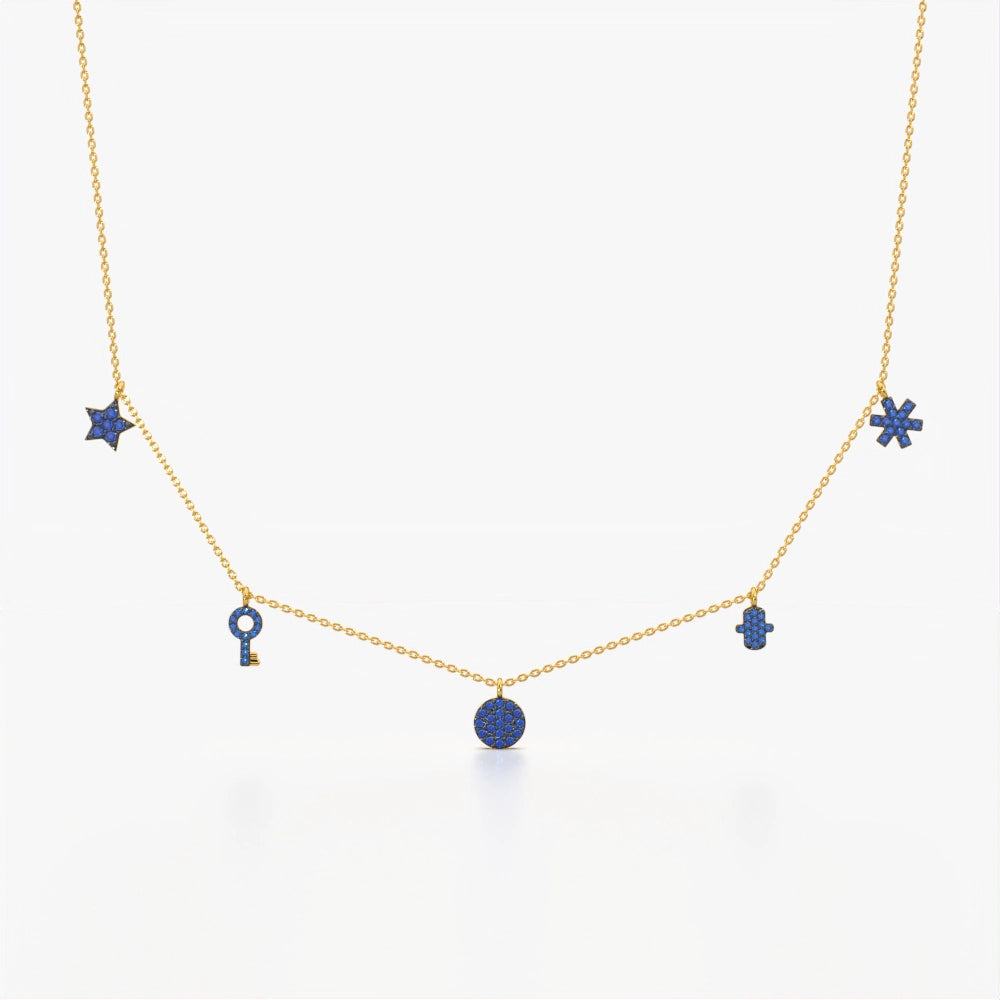
Blue Multi-Charm Station Necklace
Shop Now -

Purple Butterfly Bracelet
Shop Now -
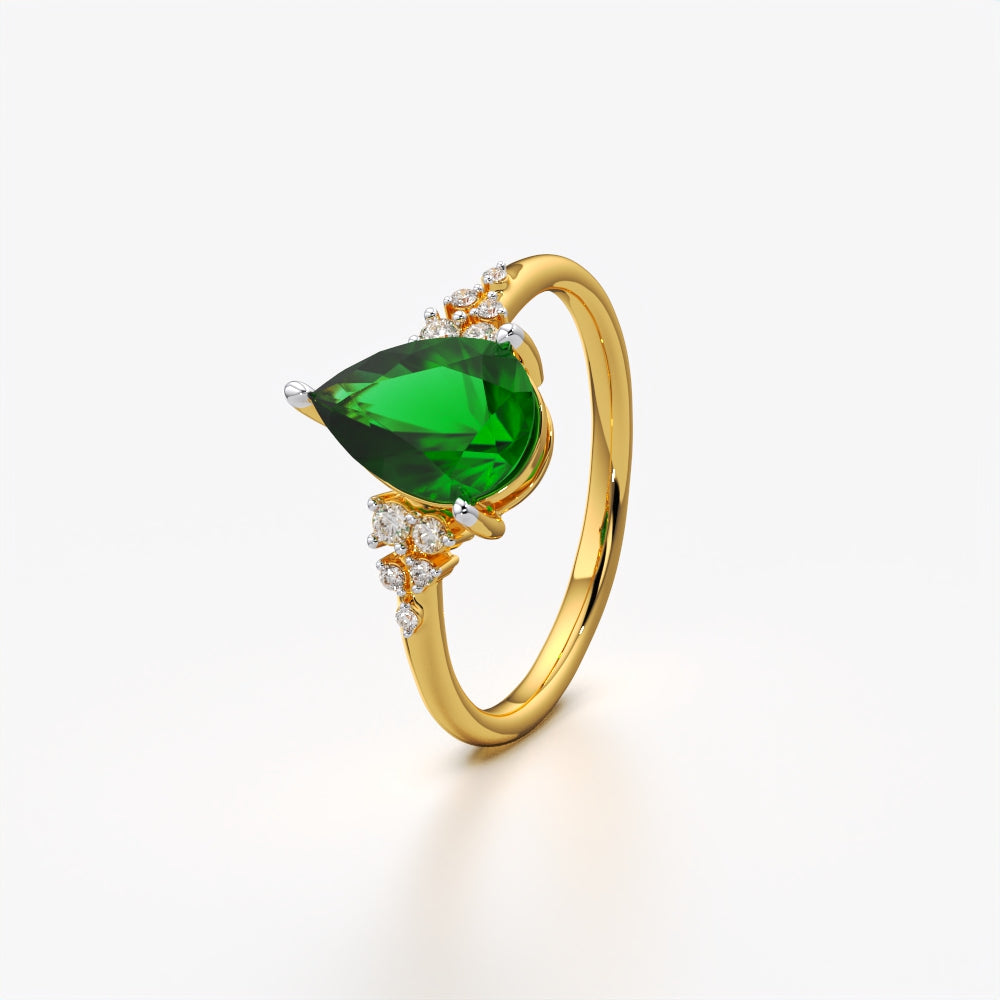
Green Pear Cluster Accent Ring
Shop Now
Navratri 2026 Colours: Day-by-Day Calendar
| Day | Date | Goddess | Colour |
|---|---|---|---|
| Day 1 | Sunday, 11 October | Maa Shailputri | Orange |
| Day 2 | Monday, 12 October | Maa Brahmacharini | White |
| Day 3 | Tuesday, 13 October | Maa Chandraghanta | Red |
| Day 4 | Wednesday, 14 October | Maa Kushmanda | Royal Blue |
| Day 5 | Thursday, 15 October | Maa Skandamata | Yellow |
| Day 6 | Friday, 16 October | Maa Katyayani | Green |
| Day 7 | Saturday, 17 October | Maa Kalaratri | Grey |
| Day 8 | Sunday, 18 October | Maa Mahagauri | Purple |
| Day 9 | Monday, 19 October | Maa Siddhidatri | Peacock Green |
Sources for this calendar list Ghatasthapana on Sunday 11 October and the nine nights running to Maha Navami on Monday 19 October, from orange on Day 1 to peacock green on Day 9.
A note on Ashtami this year. Most calendars place Durga Ashtami on 18 October 2026, but because the Ashtami tithi extends into the next day, some list Maha Ashtami on 19 October. One panchang notes that Ashtami ends on the morning of 19 October in New Delhi, so it observes Maha Ashtami and Maha Navami together that day. The colour list follows the day count, so Day 8 stays purple and Day 9 stays peacock green. For puja timings and kanya pujan, check your local panchang or family priest.
The Short Answer
- Keep the metal the same and change the colour. Yellow gold works with all nine shades. Let one coloured stone, or the outfit itself, carry the day's colour.
- Nine colours need only five stone shades: red, white, royal blue, green and purple.
- For garba, choose pieces that stay put: closed huggie hoops, stones set inside a metal rim, and necklaces that sit above the collarbone.
- Wear heirloom gold for the aarti, lighter pieces for the dancing.
Why Nine Colours? A 2003 Idea That Became Tradition
The nine-colour custom is younger than most people assume. According to the Maharashtra Times editor who launched it, the paper started the idea in 2003 to attract women readers, and linked each colour to a goddess so it would feel rooted in the festival. Today, the first colour is set by the weekday Navratri begins on, the other eight follow a fixed cycle, and the custom is most popular among women in Gujarat and Maharashtra.
That history helps you style with less pressure. The colours are a shared community code, not a religious rule, so close enough is fine. A wine-red chaniya choli on red day is not a mistake. If your housing society or garba group publishes a different list, follow theirs. In Bengal, the last days of Navratri are Durga Puja, which has its own clothing traditions.
How Gold Looks Against Each Colour
Every guide says gold goes with everything. That's true, but it looks different against different colours, and that tells you whether you need a coloured stone at all.
Yellow gold is a warm metal. It blends into warm colours, stands out against cool or deep colours, and becomes the main colour against neutrals. The nine 2026 colours fall into three groups.
Warm days, where gold blends in: orange, red, yellow. The metal and the fabric are close in tone, so the jewellery can disappear in photos. Add contrast with a stone (white, green or blue), or choose a sculpted, high-polish piece whose shape still shows.
Deep and cool days, where gold pops: royal blue, green, purple, peacock green. These are the easiest days. Plain gold looks rich, and a matching stone is a bonus, not a necessity.
Neutral days, where gold leads: white, grey. Gold becomes the colour on these days. White stones add sparkle without changing the mood.
The rule in one line: on blend days add contrast, on pop days let gold lead, on neutral days add sparkle.
Nine Colours, Five Stones
You don't need nine coloured accents, because the colours cluster. Five stone shades cover the whole festival:
| Stone shade | Matches | Also works on |
|---|---|---|
| Red | Day 3 (red) | Day 1 (orange), Day 5 (yellow), Day 6 (green, the classic red and green pairing) |
| White or clear | Day 2 (white) | Day 7 (grey), and as a neutral on any day |
| Royal blue | Day 4 (royal blue) | Day 5 (yellow), Day 9 (paired with green for a peacock effect) |
| Green | Day 6 (green), Day 9 (peacock green) | Day 3 (red), Day 5 (yellow) |
| Purple | Day 8 (purple) | Day 2 (white), Day 7 (grey) |
Many of KYMEE's coloured stone jewellery designs come in up to 13 cubic zirconia (CZ) shades: red, purple, several blues, two greens, yellow, pink, white and black. There is no orange or grey stone in the range. On Day 1 and Day 7, red, white, or plain gold do the job anyway. If you want a true orange stone for next year, see the custom option further down.
The 3 + 1 Kit: One Base, Nine Looks
The most practical way to dress for nine nights is three anchor pieces you wear every night, plus one accent that changes with the colour. The accent can be an extra piece or a swap for one of the anchors.
Anchor 1: earrings that stay put. Closed huggies or small hinged hoops have no backs to lose and don't swing into your face. Plain gold works with every colour, like the Classic Huggie Hoop Earrings. The hoop earrings collection has more shapes.
Anchor 2: one wrist piece. A single slim bangle or chain bracelet is enough. Browse bangle bracelets or chain link bracelets.
Anchor 3: one flat ring, or your mangalsutra. If you wear a mangalsutra every day, it is already an anchor (here's how to find one comfortable for daily wear). For rings, a band that sits flat, like the Classic Half Eternity Pavé Band, won't catch on fabric or dandiya sticks.
The +1: the day's colour. One coloured piece in the shade from the table above. Easy options:
- Coloured huggies with the stone set inside a metal rim, like the Kite Bezel Huggie Hoop Colour Stone Solitaire Earrings, or set into the metal itself, like the Dome Solitaire Huggie Hoops. Both styles give fabric nothing to catch on.
- A thin colour bracelet like the Twin Hearts Coloured Stone Bracelet. It pairs a small heart-cut moissanite with a heart-cut coloured CZ on a fine cable chain, closed with a lobster clasp and an adjustable extension.
The kit weighs less, leaves you less to lose, and costs less. Your five accents also keep working after Navratri, at Diwali, weddings and the office. For more colour pieces, see coloured stone earrings, coloured stone necklaces and coloured stone bracelets.
Day-by-Day Styling Guide
Day 1, Sunday 11 October: Orange (Maa Shailputri)

Ghatasthapana morning and the first garba night, when everyone is fresh and the photos come out.
- Gold blends with orange, so add contrast: a red or white stone, or a high-polish piece whose shape shows.
- At the morning puja, you'll sit close to the kalash and diyas, so small studs and one bangle are enough.
- At garba, wear your anchors plus red or white huggies.
- Avoid orange, gold, and yellow from head to toe with no contrast. It looks flat in photos.
Day 2, Monday 12 October: White (Maa Brahmacharini)

A working day for most people, so plan for office to garba.
- Gold is the colour today, and white stones fit naturally.
- Wear studs at work and switch to huggies before the evening.
- White outfits are usually the plainest of the week, so this is the one night a sparkly pavé piece doesn't compete with anything.
Day 3, Tuesday 13 October: Red (Maa Chandraghanta)

The most traditional night of the festival.
- Gold glows on red. Either go tone-on-tone with red stones, or try the classic red and green pairing seen in a lot of bandhani.
- Heirloom red bangles belong at the aarti. Take them off before the circle gets fast.
Day 4, Wednesday 14 October: Royal Blue (Maa Kushmanda)

- Royal blue gives gold its strongest contrast of the nine days. Plain gold anchors are enough.
- Fasting and late nights start to add up midweek, so wear your lightest set of the week.
- If you add a stone, the shade listed as Sapphire Blue is a royal-blue CZ.
Day 5, Thursday 15 October: Yellow (Maa Skandamata)

- This is the hardest day for gold, because yellow on yellow looks flat. Break it with a green, red, or royal blue stone.
- Skip the all-gold look today. One contrasting colour makes the whole outfit look sharper.
Day 6, Friday 16 October: Green (Maa Katyayani)

- Gold stands out well on green. Friday nights run late, so you can go a little bolder.
- Try a short pendant at collarbone length with the stone set inside a metal rim, like the Bezel Solitaire Heart Necklace, in green or red. Check the chain length on the product page. For garba, shorter is better.
Day 7, Saturday 17 October: Grey (Maa Kalaratri)
- Grey is the hardest colour on the list because a flat grey can look dull under stage lights. Polished gold and white stones bring it to life.
- For drama, wear a single black stone. It suits the night of Maa Kalaratri, the goddess's fiercest form.
- Saturday nights usually draw the biggest garba crowds. Wear anchors only and check that everything is fastened. This is the night things get lost.
Day 8, Sunday 18 October: Purple (Maa Mahagauri)

- For most families, this is Ashtami (see the note above), with kanya pujan cooking in the morning. Take off rings while kneading dough and frying puris, and put them back on after.
- A purple stone on gold looks royal. White stones are the softer option.
Day 9, Monday 19 October: Peacock Green (Maa Siddhidatri)

- Navami, and the last night. Peacock green sits between green and blue. Wear one green accent and one blue accent together, for example, green huggies with a blue bracelet, or keep it simple with one deep green stone.
- The final night is often the longest, so stick to anchors that pass the garba test below.
Dussehra, Tuesday 20 October
There's no fixed colour for Dussehra. For many Indian families, the Navratri period is also one of the most auspicious windows of the year for buying gold. If you're buying solid gold, read how to calculate gold jewellery price before you go.
The 60-Second Garba Test
Before you leave home, stand in front of a mirror and run five quick checks.
- The spin: Shake your head quickly from side to side a few times. Anything that swings past your jawline will hit your cheek or tangle in your hair and dupatta mid-round.
- The dupatta drag: Pull your dupatta across your ears and neck. If it catches, swap the piece. Stones held by raised claws (prongs) and open-work designs snag. Stones sitting inside a metal rim, or set into the metal itself, slide past.
- The clap: Clap hard a few times. Rings with tall settings knock against each other, and dandiya sticks hit knuckles, so keep to one flat ring per hand.
- The back check: Closed huggies have no backs to lose. Push-on butterfly backs loosen with sweat, so check them at every break. If you wear threaders, here's how to keep threader earrings from falling out.
- The ten-minute rule: If you can feel the weight on your earlobes after ten minutes at home, it will hurt by midnight.
What usually passes: huggies and small hoops, studs with rimmed or set-in stones, one chain bracelet or slim bangle, short pendants.
What usually fails: long jhumkas and chandbalis during the dancing, layered chains that knot when you spin, cocktail rings, and metal stacks on both wrists. Save statement earrings for the aarti and photos, then swap them for huggies when the music speeds up. If you love the sound of bangles, keep them on one wrist.
Heirloom Gold at the Aarti, Lighter Gold in the Circle
Most Indian families own gold, and Navratri feels like the time to wear it. Garba grounds are another matter: crowded, dimly lit, sweaty and constantly moving.
The numbers make the risk concrete. On 1 October 2026, 22K gold was quoted at ₹13,639 per gram in India. At that rate, a plain pair of 22K huggies weighing 3 to 4 grams holds roughly ₹41,000 to ₹54,500 of gold before making charges and GST. Lose one stud mid-spin, and you lose real money, plus the memory attached to it.
A practical split many families already use: wear the heirloom set for the morning puja and the evening aarti, then switch to lighter pieces for the dancing.
That's where gold vermeil fits. KYMEE's vermeil is crafted in 925 sterling silver and coated with a layer of 18K gold at least 2.5 microns thick. The base silver is nickel-free, so the surface you see is real gold in the same warm tone as your family jewellery, at a much lower cost. Most of KYMEE's earrings, including the coloured-stone huggies above, were priced between roughly ₹4,400 and ₹7,900 at the time of writing. What is gold vermeil? explains the material in more detail.
Vermeil isn't the right choice for everything. If you're buying gold as an investment or as an heirloom, buy hallmarked solid gold. If you love the boho look of oxidised jewellery with cotton chaniya cholis, wear it. Many oxidised pieces are brass or "German silver", an alloy of copper, nickel and zinc that contains no silver, so if your skin reacts to nickel, keep sessions short. Oxidised vs gold vermeil jewellery compares the two honestly.
Match Jewellery to Your Outfit, Not Only the Colour
- Mirror-work chaniya choli: the mirrors already reflect light, and heavy pavé just competes with them. Choose polished gold with one coloured stone.
- Multicolour bandhani or prints: the base fabric already carries the day's colour. Match your stone to the second colour in the print instead.
- Silk saree for puja: you're seated, or standing, not spinning, so heavier earrings and layered necklaces work here. See how to choose earrings for a saree.
- Lehenga for a garba event: read how to choose jewellery for different lehengas, then run the garba test.
- Necklines: a deep U or V neck takes a short pendant. A high neck, or a dupatta draped over both shoulders, hides necklaces, so let your earrings lead.
- Still unsure about colour pairing? What colour jewellery should you wear? Consider skin tone and contrast.
Caring for Jewellery Across Nine Nights
Nine nights of sweat, perfume, kumkum and kitchen work are hard on any jewellery.
A few habits keep it looking new:
- Put jewellery on last, after perfume, lotion, sunscreen and hairspray. KYMEE's care guide lists perfume, lotion, sunscreen and makeup among the things that leave a film on jewellery.
- Wipe it after every night. Use a soft, dry cloth to remove sweat, let the piece dry fully, then store it. The care guide notes that sweat, high skin acidity, humidity, or product buildup can cause mild discolouration, and keeping pieces clean and dry helps prevent it.
- Store pieces separately. Keep each one in its own pouch or a lined box, not tangled together in one bag after a late night.
- Kitchen days: take rings off for kneading, frying, and anything with haldi.
- Puja residue: kumkum and sandalwood paste can settle into stone settings. For heavier buildup, the guide suggests a slightly damp cloth with mild soap, then drying completely, and avoiding harsh cleaners.
For more, see the KYMEE jewellery care guide, how to clean gold vermeil, does gold vermeil wear off, and how to store jewellery.
Ordering This Week? Read This First
Navratri starts on Sunday and delivery times vary by pin code, so check the delivery estimate at checkout before you order for a specific night. The Ready to Ship edit is the place to start. Or use what you already own: the 3 + 1 kit works with any gold studs and any coloured accent.
For a colour the range doesn't stock, like orange or grey, or a family motif such as a lotus, use the create your own service. You fill in a short form with the piece type, metal, stone, and budget, attach a reference image, and the team comes back with ideas and a quote. Custom work takes time, so plan it for Diwali or next Navratri rather than this week. How to design custom jewellery walks through the decisions. KYMEE uses CZ for larger stones and moissanite only for small accents (what is moissanite?).
FAQs
What are the Navratri 2026 colours?
Orange (11 Oct), white (12 Oct), red (13 Oct), royal blue (14 Oct), yellow (15 Oct), green (16 Oct), grey (17 Oct), purple (18 Oct) and peacock green (19 Oct). The sequence starts with orange because Navratri 2026 begins on a Sunday.
Is Durga Ashtami on 18 or 19 October 2026?
Most calendars list 18 October, with Maha Navami on 19 October. Some panchangs observe Ashtami and Navami together on 19 October because of how the tithi ends that morning. Check your local panchang for puja timings. The colour list stays the same either way.
What jewellery is best for garba nights?
Closed huggie hoops, studs with stones set inside a metal rim or into the metal itself, one slim bracelet, one flat ring, and a short pendant or no necklace. Avoid long swinging earrings, layered chains and tall cocktail rings while dancing.
Does your jewellery have to match the colour of the day?
No. The colour list is a community tradition from 2003, not a rule. Matching one accent is enough, and plain gold works with all nine colours.
Can you wear gold vermeil while dancing garba?
Yes. Wipe it with a soft, dry cloth after each night and let it dry before storing, because sweat left on any jewellery overnight dulls the finish. Take it off for showers and swimming.
What should you wear on Navratri grey day?
Pair grey with polished gold and white stones, or a single black stone for contrast. Avoid flat, matte metals that make grey look dull.
Can you wear the same jewellery all nine days?
Yes. Keep three anchor pieces (earrings, one bracelet, one ring, or your mangalsutra) and change one coloured accent each day. Five stone shades cover all nine colours.
Is oxidised or gold jewellery better for Navratri?
Both work. Oxidised pieces suit cotton and mirror-work chaniya cholis and cost little, but many contain nickel and can feel heavy over long nights. Gold suits every colour and moves easily from puja to garba. Pick whatever passes the garba test.